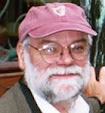
There were different kinds of service, sacrifice, and even martyrdom. We shouldn't forget the less obvious ones this Memorial Day.
Today, I especially remember my cousin Tommy Fitzpatrick [Tommy Fitzpatrick on the Virtual Vietnam Memorial Wall], who was killed in Vietnam on April 18, 1969, just over 48 years ago. Tommy grew up with us in Euclid, Ohio, went to St. William's with us, then on to St. Joseph High School and Euclid High School, where he graduated in 1967. Less than two years after high school graduation, Tommy was killed in Vietnam, a devastating loss to his family, friends, and community. Tommy was the second St. William's boy killed in Vietnam, along with Raymond "Buddy" Chasser. Buddy's mother was a Horkan, a shirttail cousin of my mother.
And today I also remember Steve Shields [Steve Shields, on the virtual Vietnam Memorial Wall], my Notre Dame and Innsbruck Program classmate. Steve was in ROTC at Notre Dame, graduating in 1970. Two years later, on June 20, 1972, the helicopter he was piloting was shot down in Vietnam, and Steve was killed. I went to the funeral in Philadelphia and the burial at West Point. Steve was mourned by hundreds of people, family, friends, and classmates. Steve was just 23 years old.
There were so many other huge sacrifices. I think about my father in World War II, 20 years old, a Signalman in the Navy, at war in the South Pacific, aboard a small wooden ship called a "Subchaser." My father-in-law, Art Sanders, also in the Navy in the South Pacific, an 18-year-old machinist. My many uncles who served in the war. At least three of them came back with serious PTSD, a condition that had no name back then. They were haunted the rest of their short lives, self-medicating their anxiety and depression with alcohol.
Not all the heroes were war heroes. Some were anti-war heroes; others played roles in the background, either supporting the war effort or the anti-war effort.
In 1970 I had to decide if I would fight in Vietnam. I read, thought, and prayed about this issue and finally decided that I would not. I felt at the time I had three or four options: I would go to Canada (or try to); I would go underground (again, I had no idea if that were even possible); I would go to jail; or I would try to take the legal path and apply for Conscientious Objector status. So in the summer of 1970, I applied for CO status. I also took my draft physical, along with hundreds of other young men, in a basement area of Erieview Tower in Cleveland. That summer I submitted my CO application and later had a kind of trial or hearing before the draft board. They eventually, to my astonishment, granted me CO status. I would next have to do two years of Alternate Service. During these 6 months of uncertainty, I was working with Gene Killeen and many other wonderful people at Terminal Parking, at West 6th and Superior. In late January of 1971, I said goodbye to Gene and my work friends, said goodbye to my family, and moved to Cincinnati to try to find an acceptable Alternate Service position. That summer, I finally located such a job, in the Health Education Department of the 12th Street Clinic. There I worked under Dr. Joseph Alter, who I heard had also been a CO many years earlier. I worked with Charles Couch, Becky Meyers RN, June Mealey, Dale White, and many other wonderful people at the clinic. My pay was $2.50 per hour. My job was located in the Cincinnati ghetto of Over-the-Rhine, but I didn't consider it dangerous. I did some service for the neighborhood and my country. My sacrifice was not like Tommy's or Buddy's or Steve's. But I played a role.
When I moved to Cincinnati I met a group of dedicated people called "Peacemakers." They were pacifists, and many of them had spent time in jail for not participating in war efforts and for refusing to pay war taxes. Their sacrifices were huge. I'm thinking of people like Maurice McCrackin, Ernest Bromley, Marion Bromley, Dan Bromley, Wally Nelson, Juanita Nelson, Chuck Matthei, Kenny Przybylski, Richard Gale, Chris Cotter, Peggy Scherer . . . gee, so many other incredible, dedicated people who said no to war and yes to peacemaking.
For all of the people mentioned, the warriors and the peacemakers, the Conscientious Objectors and conscious participators, I say, "thank you for your service."
And PS, thanks to Tim Musser for his service as a Conscientious Objector!
Showing posts with label Steve Shields. Show all posts
Showing posts with label Steve Shields. Show all posts
Monday, May 29, 2017


Tuesday, July 19, 2016
New Poem--about the Spring of 1970
Sorry I have been absent so long from this blog. Maybe I was in jail; or maybe in a mental institution; or maybe I was in Montana with my family. What in the world triggered this poem, 46 years later?
Last Month at Notre
Dame—May 1970
The world being blown apart, spring of 1970,
Cambodian Invasion, endless bloody Vietnam War,
Kent State and Jackson State massacres,
Student strike at Notre Dame where we . . .
The privileged sat on a bank above St. Mary’s Lake
Or off-campus at a friend’s party, strumming our guitars,
Singing “The Children and the Flowers” or “For Baby for
Bobby”
Or Dylan’s “You Ain’t Goin’ Nowhere.”
Steve didn’t know it, but he was going to Vietnam to die in
a helicopter crash;
Me and Chris to a Cincinnati ghetto and a Peacemakers’
commune;
Others to Mexico, graduate school, one brilliant friend to a
job as a garbage collector,
Many to the military, yet far from the horror of Southeast
Asia.
I remember that May: Mike, Chris, Tim,
Carol, Julie, Vangie, Rene, Tom,
Warren, Dick, Steve, John , many more,
Beloved friends.
Our last month as school comrades,
In the beautiful safe womb of Notre Dame,
Eager yet afraid of what awaited us
Outside the gates.
Bob Coughlin
/ July 19, 2016
Saturday, November 22, 2014
I remember November 22, 1963--The Murder of John F. Kennedy
I wrote this a few years ago and want to post it again on the 54th anniversary of the assassination of John F. Kennedy, something that still wounds me deeply:
It would be hard for anyone outside of my age, ethnic, social, and cultural context to understand how November 22, 1963, the assassination of John F. Kennedy, is etched on my soul. There is no adequate metaphor: etched, branded, tattooed. The day, the death, the memories will always be there, always be a part of me.

I think in part it's because John Kennedy, "Jack" we liked to call him, as if he were a friend of the family, it's because he represented what we longed to be. I was from a struggling, working-class Irish-Catholic family. John Kennedy came from the same roots--the exiled Irish, streaming out of famine and post-famine Ireland, where there was massive death, disease, and starvation everywhere. And then trying to find your way in a new society. By the time I was born in 1948, we had come a long way--90 years after our immigrant great grandparents came to America's shores. We had a lot of wonderful gifts: our tight Catholic religious community, our large and loving families and extended families ( I joke that my parents and I didn't have friends--we had relatives. It is the truth!). But we also had terrible problems with alcoholism, untreated anxiety and mental illness, and we faced plenty of prejudice. Very few people acknowledge that now, but it was the truth. Catholics, even in the 1950's and 1960s, were victims themselves of discrimination and prejudice (and we were full of that same vice towards others, I am sad to say). John F. Kennedy seemed like a vision to us, of what could be: he was more handsome, richer, better educated--yet full of his own problems, we later discovered, many far worse than our own ills and sins.
When I heard around 2:05 PM that November 22nd, that Black Friday, sitting in my religion class as St. Joseph High School in Cleveland--when Brother Stanley Matthews came over the PA system and told us, "Boys, he's been shot. The president has been shot," we were stunned beyond belief. It was as if my own Father had been shot. I remember how we prayed for the next half hour, when Brother Stanley came on again and said, "Boys, he's gone, he's dead. Pray for him, his family. Pray for yourselves and the world."
And that is what we did.
We, of that generation, knew a lot of terrible deaths, and we took them personally. John F. Kennedy, Martin Luther King Jr., Robert Kennedy. And then the Vietnam War, and cousins, classmates, friends getting killed: Tommy Fitzpatrick, Buddy Chasser, Steve Shields.
So I am marked by this day. I know my cousin Maggie Brock is also deeply marked. As are so many in my family, among my friends, in my generation.
Five years after John F. Kennedy's assassination, Brian Wilson and I were traveling in Greece during our spring break (we were Notre Dame students studying abroad in Austria). It was the day after Martin Luther King Jr. had been murdered. Brian and I were invited into a modest home near Matala, Crete. The man of the house wanted to show us his bouzouki and tell us of relatives in America. On the wall of his home were two pictures: Pope John XXIII, and John F. Kennedy.
Pope John would not have been his religious leader, for this man was Greek Orthodox. And JFK would not have been his president. But there it was--two heroes. Yes, we know JFK's clay feet, we know his catalogue of sins and faults. But I was inspired by him to try to make the world a better place. And his assassination on this day 51 years ago is etched indelibly into my heart.
Postscript: Pat Denny, a friend of mine, read this blog entry and sent me some of her own reflections on that fateful day. Pat was a freshman at Regina High School in South Euclid on November 22, 1963. Here is what she wrote me--I appreciate it so much!
"We were in an assembly. Principal (Sr. Mary Marthe) interrupted the program when the news was first announced. The program resumed, and later she returned and ended the program when the news of his dying came in. All our buses came earlier than usual, as I'm recalling. We all prayed the rosary all the way home from Regina to 260th bus stop in Euclid. Overwhelming sadness and grief punctuated that entire weekend, and for many days after as we followed the TV coverage. We were at such an impressionable age when it happened. Our hearts still ache when we recall it all."
It would be hard for anyone outside of my age, ethnic, social, and cultural context to understand how November 22, 1963, the assassination of John F. Kennedy, is etched on my soul. There is no adequate metaphor: etched, branded, tattooed. The day, the death, the memories will always be there, always be a part of me.
I think in part it's because John Kennedy, "Jack" we liked to call him, as if he were a friend of the family, it's because he represented what we longed to be. I was from a struggling, working-class Irish-Catholic family. John Kennedy came from the same roots--the exiled Irish, streaming out of famine and post-famine Ireland, where there was massive death, disease, and starvation everywhere. And then trying to find your way in a new society. By the time I was born in 1948, we had come a long way--90 years after our immigrant great grandparents came to America's shores. We had a lot of wonderful gifts: our tight Catholic religious community, our large and loving families and extended families ( I joke that my parents and I didn't have friends--we had relatives. It is the truth!). But we also had terrible problems with alcoholism, untreated anxiety and mental illness, and we faced plenty of prejudice. Very few people acknowledge that now, but it was the truth. Catholics, even in the 1950's and 1960s, were victims themselves of discrimination and prejudice (and we were full of that same vice towards others, I am sad to say). John F. Kennedy seemed like a vision to us, of what could be: he was more handsome, richer, better educated--yet full of his own problems, we later discovered, many far worse than our own ills and sins.
When I heard around 2:05 PM that November 22nd, that Black Friday, sitting in my religion class as St. Joseph High School in Cleveland--when Brother Stanley Matthews came over the PA system and told us, "Boys, he's been shot. The president has been shot," we were stunned beyond belief. It was as if my own Father had been shot. I remember how we prayed for the next half hour, when Brother Stanley came on again and said, "Boys, he's gone, he's dead. Pray for him, his family. Pray for yourselves and the world."
And that is what we did.
We, of that generation, knew a lot of terrible deaths, and we took them personally. John F. Kennedy, Martin Luther King Jr., Robert Kennedy. And then the Vietnam War, and cousins, classmates, friends getting killed: Tommy Fitzpatrick, Buddy Chasser, Steve Shields.
So I am marked by this day. I know my cousin Maggie Brock is also deeply marked. As are so many in my family, among my friends, in my generation.
Five years after John F. Kennedy's assassination, Brian Wilson and I were traveling in Greece during our spring break (we were Notre Dame students studying abroad in Austria). It was the day after Martin Luther King Jr. had been murdered. Brian and I were invited into a modest home near Matala, Crete. The man of the house wanted to show us his bouzouki and tell us of relatives in America. On the wall of his home were two pictures: Pope John XXIII, and John F. Kennedy.
 |
| John XXIII |
Pope John would not have been his religious leader, for this man was Greek Orthodox. And JFK would not have been his president. But there it was--two heroes. Yes, we know JFK's clay feet, we know his catalogue of sins and faults. But I was inspired by him to try to make the world a better place. And his assassination on this day 51 years ago is etched indelibly into my heart.
Postscript: Pat Denny, a friend of mine, read this blog entry and sent me some of her own reflections on that fateful day. Pat was a freshman at Regina High School in South Euclid on November 22, 1963. Here is what she wrote me--I appreciate it so much!
"We were in an assembly. Principal (Sr. Mary Marthe) interrupted the program when the news was first announced. The program resumed, and later she returned and ended the program when the news of his dying came in. All our buses came earlier than usual, as I'm recalling. We all prayed the rosary all the way home from Regina to 260th bus stop in Euclid. Overwhelming sadness and grief punctuated that entire weekend, and for many days after as we followed the TV coverage. We were at such an impressionable age when it happened. Our hearts still ache when we recall it all."
Monday, May 26, 2014
Memorial Day. And Dad's 92nd Birthday.
Today my Dad would have been 92 years old. He was born in Cleveland on May 26, 1922, to Cora Esther Bowers Coughlin and Cornelius (Connie) Francis Coughlin. Both my grandparents were first generation Americans. In 1922 they lived around East 87th Street, between St. Clair and Superior. My Dad was the third child, after Fran and Jack. Bill was born about a year and a half later. And Bernice followed Bill. My grandparents' marriage seemed a little odd--Connie was a rough and ready Irishman and a great semi-pro baseball player. My grandmother was the daughter of a bridge engineer, Frank Bowers (changed from Bauer) and Mary Voelker. My impression is that they were upper middle class. So Cora married a guy who was in a lower social class. But Connie had charm and smarts. He was funny, affable, a great athlete, with lots of friends.Their marriage lasted about 43 years, until my Grampa's death in 1960.
During World War II, their 4 boys were all in the service, all over seas. My Dad was a signalman in the Navy, and spent most of his 4 years in the South Pacific, on very small ships (including wooden Subchasers!). We honor him today, his birthday, and Memorial Day.
Today I also think about my cousin Tommy Fitzpatrick, who was just 6 months older than me. Tommy was killed in Vietnam in 1969, just 21 years old. His death is an unending ache to his family and friends.
I also think about my Notre Dame/Innsbruck friend, Steve Shields. I studied with Steve in Salzburg and Innsbruck, Austria in 1967-68, and we graduated from Notre Dame together in 1970. Just a couple years later, around age 23 or 24, Steve's helicopter was shot down in Vietnam and he was killed. Rest in Peace, Tommy and Steve.
I also think about some of the unsung heroes of the Civil Rights and Peace Movement on Memorial Day. There is no official holiday for them, but they are also heroes for our country and our world. Names that come quickly to mind are Ernest and Marion Bromley, Maurice McCrackin, and Chuck Matthei. But there are many more, many whose names are totally lost to history.
So to all the heroes, both of wars and of the struggle for peace and justice, we say Thank You!
During World War II, their 4 boys were all in the service, all over seas. My Dad was a signalman in the Navy, and spent most of his 4 years in the South Pacific, on very small ships (including wooden Subchasers!). We honor him today, his birthday, and Memorial Day.
Today I also think about my cousin Tommy Fitzpatrick, who was just 6 months older than me. Tommy was killed in Vietnam in 1969, just 21 years old. His death is an unending ache to his family and friends.
I also think about my Notre Dame/Innsbruck friend, Steve Shields. I studied with Steve in Salzburg and Innsbruck, Austria in 1967-68, and we graduated from Notre Dame together in 1970. Just a couple years later, around age 23 or 24, Steve's helicopter was shot down in Vietnam and he was killed. Rest in Peace, Tommy and Steve.
I also think about some of the unsung heroes of the Civil Rights and Peace Movement on Memorial Day. There is no official holiday for them, but they are also heroes for our country and our world. Names that come quickly to mind are Ernest and Marion Bromley, Maurice McCrackin, and Chuck Matthei. But there are many more, many whose names are totally lost to history.
So to all the heroes, both of wars and of the struggle for peace and justice, we say Thank You!
 |
| Tommy Fitzpatrick in Vietnam (center) |
 |
| Dad and Mom, August 1947, Willoughby |
 |
| Steve Shields (left)--Salzburg, Austria [Also, Charlie Bradley, Brian Wilson, me, Mike Gerrity] |
Wednesday, March 5, 2014
How Did Vietnam Protesters Treat Soldiers Who Fought in Vietnam?
This is my last response to my niece Rachel Sanders, who is doing a college project on the Vietnam War. I'm not sure I ever want to write on this topic again (though I am grateful that Rachel asked me about all this).
A point I want to make very clear and unambiguous: The soldiers who fought in Vietnam were our friends, our brothers, our cousins, our classmates. We did not hate them. We loved them, admired their courage, were even grateful, in a way, for their service.
There were very few differences between them and us. We never spit on the returning soldiers, we never jeered them. Despite what has been said over and over--I never saw saw any of this. Perhaps it happened somewhere, but I never saw it. I loved my cousin Tommy Fitzpatrick, killed in the war. I loved and admired my Notre Dame classmate Steve Shields, killed in the war. I loved my brother Denny, who was in the Navy in the Vietnam theatre. I enjoyed hearing Euclid firefighter Mike Walsh's Vietnam stories. Same for Charlie Celizic. These were our family members and friends. We did not hate them.
Some of the soldiers who came back from Vietnam joined our protest. There was an organization called "Vietnam Vets Against the War." One of the great men in the United States, Secretary of State John Kerry, was both a Vietnam hero and a protester against the war.
[Thanks for this opportunity, Rachel, to remember. I do feel a little beat up now by the process of recalling so many painful things. And like I said, I think I am done, maybe forever, writing on this topic.]
A point I want to make very clear and unambiguous: The soldiers who fought in Vietnam were our friends, our brothers, our cousins, our classmates. We did not hate them. We loved them, admired their courage, were even grateful, in a way, for their service.
There were very few differences between them and us. We never spit on the returning soldiers, we never jeered them. Despite what has been said over and over--I never saw saw any of this. Perhaps it happened somewhere, but I never saw it. I loved my cousin Tommy Fitzpatrick, killed in the war. I loved and admired my Notre Dame classmate Steve Shields, killed in the war. I loved my brother Denny, who was in the Navy in the Vietnam theatre. I enjoyed hearing Euclid firefighter Mike Walsh's Vietnam stories. Same for Charlie Celizic. These were our family members and friends. We did not hate them.
Some of the soldiers who came back from Vietnam joined our protest. There was an organization called "Vietnam Vets Against the War." One of the great men in the United States, Secretary of State John Kerry, was both a Vietnam hero and a protester against the war.
 |
| John Kerry |
[Thanks for this opportunity, Rachel, to remember. I do feel a little beat up now by the process of recalling so many painful things. And like I said, I think I am done, maybe forever, writing on this topic.]
Monday, March 3, 2014
Being a Conscientious Objector During the Vietnam War
My niece Rachel Sanders asked me this question:
4. What was your role as a conscientious objector? What prompted you to become one? What was the process like?
I was issued Conscientious Objector (CO) status sometime in the summer or fall of 1970. The process of attaining this status was incredible and complex.
During the spring of 1970 my draft board in Cleveland was actively pursuing me. They knew that I would be graduating from college in June of that year and my student deferment would be up. They told me to go to Chicago to get a physical (that must have been in March or April of 1970) and I mailed back to them that I was unable to do that. OK, they responded, then you will have to get your physical in Cleveland in June. Meanwhile, I was planning to apply for CO status and trying to figure out how that was done. At this point I was convinced that the war was immoral. It was clear in my mind that I was not going to participate. I felt like I had 3 choices: I could be granted CO status and do "alternate service"; I could go to jail; or I could go underground or try to emigrate to Canada. What I was not going to do was be part of the military in this terrible war. I realized that this could alienate me from my Dad and many others in my family (gee, even my brother Denny, who might have been in the Navy by this time).
I had my physical during the summer of 1970. I had just started working a part-time job at "Terminal Parking," in Downtown Cleveland. My pay was $2.50 per hour. Believe it or not, I enjoyed working with the Killeen family, who owned the parking lot. I had a good time at this job. My draft physical took place in the basement of the Erieview Tower on East 9th Street. It was a circus! Dozens, maybe hundreds of boys standing around for hours in their underpants. I recognized one fellow, my grade school classmate Tony Severino. Tony had been a terrific high school and college athlete, baseball and football. He looked like Mr. America. But Tony had some sort of cyst on his back--and a note from his doctor. Tony failed his physical, but I passed it.
In the weeks that followed I submitted my request for CO status to my draft board. It was a long, detailed essay, based mostly on my religious views, and backed up with letters of support from a priest, Fr. Maurie Amen, CSC, from a friend, Chris Cotter, and from another friend who was a soldier, Steve Shields (Steve died in Vietnam two years later). The draft board considered my materials and had a hearing for me in Downtown Cleveland. Apparently it went well, because some time later I was granted CO status.
I kept working at the parking lot until January of 1971, and then moved to Cincinnati upon the urging of my friend Chris Cotter. When I got to Cincinnati, I did all sorts of odd jobs, all the while looking for an "alternate service" job that I would do instead of military service. I finally found that job in August of 1971--working in the Health Education Department of the 12th Street Clinic, in Cincinnati's Over-the-Rhine neighborhood. I did that job for about a year and a half. By that time, the draft process had fallen apart and I felt I could safely change jobs or go back to school.
4. What was your role as a conscientious objector? What prompted you to become one? What was the process like?
I was issued Conscientious Objector (CO) status sometime in the summer or fall of 1970. The process of attaining this status was incredible and complex.
During the spring of 1970 my draft board in Cleveland was actively pursuing me. They knew that I would be graduating from college in June of that year and my student deferment would be up. They told me to go to Chicago to get a physical (that must have been in March or April of 1970) and I mailed back to them that I was unable to do that. OK, they responded, then you will have to get your physical in Cleveland in June. Meanwhile, I was planning to apply for CO status and trying to figure out how that was done. At this point I was convinced that the war was immoral. It was clear in my mind that I was not going to participate. I felt like I had 3 choices: I could be granted CO status and do "alternate service"; I could go to jail; or I could go underground or try to emigrate to Canada. What I was not going to do was be part of the military in this terrible war. I realized that this could alienate me from my Dad and many others in my family (gee, even my brother Denny, who might have been in the Navy by this time).
I had my physical during the summer of 1970. I had just started working a part-time job at "Terminal Parking," in Downtown Cleveland. My pay was $2.50 per hour. Believe it or not, I enjoyed working with the Killeen family, who owned the parking lot. I had a good time at this job. My draft physical took place in the basement of the Erieview Tower on East 9th Street. It was a circus! Dozens, maybe hundreds of boys standing around for hours in their underpants. I recognized one fellow, my grade school classmate Tony Severino. Tony had been a terrific high school and college athlete, baseball and football. He looked like Mr. America. But Tony had some sort of cyst on his back--and a note from his doctor. Tony failed his physical, but I passed it.
In the weeks that followed I submitted my request for CO status to my draft board. It was a long, detailed essay, based mostly on my religious views, and backed up with letters of support from a priest, Fr. Maurie Amen, CSC, from a friend, Chris Cotter, and from another friend who was a soldier, Steve Shields (Steve died in Vietnam two years later). The draft board considered my materials and had a hearing for me in Downtown Cleveland. Apparently it went well, because some time later I was granted CO status.
I kept working at the parking lot until January of 1971, and then moved to Cincinnati upon the urging of my friend Chris Cotter. When I got to Cincinnati, I did all sorts of odd jobs, all the while looking for an "alternate service" job that I would do instead of military service. I finally found that job in August of 1971--working in the Health Education Department of the 12th Street Clinic, in Cincinnati's Over-the-Rhine neighborhood. I did that job for about a year and a half. By that time, the draft process had fallen apart and I felt I could safely change jobs or go back to school.
Friday, February 28, 2014
How We Got the News about the Vietnam War
My niece Rachel Sanders asked this question:
7. How did you receive most of your news about what was going on in the US and world during the time?
At the beginning of the Vietnam War, I heard some news on the nightly network news programs--CBS with Walter Cronkite, NBC with Chet Huntley and David Brinkley, and less so, ABC. I also watched some of the Today show on NBC back then. There were 3 TV stations in those days--at least on my TV. All programs were broadcast, received over antennas. There was no cable TV and no internet. The internet was not even dreamed about. Of course there were no cell phones (though the Dick Tracy comic strip imagined such a thing).
I also read the Cleveland Plain Dealer (and delivered it!).
While a student at the University of Notre Dame, I saw almost no television until about 1969-70. Almost no students had televisions in their dorm rooms and even radio broadcasts were hard to pick up in the dorms. I often did see the South Bend Tribune and sometimes the Chicago Sun Times. At lunchtime we could sometimes hear the Paul Harvey's radio show broadcast over the PA system. For the most part these were very conservative sources of news, pro-war, super patriotic (in one sense of the word). To be against the war was to be both a traitor and a coward.
Gradually the reality of the war began to sink in, even to the point where Walter Cronkite could no longer echo the Pentagon line--and he started telling it the way it was.
One odd dimension of the news on Vietnam were the body count statistics. It was like keeping score. We heard of hundreds or thousands of Viet Cong deaths every week, and far fewer American deaths (though even these eventually added up to over 55,000--including my cousin (Tommy Fitzpatrick), my Notre Dame friend and classmate (Stephen Shields), and a St. William's classmate (Buddy Chasser).
Toward the end of the war there were many other sources of news--alternative newspapers, newsletters, magazines, and journals. The truth was getting out there, slowly but surely. I helped with one of these newsletters, The Peacemaker, published by Ernest and Marion Bromley, out of the village of Gano, north of Cincinnati, Ohio.
7. How did you receive most of your news about what was going on in the US and world during the time?
At the beginning of the Vietnam War, I heard some news on the nightly network news programs--CBS with Walter Cronkite, NBC with Chet Huntley and David Brinkley, and less so, ABC. I also watched some of the Today show on NBC back then. There were 3 TV stations in those days--at least on my TV. All programs were broadcast, received over antennas. There was no cable TV and no internet. The internet was not even dreamed about. Of course there were no cell phones (though the Dick Tracy comic strip imagined such a thing).
I also read the Cleveland Plain Dealer (and delivered it!).
While a student at the University of Notre Dame, I saw almost no television until about 1969-70. Almost no students had televisions in their dorm rooms and even radio broadcasts were hard to pick up in the dorms. I often did see the South Bend Tribune and sometimes the Chicago Sun Times. At lunchtime we could sometimes hear the Paul Harvey's radio show broadcast over the PA system. For the most part these were very conservative sources of news, pro-war, super patriotic (in one sense of the word). To be against the war was to be both a traitor and a coward.
Gradually the reality of the war began to sink in, even to the point where Walter Cronkite could no longer echo the Pentagon line--and he started telling it the way it was.
One odd dimension of the news on Vietnam were the body count statistics. It was like keeping score. We heard of hundreds or thousands of Viet Cong deaths every week, and far fewer American deaths (though even these eventually added up to over 55,000--including my cousin (Tommy Fitzpatrick), my Notre Dame friend and classmate (Stephen Shields), and a St. William's classmate (Buddy Chasser).
Toward the end of the war there were many other sources of news--alternative newspapers, newsletters, magazines, and journals. The truth was getting out there, slowly but surely. I helped with one of these newsletters, The Peacemaker, published by Ernest and Marion Bromley, out of the village of Gano, north of Cincinnati, Ohio.
Thursday, February 27, 2014
Most Poignant Memories of the Vietnam Era: Tommy Fitzpatrick, Steve Shields, Kent State Killings
This is a response to question #2, asked me by my niece Rachel Sanders:
2. What are some vivid memories you have about the time? What do you consider to be the most important events? Why?
The most important events for me personally were, for the most part, not the most important events nationally. The first event that hit me like a ton of bricks was the death in Vietnam of my first cousin, Tommy Fitzpatrick. I grew up about a mile away from Tommy in Euclid and I went to grade school, St. William's, with him. Oddly, our extended family was so large and close that we hardly had friends outside the family. Tommy was killed in April 18, 1969 (http://www.virtualwall.org/df/FitzpatrickTM01a.htm). He was 21-years-old, his whole life ahead of him. His funeral was at St. William's and he is buried at All Souls Cemetery in Chardon.
A second vivid memory was the death in Vietnam of my Notre Dame friend and classmate, Steve Shields. Steve studied with me in Salzburg and Innsbruck, Austria. He was brilliant, fun, and funny. Everybody loved Steve. At Notre Dame Steve was in Army ROTC and became an officer after college graduation. After a period of training, he went to Vietnam as a helicopter pilot. Steve's copter was shot down in June 20, 1972 (http://www.virtualwall.org/ds/ShieldsSE01a.htm). I went to his funeral in Philadelphia and his military burial at West Point.
A third poignant memory for me was the killings at Kent State on May 4, 1970. I cannot express how terrible and traumatic that was for me. Kent State was located very close to my home in Euclid, Ohio, and so many friends attended there. Even my cousin Maggie Brock was there that day. This was a turning point in my life and I think a turning point in public approval of the war.
The huge demonstrations against the war were memorable and the My Lai massacre March 16, 1968) was one of the most significant events, but personally the combat deaths of Tommy and Steve, and the killings at Kent State were the most affecting.
2. What are some vivid memories you have about the time? What do you consider to be the most important events? Why?
The most important events for me personally were, for the most part, not the most important events nationally. The first event that hit me like a ton of bricks was the death in Vietnam of my first cousin, Tommy Fitzpatrick. I grew up about a mile away from Tommy in Euclid and I went to grade school, St. William's, with him. Oddly, our extended family was so large and close that we hardly had friends outside the family. Tommy was killed in April 18, 1969 (http://www.virtualwall.org/df/FitzpatrickTM01a.htm). He was 21-years-old, his whole life ahead of him. His funeral was at St. William's and he is buried at All Souls Cemetery in Chardon.
 |
| Tommy in Vietnam (left) |
A second vivid memory was the death in Vietnam of my Notre Dame friend and classmate, Steve Shields. Steve studied with me in Salzburg and Innsbruck, Austria. He was brilliant, fun, and funny. Everybody loved Steve. At Notre Dame Steve was in Army ROTC and became an officer after college graduation. After a period of training, he went to Vietnam as a helicopter pilot. Steve's copter was shot down in June 20, 1972 (http://www.virtualwall.org/ds/ShieldsSE01a.htm). I went to his funeral in Philadelphia and his military burial at West Point.
A third poignant memory for me was the killings at Kent State on May 4, 1970. I cannot express how terrible and traumatic that was for me. Kent State was located very close to my home in Euclid, Ohio, and so many friends attended there. Even my cousin Maggie Brock was there that day. This was a turning point in my life and I think a turning point in public approval of the war.
The huge demonstrations against the war were memorable and the My Lai massacre March 16, 1968) was one of the most significant events, but personally the combat deaths of Tommy and Steve, and the killings at Kent State were the most affecting.
Friday, November 11, 2011
Veterans' Day
On this Veterans' Day I want to remember my Dad, Robert P. Coughlin, and his brothers, Bill, Jack, and Fran, all World War II vets (all survived the war, all now deceased, two of them very damaged in spirit by their service).
Also, my Uncles Dick and Don Fitzpatrick, also World War II vets, also damaged in spirit by the war.
And Tommy Fitzpatrick, my cousin, who died in Vietnam in 1969; my Notre Dame and Innsbruck classmate, Steve Shields, who died in Vietnam in 1972.
And Michelle Zaremba, my niece, who fought in Iraq, and has fought (successfully) some PTSD demons.
"Dear Lord, bring just and lasting peace to the World!"
Also, my Uncles Dick and Don Fitzpatrick, also World War II vets, also damaged in spirit by the war.
And Tommy Fitzpatrick, my cousin, who died in Vietnam in 1969; my Notre Dame and Innsbruck classmate, Steve Shields, who died in Vietnam in 1972.
And Michelle Zaremba, my niece, who fought in Iraq, and has fought (successfully) some PTSD demons.
"Dear Lord, bring just and lasting peace to the World!"
Monday, September 20, 2010
Notre Dame-Innsbruck Friends from 1967-68


The 1967-68 Notre Dame Innsbruck Program:
The top photo looks like something out of "Lucy in the Sky with Diamonds" and the Magical Mystery Tour! It shows some of the Ehrlerstrasse Pension gang drinking beer, strumming guitars, and wearing funny hats (the hats belonged to Steve Shields). Included here are Mike Celizic (seriously ill these days), Chris Cotter, Steve Shields, and Mike Gerrity. The special effects in this photo are the products of chance, time, the print being rolled up in a tube for years, blood, sweat, tears, and probably some measure of alcohol.
The bottom photo shows 5 members of the Notre Dame-Innsbruck Program, probably in September of 1967 at "Eisriesenwelt," gigantic ice caves outside Salzburg, Austria. In this photo you can see Steve Shields (died in Vietnam, circa 1972); Charlie Bradley; Brian Wilson; Bob Coughlin; Mike Gerrity. There was quite a scary hike to get to the caves, including a trek across a cliff face (holding on to cable affixed to the rock). I can't remember who took this photo.
Saturday, October 24, 2009
Jack Pendergast's Funeral at Arlington National Cemetery


 [Photos: top, the piper who played a slow tune after the military burial ceremony; middle, a view of the graves at Arlington National Cemetery; bottom, the caisson, pulled by 6 white horses in the procession from the chapel to the burial site.]
This past Wednesday, my daughter Carolan, my brother Kevin, and I drove down from the Cleveland area to Washington, D.C. for the funeral of my cousin Jack Pendergast at Arlington National Cemetery. Jack died in early August, but there is a long delay for burial at our nation's most famous cemetery.
The ride on the Ohio and Pennsylvania turnpikes was beautiful. We exited the Pennsy Pike at Breezewood, and drove through the beautiful hills and mountains of northern Maryland--the hills dressed in their peak fall glory--to our motel in Alexandria, Virginia. I'm pretty sure my old Notre Dame-St. Mary's friend Rene Mirro lives in Alexandria; and I believe my new friend, Jim Sell, lives near there too. Jim is working on a memorial at Gonzaga High School for Steve Shields, my Notre Dame-Innsbruck buddy shot down in Vietnam in 1972. Unfortunately there was no time to visit with Rene or Jim.
We did get to wander around the old town and the Potomac riverside area of Alexandria Wednesday night. Everything there is so different from Cleveland. The area is very busy, very prosperous. Hundreds of people were out and about that night. Stores, boutiques, and restaurants were all busy. The city is dense, traffic is heavy, and there's an air of excitement in the air. All of this contrasts with current-day Cleveland!
In the morning we drove to Arlington National Cemetery and had quite an adventure just trying to get to the Old Post Chapel at Fort Myer--just outside the gates to the Cemetery. The problem apparently involved security clearance and we were forced to drive several miles to a special gate where we and our vehicle could be searched. The delay made us almost late for the funeral mass.
The chapel is quite simple and is certainly used for many different faiths. This would be a funeral mass, celebrated by Fr. O'Brien (I think that was his name), probably a family friend of Vicki and Jack Pendergast. I did recognize some faces in the congregation--Vicki Pendergast; and two Hogan relatives who had come from San Diego (Nancy Hogan Acevedo and Kay Hogan Love). I had seen their photos previously, sent to me by my brother Denny and his wife Sher. I'm sure Den and Sher wish they could have attended this funeral!
When the mass was over, the military procession to the burial site began. There was a military band, a caisson pulled by 6 white horses, and a number of soldiers or airmen in the procession. The march to the burial site was quite long, through the winding roads of this incredibly beautiful and holy place.
The burial involved Catholic prayers, songs played by the military band, taps, a 21-gun salute, and the folding of the flag draping the coffin and handing it to Vicki Pendergast. Everything was done with utmost care and respect. The ceremony was very beautiful, very moving. When this part of the ceremony was done, a piper dressed in kilts played a slow tune ("Going Home," I believe).
Three important aspects of Jack's life were honored at the burial: his Catholic religious heritage; his military career of 27 years in the Air Force; and his commitment to his Irish heritage.
After the burial I introduced myself to Vicki and she remembered me from my visit of 4 years ago or so when I met her and Jack for lunch in Baltimore. I then met Dan and Kay, the children of Jack and Vicki. I also said hello to Nancy and met Dan's wife.
The ride on the Ohio and Pennsylvania turnpikes was beautiful. We exited the Pennsy Pike at Breezewood, and drove through the beautiful hills and mountains of northern Maryland--the hills dressed in their peak fall glory--to our motel in Alexandria, Virginia. I'm pretty sure my old Notre Dame-St. Mary's friend Rene Mirro lives in Alexandria; and I believe my new friend, Jim Sell, lives near there too. Jim is working on a memorial at Gonzaga High School for Steve Shields, my Notre Dame-Innsbruck buddy shot down in Vietnam in 1972. Unfortunately there was no time to visit with Rene or Jim.
We did get to wander around the old town and the Potomac riverside area of Alexandria Wednesday night. Everything there is so different from Cleveland. The area is very busy, very prosperous. Hundreds of people were out and about that night. Stores, boutiques, and restaurants were all busy. The city is dense, traffic is heavy, and there's an air of excitement in the air. All of this contrasts with current-day Cleveland!
In the morning we drove to Arlington National Cemetery and had quite an adventure just trying to get to the Old Post Chapel at Fort Myer--just outside the gates to the Cemetery. The problem apparently involved security clearance and we were forced to drive several miles to a special gate where we and our vehicle could be searched. The delay made us almost late for the funeral mass.
The chapel is quite simple and is certainly used for many different faiths. This would be a funeral mass, celebrated by Fr. O'Brien (I think that was his name), probably a family friend of Vicki and Jack Pendergast. I did recognize some faces in the congregation--Vicki Pendergast; and two Hogan relatives who had come from San Diego (Nancy Hogan Acevedo and Kay Hogan Love). I had seen their photos previously, sent to me by my brother Denny and his wife Sher. I'm sure Den and Sher wish they could have attended this funeral!
When the mass was over, the military procession to the burial site began. There was a military band, a caisson pulled by 6 white horses, and a number of soldiers or airmen in the procession. The march to the burial site was quite long, through the winding roads of this incredibly beautiful and holy place.
The burial involved Catholic prayers, songs played by the military band, taps, a 21-gun salute, and the folding of the flag draping the coffin and handing it to Vicki Pendergast. Everything was done with utmost care and respect. The ceremony was very beautiful, very moving. When this part of the ceremony was done, a piper dressed in kilts played a slow tune ("Going Home," I believe).
Three important aspects of Jack's life were honored at the burial: his Catholic religious heritage; his military career of 27 years in the Air Force; and his commitment to his Irish heritage.
After the burial I introduced myself to Vicki and she remembered me from my visit of 4 years ago or so when I met her and Jack for lunch in Baltimore. I then met Dan and Kay, the children of Jack and Vicki. I also said hello to Nancy and met Dan's wife.
Following the burial there was to be a kind of reception/Irish wake at the Dubliner Pub in Washington, D.C. It took Kevin, Carolan, and me a long time to get to the pub because of our inexperience in navigating the Metro subway system. So unfortunately we were late in arriving and I think we missed some eulogies. I'm very sorry that we missed that. We did arrive in time for some Guinness and food and to meet many of Jack's friends and relatives.
At the wake I was able to talk a bit with Dan and Kay Pendergast. Dan and I discovered we attended Ohio State University the same years. In fact, Linda worked at the Horticulture College when Dan was a student there! And Kay attended Miami University in Oxford, Ohio, where my daughter Julia also went to college. I also discovered Vicki was from Reynoldsburg, Ohio, just outside Columbus, and Jack was stationed for a while in Ohio.
We met so many people at the wake my head was spinning and I couldn't keep all the names and relationships straight. We met a Mr. Smith from outside Dayton (Springboro, I think). I found out he is a professional golfer; I told him I was the worst golfer in the world! He attended Ohio University and lived in Reed Hall (and his son is currently at OU and in Reed Hall). My daughters Carolan and Emily both attended OU, and Carolan lived in Reed, and Emily, who's still at OU, lived right next door to Reed.
I also met two other Hogan men. One lives in Aurora or Auburn, New York, where the Coughlin family settled after emigrating from West County Cork, Ireland. This Hogan was surprised the way I pronounced "Coughlin" --as /COG-lin/. He said he pronounced it /COCK-lin/, which is much closer to the Irish pronunciation and the pronunciation of my father and grandfather. I also met another Hogan man, who, I think, lived in the South. I believe his name is Ed. I'm sorry I couldn't keep all these names straight!
After the wake ended at the Dubliner Pub, Carolan, Kevin, and I walked up to the Capitol and then the length of the Mall, stopping at the World War II memorial (which I think of as a memorial to my Dad, my uncles, and to my father-in-law, Art Sanders). Then on to the Vietnam Memorial. We found the etchings of Tommy Fitzpatrick, my cousin, who died there in 1969; Ray ("Buddy") Chasser, St. William's and St. Joe's classmate, who died there in 1967; and my Notre Dame/Innsbruck classmate, Steve Shields, who died in Vietnam in 1972. We rubbed our hands over the etchings of their names and said a prayer for them and for us.
All in all, the funeral and the events surrounding it were moving experiences that we will never forget.
Tuesday, November 11, 2008
Salute to Veterans
Today let's honor our Veterans. I think especially of three friends who died in Vietnam: my cousin Tommy Fitzpatrick of Euclid, Ohio, who died in Vietnam in 1969; Steve Shields, my classmate from Notre Dame and Innsbruck, Austria, who died in Vietnam in 1972; and Buddy Chasser, a classmate at St. William's and St. Joe's and Euclid, Ohio resident, who died in Vietnam in 1967.
And we honor family members who served in the military during war time:
--Denny Coughlin, my brother, Navy man who served aboard ship off Vietnam in the early 1970's;
--Robert P. Coughlin, my Dad, Navy man who served in the South Pacific during World War II (he was a signalman aboard small ships, the wooden SC, and the steel-hulled PC;
--Arthur J. Sanders, my father-in-law, a Navy mechanic who served in the South Pacific in World War II;
--my Uncles Dick and Don Fitzpatrick; Bill, Connie (Fran), and Jack Coughlin; and Bill Brock, who served in World War II.
--And finally, to Michelle Zaremba, my niece, who served just recently in the 2nd Iraq War and won two Purple Hearts. Michelle has just published a book about her service in Iraq called Wheels on Fire. Check www.amazon.com or www.borders.com for the book.
And to all Veterans, we thank you and honor your service!
Wednesday, April 23, 2008
Where Are They? People In and Out of Our Lives
People move in and out of our lives all the time, and sometimes it is very painful. Think about the huge losses when family members and friends die! I think about my Mom, my Dad, my mother-in-law, Ruth Sanders, my father-in-law, Art Sanders, my Gramma, Cora Bowers Coughlin, and so many uncles and aunts. Then there are my cousins, Tommy Fitzpatrick, killed in Vietnam in 1969; and his brother Jack, murdered while waiting in line with his children to see Santa Claus in 1971; and Tim Coughlin, dying early from brain cancer. And there have been friends: Kenny Przybylski, Jack Shereda, Chuck Matthei, Ernest and Marion Bromley, Maurice McCrackin, Steve Shields (Vietnam 1972), and others.
My Gramma Coughlin and her sister Edna Bowers Rosenfelder lived into their nineties, and by the end had lost so many people. Gramma even buried 2 of her own children: Fran ("Connie") and Jack. Mom lost her own mother when she was 16, and then lost her twin brothers, Dick and Don Fitzpatrick, when she was in her 30's. My family has accepted death, and they have never been destroyed by it--but that doesn't mean it isn't always hard! [Next blog entry will be on people still living who have moved in and out of our lives.]
My Gramma Coughlin and her sister Edna Bowers Rosenfelder lived into their nineties, and by the end had lost so many people. Gramma even buried 2 of her own children: Fran ("Connie") and Jack. Mom lost her own mother when she was 16, and then lost her twin brothers, Dick and Don Fitzpatrick, when she was in her 30's. My family has accepted death, and they have never been destroyed by it--but that doesn't mean it isn't always hard! [Next blog entry will be on people still living who have moved in and out of our lives.]
Subscribe to:
Posts (Atom)