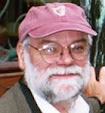
I found out yesterday, from Jane Ely Williams, that Gary Czyzynski died a couple years ago (July 23, 2014) on his ranch near Sheridan, Wyoming. As I understand it, Gary went out to do some chores on his ranch and never came back. At some point his wife went out looking for him, and found Gary dehydrated and close to death. Gary died soon after that, either at home or in the hospital. [Jane Williams has recently told me that I have the story of Gary's death wrong. I'll try to get the facts right and then I'll correct this blog post.]
I located an obituary for Gary. Click this link: Gary Czyzynski obituary. The obit has a photo of him. The only photo I would have of Gary is from our 1966 St. Joe's yearbook, when he was about 17-18 years old. Like most things of my childhood and growing up years, there are absolutely no photos. Back then we just lived our lives; we didn't live them at a distance via social media or photography.
Gary went to St. William's grade school with me and St. Joseph's High School. He was from a very Polish family and lived in my neighborhood. Gary lived on Drakefield Avenue, maybe 1/4 mile from me. I remember he had a sister, Gayle. And I remember his mother and father. I was once told that his Dad worked on a crane at a junkyard and was from a gigantic family--maybe 20 children. Now Gary was an exaggerator and a mythologizer, a lot like me. So whether this "20 children" number is exactly true, I don't know. Let's say Gary's Dad was from a large family. Also, I remember Gary's Mom very well, very fondly.
Gary was energetic and fun. And he was a pretty good athlete, especially at football. He and I were ferocious competitors, almost always on opposing teams. This was a kind of informal sandlot football, played at Upson School or Mudville (Willow Playground). Occasionally we would play at other places--I remember a particularly bloody game at Memorial Park in Euclid. Gary and I would both play running back and he would end up tackling me and I would end up tackling him. It was a tough, bruising game--and we loved it. For a couple years Gary and I played Muny Football for the Northeast Warriors. We'd practice at Humphrey Field, across from Euclid Beach, and play our games throughout Cleveland.
There was a kind of loose gang around Gary that involved Jay Neidermeyer, Jim Allsip, and about 10 other guys off and on (Jim Turner, Pat Quinn, Wayne Starkey, Tim Homan, Dale Kovatch, many others). For a while we would hang out in front of Upson Delicatessen or "Uncle Willy's" little grocery store, next to Upson Drugs. Nobody remembers the real name of that store or the proprietor, but Gary, who was a fun mythologizer and storyteller, called him "Uncle Willy." I have a vague memory of Gary or another one of the guys stealing a bottle of Boone's Farm Wine from Uncle Willy's store--and drinking it in Jim Turner's garage on Shoreview Avenue. A little time in Purgatory for that I guess.
I remember driving to St. Joe's with Gary between 1964-66 in his old bomb of a car. One time, in bitter cold weather, Gary's car lost a wheel (or the axle broke in half) on the way to school. I remember another time Gary was driving like a maniac on the Freeway, Route 2 in Euclid. He was going about a hundred miles an hour. I was in the back seat--and terrified. I started choking Gary, demanding that he slow down. Not a great idea, but it worked. I also remember Gary eating a hamburger on a Friday at the McDonald's on Lake Shore Boulevard, across from Villa Angela Academy. I was absolutely shocked that he as a Catholic was eating meat on a Friday! I thought Gary had committed a mortal sin--ha ha.
Gary Czyzynski was full of life and fun. He was a great competitor, a great football player. I didn't see him much after high school, but I thought of him often. The world will miss the Great "Sazz."
Showing posts with label growing up in Euclid. Show all posts
Showing posts with label growing up in Euclid. Show all posts
Thursday, February 2, 2017


Monday, July 25, 2016
My First Day of School, September 1953
Just after Labor Day in 1953, I went to school for the first time. I was enrolled in an overflow classroom of Upson School and it was located in the basement of the Lutheran Church at the corner of East 260th and Forestview Avenue in Euclid. The Baby Boom had started, and the United States was in for a dynamic growth spurt. One or two blocks south of the Lutheran Church was Upson School, a large brick edifice that had been there for ages. In one of the kindergarten classrooms in the big school was Beth Hodder, who I would meet 62 years later in West Glacier, Montana--the front door to Glacier National Park. Beth was my age and was also a Euclid native. At some point she found her way out West, married a forest ranger, Al Koss, and made her life in the mountains and forests of the American West. When I met Beth, she was hawking her children's book, set in the Bob Marshall Wilderness--exactly where my daughter Carolan worked. Beth's book is The Ghost of Shafer Meadows. And ironically, Carolan has also written a book set in this same Wilderness, authored with her cousin Megan Sanders Hartfelder, called "The Great Bear Surprise" (available on Amazon, Carolan and Megan's book).
My Mom walked me north on East 266 Street that morning to Oriole Avenue, then down Oriole to East 260th and the Lutheran Church, 8/10s of a mile. She gave me a little kiss and said goodbye and good luck--and then she left, never to walk me to or from school again--it just wasn't done much back then. Our family had one car, which my Dad drove to work, and Mom was at home with Denny, who was three years old, and baby Mary Ellen.
I was struck in that first hour of kindergarten by the fact that a couple of children were crying. I thought, "What babies!" Soon, school started--and I loved it. We might have had 12-15 kids in our class (which would contrast with my years at St. William's School, when we had 50-60 in a classroom in my early years). The teacher's name was Mrs. Ockunzi (I bet that spelling is off). I remember some of the kids in class--Billy O'Neal, a great and happy guy; Joanne (can't remember her last name, but she had carrot-red hair and lived in the F & S homes); Bob Ernst and Barbara S, who went to St. William's with me for 8 years. If I had the class photo in front of me, I could identify others.
I remember kindergarten as great fun: we had a band, and I got to play the triangle; we did finger painting; we sang and marched; and we even took a little nap. At the end of that first day, I walked the 8/10s of a mile back home by myself. I had just turned five. Now days, a National Guard battalion would accompany the kid home. That was not our world in Euclid in 1953!
My Mom walked me north on East 266 Street that morning to Oriole Avenue, then down Oriole to East 260th and the Lutheran Church, 8/10s of a mile. She gave me a little kiss and said goodbye and good luck--and then she left, never to walk me to or from school again--it just wasn't done much back then. Our family had one car, which my Dad drove to work, and Mom was at home with Denny, who was three years old, and baby Mary Ellen.
I was struck in that first hour of kindergarten by the fact that a couple of children were crying. I thought, "What babies!" Soon, school started--and I loved it. We might have had 12-15 kids in our class (which would contrast with my years at St. William's School, when we had 50-60 in a classroom in my early years). The teacher's name was Mrs. Ockunzi (I bet that spelling is off). I remember some of the kids in class--Billy O'Neal, a great and happy guy; Joanne (can't remember her last name, but she had carrot-red hair and lived in the F & S homes); Bob Ernst and Barbara S, who went to St. William's with me for 8 years. If I had the class photo in front of me, I could identify others.
I remember kindergarten as great fun: we had a band, and I got to play the triangle; we did finger painting; we sang and marched; and we even took a little nap. At the end of that first day, I walked the 8/10s of a mile back home by myself. I had just turned five. Now days, a National Guard battalion would accompany the kid home. That was not our world in Euclid in 1953!
Wednesday, June 22, 2016
Where Have All the Catholics Gone?
Catholics have been leaving the Church in droves for a long time now. At a recent mass at my parish church, St. Mary's in Painesville, Ohio, I asked my wife why the pews are so empty. It's like that almost everywhere we go (except last Sunday at the outdoor mass at Our Lady of Lourdes Shrine in Euclid, Ohio, where we attend mass in the summertime). This is such a contrast with church attendance in my childhood.
At St. William's in Euclid in the 1950s and 1960s, there were so many masses: 5:45 AM, 7:00, 8:15, 9:30, 11:00, and 12:15 PM. Later there was a Saturday mass and a Sunday evening mass. The church was so overflowing that there were two basement masses at the same time mass was held in the main church. And Catholics came to church no matter the weather (and I still do!). Even in bitter cold and snow the church would be full. Often people were standing in the aisles and in the back of the church.
So many things have happened in the past 50-60 years that have undermined the authority of the church. The sexual abuse of children, mostly by priests and religious brothers (really a very very small minority of religious--who have done enormous and lasting damage); physical and emotional abuse by some nuns in Catholic schools (again, just a handful were abusive, but I saw the beaqtings with my own eyes); changing conceptions of serious sin (we thought we'd go to hell for missing mass--no kidding).
There are other reasons--no one thing can explain the decline in church attendance. In many ways, the church has failed parishioners. Catholics have put up with bad liturgy and very bad homilies for the longest time--but now people are voting with their feet.
Secular society is often blamed for the decline of the Church. There may be truth in that idea, but I think it's mostly an excuse. Somehow the Church hasn't addressed the wants and needs of people for meaning. Personally, the over-focus on certain sins and the lack of focus on social justice has alienated me from some churches (that's why 10 years ago or so we left our Church in Chardon and started attending St. Mary's in Painesville. The first time there they mentioned their prison ministry, their work with the homeless and hungry, their work with Latino refugees and immigrants--and I was hooked. Four years ago we started actively participating in the Karpos Ministry to the Homeless and Hungry. This cemented our commitment to St. Mary's. We still put up with a lot of poor liturgies and homilies. But we have outstanding music and a vibrant parish life.
People want a deep engagement with the Truth, with the Corporal and Spiritual Works of Mercy. Our Catholic Churches have to offer this to people. We have to stop being so judgmental about divorce, about birth control. Sometimes the church needs to listen to the voice of the people. We have to give women a much bigger role. I still don't understand the arguments against women in the priesthood. I believe that will change some day, and we'll look back on the old days like we look back on slavery now.
One thing people don't realize is how much will be lost by abandoning the Church. Centuries, millennia, of culture, wisdom, goodness. That can't be replaced by things, by pop culture, by technology. Please don't abandon the Church. Instead, try to make it better. And to the Church: don't abandon the people! Make changes, and do it quickly before another generation of Catholics is lost.
At St. William's in Euclid in the 1950s and 1960s, there were so many masses: 5:45 AM, 7:00, 8:15, 9:30, 11:00, and 12:15 PM. Later there was a Saturday mass and a Sunday evening mass. The church was so overflowing that there were two basement masses at the same time mass was held in the main church. And Catholics came to church no matter the weather (and I still do!). Even in bitter cold and snow the church would be full. Often people were standing in the aisles and in the back of the church.
So many things have happened in the past 50-60 years that have undermined the authority of the church. The sexual abuse of children, mostly by priests and religious brothers (really a very very small minority of religious--who have done enormous and lasting damage); physical and emotional abuse by some nuns in Catholic schools (again, just a handful were abusive, but I saw the beaqtings with my own eyes); changing conceptions of serious sin (we thought we'd go to hell for missing mass--no kidding).
There are other reasons--no one thing can explain the decline in church attendance. In many ways, the church has failed parishioners. Catholics have put up with bad liturgy and very bad homilies for the longest time--but now people are voting with their feet.
Secular society is often blamed for the decline of the Church. There may be truth in that idea, but I think it's mostly an excuse. Somehow the Church hasn't addressed the wants and needs of people for meaning. Personally, the over-focus on certain sins and the lack of focus on social justice has alienated me from some churches (that's why 10 years ago or so we left our Church in Chardon and started attending St. Mary's in Painesville. The first time there they mentioned their prison ministry, their work with the homeless and hungry, their work with Latino refugees and immigrants--and I was hooked. Four years ago we started actively participating in the Karpos Ministry to the Homeless and Hungry. This cemented our commitment to St. Mary's. We still put up with a lot of poor liturgies and homilies. But we have outstanding music and a vibrant parish life.
People want a deep engagement with the Truth, with the Corporal and Spiritual Works of Mercy. Our Catholic Churches have to offer this to people. We have to stop being so judgmental about divorce, about birth control. Sometimes the church needs to listen to the voice of the people. We have to give women a much bigger role. I still don't understand the arguments against women in the priesthood. I believe that will change some day, and we'll look back on the old days like we look back on slavery now.
One thing people don't realize is how much will be lost by abandoning the Church. Centuries, millennia, of culture, wisdom, goodness. That can't be replaced by things, by pop culture, by technology. Please don't abandon the Church. Instead, try to make it better. And to the Church: don't abandon the people! Make changes, and do it quickly before another generation of Catholics is lost.
Tuesday, June 21, 2016
A Poem about Mentor Headlands in the Summer of 1964
Lucky (Stones) at Mentor Headlands (1964)
Got my driver’s license a week after June 11th,
borrowed Dad’s ‘59 Pontiac Catalina, big as an ocean liner,
and headed down Lake Shore Boulevard to Headlands.
The drive in mid June is wonderful, windows down,
“Cathy’s Clown” blaring from WIXY 1260,
Everly Brother’s in their perfect blood harmony.
My brother Denny and my buddies are singing raucously along.
We think we’re big deals, going into junior year of high school,
hormones boiling, but a Catholic straightjacket firmly over everything.
We get to Corduroy Road, then north past the Marsh
and east to the park. Hundreds, maybe thousands of cars
parked there, the hottest day of the year.
We hit the broad beach, burning like coals,
and hot-foot it across the sand towards the lake.
Half-naked bodies everywhere. We’re not in Catholic school any more!
The smell the wonderful smell everywhere, sweat and tanning lotion,
coconut, Coppertone, and towels cheek to jowl on the sand.
Transistor radios, tuned to WIXY and WHK, “color radio,” whatever that means!
We run into the lake, and the contrast with the sand is astonishing!
The lake is freezing cold, the sand too hot! But we are 16
and don’t give a good goddamn. We are 16,
Walk the beach toward the Fairport Lighthouse,
pick up luckystones and polished beach glass,
wish the impossible, that we could get lucky,
with the beautiful girls sunning on the beach!
The music is changing this year, Gerry and the Pacemakers,
Peter and Gordon, “Love Me Do,” side by side
with “Chapel of Love” and “Girl from Ipanema.”
Headlands is no Ipanema, Mentor no Rio de Janeiro,
but we are 16, Kings of the Beach, and happy to be here!
[Bob Coughlin / April 3, 2014]
Friday, March 25, 2016
Good Friday at the Euclid Lourdes Shrine
One of the most beautiful and holiest places in Euclid is the Shrine of Our Lady of Lourdes, off Chardon Road (U.S. Route 6), on a hill above Euclid Avenue. From the Shrine you can see all the way to Lake Erie, about 3-4 miles north. We attend mass at the Shrine in the summer and visit it periodically throughout the year, and always on Good Friday. The Grotto is made from Euclid Bluestone, quarried 2 miles away along Euclid Creek (my Great Grandfather Fenton Fitzpatrick worked there when he arrived from Ireland).
 |
| The replica Grotto of Lourdes in Euclid. |
 |
| Statue of Mary at the Grotto, above the spring. |
 |
| Entrance to the Stations of the Cross. Many people were there today, Good Friday. |
Tuesday, March 22, 2016
What Lent and Holy Week Meant to me as a Kid
Parce Domine! Parce
Populo Tuo! Ne in aeternum irascaris nobis! This was the Latin antiphon we
would sing at St. William’s Church in Euclid during Holy Week when I was growing
up in the 1950s and 1960s. The tune was ancient Gregorian chant; the antiphon
was sung over and over, a response to a psalm reading. The effect was powerful
and hypnotic—and unforgettable.
Somehow Christmas, especially the invention of a fantasy,
commercialized Christmas, is bigger in the popular imagination; but for me as a
child and adolescent, Lent, with the passion and suffering of Jesus and our own
little personal sacrifices, was much more significant. It seems that it’s
harder to commercialize sacrifice, suffering, agonizing death, and even
Easter—the Resurrection.
The truth is that even as a kid I understood the suffering
part, but couldn’t exactly imagine the victory of the Resurrection. That I
could only grasp intellectually, not “in the deep heart’s core” (to use Yeats’
great phrase from “The Lake Isle of Innisfree”).
During Lent we would always try to give up something—and for
most people, including me for many years, it was candy. But one year I promised
to make the Stations of the Cross (i.e., say a prayer and meditate at each of
the 14 stations of the cross) every day. It went well for about two weeks and
then I missed a day. In my scrupulous mind, this was a great mistake, and I
promised Jesus that I would say ten Stations of the Cross for every one I
missed. And then I missed again, and multiplied my promise to Jesus—and now I
was in debt for 100 Stations for every one missed. Pretty soon, my debt began
to multiply geometrically, and I finally gave up—owing the Lord thousands,
maybe tens of thousands of Stations. I tell you I am hopelessly in debt to the
Lord, and there’s no paying it back! It was a lesson in my own fallibility, my
own flawed will—and maybe, the mercy of God. It took a long time to grow out of
my over-religiosity, my scrupulousness.
For some reason, my inner spirit is still deeply religious,
but no longer in an orthodox or conventional way. Lent, and Holy Week, still
speaks to my soul, my Spirit. With the aching earth and its Creation, I can
still sing that ancient Latin antiphon, “Parce,
Domine!” Save, O Lord! Parce Populo Tuo!
Save your people! Ne in aeternum,
irascaris nobis. Don’t be angry at us forever.
Wednesday, April 1, 2015
Holy Week Tugs at the Heart Strings
This is Holy Week 2015 and my memory is going crazy, pulling up things from my childhood in Euclid and at St. William's Church. Memory is also calling up my many visits to the Shrine of Our Lady of Lourdes in Euclid, as well as family trips to Martin, Floyd County, Kentucky and our annual stays at the Dwelling Place Monastery with the Mt. Tabor Benedictine nuns.
An old Gregorian chant heard throughout my childhood keep running through my head: "Parce, Domine! Parce populo tuo. Ne in aeternum, irascaris nobis." In English, "Spare, O Lord! Spare your people. Be not angry with us forever!" I remember so vividly the solemn rituals of Holy Week, the cloaked crucifix and statues (covered with purple linen), the haunting rituals of Good Friday when we remember the Crucifixion, the emptiness of Holy Saturday, the joy of Easter Sunday. On Good Friday the bells rung at the Consecration were replaced with clappers. The psychological impact on me was incredible. I loved the mournful songs and chants, sung and played in minor keys. I loved that there were very few Easter songs. The popular culture couldn't figure out how to exploit Good Friday and Easter Sunday with the shameful orgy of commercialism that has become the Christmas season in America.
As a kid my Dad would take us over to the Shrine of Our Lady of Lourdes--right where Chardon Road (US Rt. 6) meets Euclid Avenue (US Rt. 20), the holiest place in Euclid. We would walk the hillside Stations of the Cross, praying at each of the 14 stations. On Friday we would keep silent from 12 Noon until 3 PM and we always expected Mother Nature to reflect the solemnity of the occasion, with cloudy skies, rain, or snow flurries. I cannot contemplate this season without thinking of Dad, Mom, my sister, and brothers at the Shrine. We took Julia, Carolan, and Emily there as they were growing up. I hope they don't forget it.
I also think of the many years we would travel, in the 1990's and early 2000's, driving from Euclid or Chardon to Floyd County, Kentucky, to see Steve and Sue Sanders and their children. Most of the time we would stay in the guest house of the Dwelling Place Monastery, home of the Mt. Tabor Benedictine nuns. These were among the most liberated Christian nuns on the planet. They finally left the umbrella of the Roman Catholic Church and became a freer ecumenical community. Holy Saturday was so special with the sisters (who absolutely loved our visits and planned activities for our girls and their cousins). They would design a beautiful ritual, which began with an outdoor bonfire, and then a candlelit procession into the chapel, set on the mountainside. A place so beautiful (and amid such ugliness and poverty) it would break your heart. The sisters there taught us to pray not just to the patriarchal God we were so familiar with, but also "Sophia," the feminine spirit of God--really, the Holy Spirit. We would laugh and joke about these prayers, but we were praying in a new and radical way--and a truthful way.
I always associate our trips to Mt. Tabor and the Sanders family with the spectacular blooms of spring, in particular the redbud trees, a riot of reds and purples, and the dogwood, with their cream-white and sometimes pinkish blossoms. These trees would limn the creeks and hillsides and announce the Resurrection of nature after a hard winter.
The last time I saw my mother-in-law, Ruth Sanders, was at the Dwelling Place Monastery. It was 2007, weeks before her sudden passing. Ruth Sanders was a force, and she has left her mark on many people, including our children. We miss her so much; may she rest in peace.
I am grateful for all these memories. I have lived them. I was there. I am a witness.
An old Gregorian chant heard throughout my childhood keep running through my head: "Parce, Domine! Parce populo tuo. Ne in aeternum, irascaris nobis." In English, "Spare, O Lord! Spare your people. Be not angry with us forever!" I remember so vividly the solemn rituals of Holy Week, the cloaked crucifix and statues (covered with purple linen), the haunting rituals of Good Friday when we remember the Crucifixion, the emptiness of Holy Saturday, the joy of Easter Sunday. On Good Friday the bells rung at the Consecration were replaced with clappers. The psychological impact on me was incredible. I loved the mournful songs and chants, sung and played in minor keys. I loved that there were very few Easter songs. The popular culture couldn't figure out how to exploit Good Friday and Easter Sunday with the shameful orgy of commercialism that has become the Christmas season in America.
As a kid my Dad would take us over to the Shrine of Our Lady of Lourdes--right where Chardon Road (US Rt. 6) meets Euclid Avenue (US Rt. 20), the holiest place in Euclid. We would walk the hillside Stations of the Cross, praying at each of the 14 stations. On Friday we would keep silent from 12 Noon until 3 PM and we always expected Mother Nature to reflect the solemnity of the occasion, with cloudy skies, rain, or snow flurries. I cannot contemplate this season without thinking of Dad, Mom, my sister, and brothers at the Shrine. We took Julia, Carolan, and Emily there as they were growing up. I hope they don't forget it.
I also think of the many years we would travel, in the 1990's and early 2000's, driving from Euclid or Chardon to Floyd County, Kentucky, to see Steve and Sue Sanders and their children. Most of the time we would stay in the guest house of the Dwelling Place Monastery, home of the Mt. Tabor Benedictine nuns. These were among the most liberated Christian nuns on the planet. They finally left the umbrella of the Roman Catholic Church and became a freer ecumenical community. Holy Saturday was so special with the sisters (who absolutely loved our visits and planned activities for our girls and their cousins). They would design a beautiful ritual, which began with an outdoor bonfire, and then a candlelit procession into the chapel, set on the mountainside. A place so beautiful (and amid such ugliness and poverty) it would break your heart. The sisters there taught us to pray not just to the patriarchal God we were so familiar with, but also "Sophia," the feminine spirit of God--really, the Holy Spirit. We would laugh and joke about these prayers, but we were praying in a new and radical way--and a truthful way.
I always associate our trips to Mt. Tabor and the Sanders family with the spectacular blooms of spring, in particular the redbud trees, a riot of reds and purples, and the dogwood, with their cream-white and sometimes pinkish blossoms. These trees would limn the creeks and hillsides and announce the Resurrection of nature after a hard winter.
The last time I saw my mother-in-law, Ruth Sanders, was at the Dwelling Place Monastery. It was 2007, weeks before her sudden passing. Ruth Sanders was a force, and she has left her mark on many people, including our children. We miss her so much; may she rest in peace.
I am grateful for all these memories. I have lived them. I was there. I am a witness.
 |
| Sisters of Mt. Tabor/Dwelling Place Monastery. |
 |
| First Floor of the Mt. Tabor Guest House, where we stayed every Easter. |
Sunday, January 4, 2015
A New Epiphany: How About Women as Priests, Bishops, Cardinals, Pope!
Today the Roman Catholic Church celebrates the great Feast of the Epiphany. Growing up, we celebrated this feast on January 6th. It was a fairly big deal in my part of Euclid, because, not only did it mark the end of the Christmas season, but it marked Little Christmas for the Byzantine Catholics at St. Stephen's Church on Lloyd Road.
In today's second reading, from St. Paul to the Ephesians, we get this revolutionary proclamation:
It was not made known to people in other generations
as it has now been revealed
to his holy apostles and prophets by the Spirit:
that the Gentiles are coheirs, members of the same body,
and copartners in the promise in Christ Jesus through the gospel.
I imagine in its day these were astonishing and difficult words for the Jews who were also followers of Jesus. It was as if Paul said aliens could also be followers of Jesus.
What we need today is a new epiphany. The word "epiphany" can mean "manifestation" or "sudden insight." The new epiphany is that women are the equal to men (how can those words even be uttered or written without the thought--"Well, duh . . . Of course!"). Of course. How can there be any genuine reason that women cannot be deacons, priests, bishops, and even pope? The old arguments, beginning with Jesus and the apostles being male, carry no weight at all! Of course 2000 years ago the world was not ready to hear that women were the equals of men. Then again, the world of Jewish-Christians or Christian-Jews (however you want to characterize these early communities) might not have been ready to hear that Gentiles could be followers of Jesus.
But this is the moment of kairos! We are ready to hear these prophetic words. We need brave men and women, with stature in the religious community, to stand up and proclaim the truth, just as St. Paul did almost 2000 years ago.
In today's second reading, from St. Paul to the Ephesians, we get this revolutionary proclamation:
It was not made known to people in other generations
as it has now been revealed
to his holy apostles and prophets by the Spirit:
that the Gentiles are coheirs, members of the same body,
and copartners in the promise in Christ Jesus through the gospel.
I imagine in its day these were astonishing and difficult words for the Jews who were also followers of Jesus. It was as if Paul said aliens could also be followers of Jesus.
What we need today is a new epiphany. The word "epiphany" can mean "manifestation" or "sudden insight." The new epiphany is that women are the equal to men (how can those words even be uttered or written without the thought--"Well, duh . . . Of course!"). Of course. How can there be any genuine reason that women cannot be deacons, priests, bishops, and even pope? The old arguments, beginning with Jesus and the apostles being male, carry no weight at all! Of course 2000 years ago the world was not ready to hear that women were the equals of men. Then again, the world of Jewish-Christians or Christian-Jews (however you want to characterize these early communities) might not have been ready to hear that Gentiles could be followers of Jesus.
But this is the moment of kairos! We are ready to hear these prophetic words. We need brave men and women, with stature in the religious community, to stand up and proclaim the truth, just as St. Paul did almost 2000 years ago.
Monday, December 29, 2014
A Memory of Christmas 1960--Euclid, Ohio
Christmas Eve of 1960--I was 12 years old, in 7th grade at St. William's School in Euclid, Ohio. In my mind, that year, plus or minus a year or two, was the end of the Medieval Era. I know history books wouldn't give such a late date for that, but in my life, the life of my family and Church, that is around the time the Medieval Era ended. Catholic masses were still in Latin; all Catholics went to church every Sunday; all Catholics abstained from meat on Fridays; we were deathly afraid of mortal sin and the possibility of spending eternity in hell. So there were many, many negative things in the atmosphere.
On the positive side, for us Irish-Catholics at least, John F. Kennedy had been elected president, Pope John XXIII was pope, and had convened the Second Vatican Council, which threw open the windows of the Church and began a desperately needed reform.
Though we didn't know it at the time, we in the United States, and the whole world, were on the cusp of change, a very new and different world--in some ways better and in some ways worse.
On Christmas Eve, around 9:30 PM, I walked from my home on East 266 Street to St. William's for Midnight Mass. As a choir boy, I had to arrive early, in Sr. Muriel's classroom on the first floor of the old building. There we did our last practice and received instructions from Sister. She was a bit tense that night, anticipating the big moment.
Shortly before midnight we lined up in the hallway and processed, in the dark, into St. William's old church (which is now a gym and bingo hall). The church was packed to the rafters, and many people stood in the aisles and in the back. Fr. John Fleming and his con-celebrants processed in, led by altar boys holding up the processional cross. We moved to the choir loft, packed in there like sardines, along with the organist and the smaller men's choir. Then, for the next hour or so, we sang gorgeous songs, in English and in Latin, music that would make the angels weep. Gloria in Excelsis Deo! "When blossoms flowered 'mid the snow" (Gesu Bambino); Venite adoremus! O come let us adore him!
And then it was over. The boys processed, very tired by now, back to the classroom; we put on our coats, and headed for home. It was snowing, and I walked the mile home by myself, in the quiet snow, at 1:30 in the morning. It was peaceful and beautiful.
The next morning, I woke about 7:30 and we opened our presents. That year I got a pair of baseball spikes as my main present. We didn't get many presents--there were five kids, and very little money to go around. Right around 8:30 AM I arrived back at Church to sing the 9:30 high mass. There was less mystery than at midnight, but the mass and songs were beautiful.
Around 11 AM I was back home. With my brothers, Denny, Kevin, and Jimmy, and my sister Mary Ellen, we played with our Christmas presents. Later Dad took us to the North Chagrin Metro Park at Squires Castle, where we went sled riding (even one-year-old Jimmy went).
The world was about to change. Around the corner was JFK's assassination, the Vietnam War, the age of transistors and then computers. On the positive side, the Civil Rights Movement, the Women's Movement, the Anti-War movement. The Church would change significantly, then slip back into old ways. The Great Mandela of Time.
On the positive side, for us Irish-Catholics at least, John F. Kennedy had been elected president, Pope John XXIII was pope, and had convened the Second Vatican Council, which threw open the windows of the Church and began a desperately needed reform.
Though we didn't know it at the time, we in the United States, and the whole world, were on the cusp of change, a very new and different world--in some ways better and in some ways worse.
On Christmas Eve, around 9:30 PM, I walked from my home on East 266 Street to St. William's for Midnight Mass. As a choir boy, I had to arrive early, in Sr. Muriel's classroom on the first floor of the old building. There we did our last practice and received instructions from Sister. She was a bit tense that night, anticipating the big moment.
Shortly before midnight we lined up in the hallway and processed, in the dark, into St. William's old church (which is now a gym and bingo hall). The church was packed to the rafters, and many people stood in the aisles and in the back. Fr. John Fleming and his con-celebrants processed in, led by altar boys holding up the processional cross. We moved to the choir loft, packed in there like sardines, along with the organist and the smaller men's choir. Then, for the next hour or so, we sang gorgeous songs, in English and in Latin, music that would make the angels weep. Gloria in Excelsis Deo! "When blossoms flowered 'mid the snow" (Gesu Bambino); Venite adoremus! O come let us adore him!
And then it was over. The boys processed, very tired by now, back to the classroom; we put on our coats, and headed for home. It was snowing, and I walked the mile home by myself, in the quiet snow, at 1:30 in the morning. It was peaceful and beautiful.
The next morning, I woke about 7:30 and we opened our presents. That year I got a pair of baseball spikes as my main present. We didn't get many presents--there were five kids, and very little money to go around. Right around 8:30 AM I arrived back at Church to sing the 9:30 high mass. There was less mystery than at midnight, but the mass and songs were beautiful.
Around 11 AM I was back home. With my brothers, Denny, Kevin, and Jimmy, and my sister Mary Ellen, we played with our Christmas presents. Later Dad took us to the North Chagrin Metro Park at Squires Castle, where we went sled riding (even one-year-old Jimmy went).
The world was about to change. Around the corner was JFK's assassination, the Vietnam War, the age of transistors and then computers. On the positive side, the Civil Rights Movement, the Women's Movement, the Anti-War movement. The Church would change significantly, then slip back into old ways. The Great Mandela of Time.
Monday, December 22, 2014
Remembering My Cousin Jack Fitzpatrick, Murdered 43 Years Ago at Higbee's Department Store, Waiting in Line with His Children to See Santa
 |
| Tommy Fitzpatrick, left, in Vietnam |
 |
| Mary Finnegan Fitzpatrick |
 |
| Jack Fitzpatrick |
Forty-three years ago yesterday, December 21, 1971, my cousin Jack Fitzpatrick was brutally murdered while waiting in line to see Santa Claus with three of his four children. His wife, Mary Finnegan Fitzpatrick, was shopping nearby with their oldest daughter. Mary was near full-term pregnant, and their fifth child, Tommy, was born after his father's murder. Tommy was named after his uncle Tom Fitzpatrick, my cousin, who was killed in Vietnam two years earlier. The tragedy for my Uncle Al and Aunt Catherine Fitzpatrick was beyond comprehension--two of their children violently killed within two years. The ripples of this killing have not ended. Our family is still terribly bruised by this tragedy.
The murderer of my cousin was Tyrone Howard. In an amazing twist of fate, Tyrone's son is one of America's most famous actors, Terrence Howard. Terrence was two years old, and was there at Higbee's, when his father murdered my cousin.
Jack Fitzpatrick was about 12 years older than me, so my memories of him are somewhat skewed by that age difference. He was a kind of hero in the family. He was the oldest Fitzpatrick grandson of my grandparents, Jack and Margaret Ann Sullivan Fitzpatrick. He had been a seminarian, studying for the priesthood for a time at Borromeo Seminary in Wickliffe, Ohio. He was the first relative to ever graduate from college--from John Carroll University. He had been an ROTC officer, if I remember correctly.
I heard the news listening to a scratchy TV news program in Cincinnati, in my Over-the-Rhine apartment. I came back to Euclid, to St. William's, for the funeral, which was held on Christmas Eve. I can't forget Mary's inconsolable keening, and the family and community's deep deep sorrow.
Mary recovered from this tragedy and lived a good life, with many friends. She did a fine job raising her children. Her children have led good lives. My Dad helped Mary and her children a lot through all of this.
The Light shines in the darkness, And the darkness has not overcome it.
Wikipedia article on Jack Fitzpatrick's murder.
Saturday, November 22, 2014
I remember November 22, 1963--The Murder of John F. Kennedy
I wrote this a few years ago and want to post it again on the 54th anniversary of the assassination of John F. Kennedy, something that still wounds me deeply:
It would be hard for anyone outside of my age, ethnic, social, and cultural context to understand how November 22, 1963, the assassination of John F. Kennedy, is etched on my soul. There is no adequate metaphor: etched, branded, tattooed. The day, the death, the memories will always be there, always be a part of me.

I think in part it's because John Kennedy, "Jack" we liked to call him, as if he were a friend of the family, it's because he represented what we longed to be. I was from a struggling, working-class Irish-Catholic family. John Kennedy came from the same roots--the exiled Irish, streaming out of famine and post-famine Ireland, where there was massive death, disease, and starvation everywhere. And then trying to find your way in a new society. By the time I was born in 1948, we had come a long way--90 years after our immigrant great grandparents came to America's shores. We had a lot of wonderful gifts: our tight Catholic religious community, our large and loving families and extended families ( I joke that my parents and I didn't have friends--we had relatives. It is the truth!). But we also had terrible problems with alcoholism, untreated anxiety and mental illness, and we faced plenty of prejudice. Very few people acknowledge that now, but it was the truth. Catholics, even in the 1950's and 1960s, were victims themselves of discrimination and prejudice (and we were full of that same vice towards others, I am sad to say). John F. Kennedy seemed like a vision to us, of what could be: he was more handsome, richer, better educated--yet full of his own problems, we later discovered, many far worse than our own ills and sins.
When I heard around 2:05 PM that November 22nd, that Black Friday, sitting in my religion class as St. Joseph High School in Cleveland--when Brother Stanley Matthews came over the PA system and told us, "Boys, he's been shot. The president has been shot," we were stunned beyond belief. It was as if my own Father had been shot. I remember how we prayed for the next half hour, when Brother Stanley came on again and said, "Boys, he's gone, he's dead. Pray for him, his family. Pray for yourselves and the world."
And that is what we did.
We, of that generation, knew a lot of terrible deaths, and we took them personally. John F. Kennedy, Martin Luther King Jr., Robert Kennedy. And then the Vietnam War, and cousins, classmates, friends getting killed: Tommy Fitzpatrick, Buddy Chasser, Steve Shields.
So I am marked by this day. I know my cousin Maggie Brock is also deeply marked. As are so many in my family, among my friends, in my generation.
Five years after John F. Kennedy's assassination, Brian Wilson and I were traveling in Greece during our spring break (we were Notre Dame students studying abroad in Austria). It was the day after Martin Luther King Jr. had been murdered. Brian and I were invited into a modest home near Matala, Crete. The man of the house wanted to show us his bouzouki and tell us of relatives in America. On the wall of his home were two pictures: Pope John XXIII, and John F. Kennedy.
Pope John would not have been his religious leader, for this man was Greek Orthodox. And JFK would not have been his president. But there it was--two heroes. Yes, we know JFK's clay feet, we know his catalogue of sins and faults. But I was inspired by him to try to make the world a better place. And his assassination on this day 51 years ago is etched indelibly into my heart.
Postscript: Pat Denny, a friend of mine, read this blog entry and sent me some of her own reflections on that fateful day. Pat was a freshman at Regina High School in South Euclid on November 22, 1963. Here is what she wrote me--I appreciate it so much!
"We were in an assembly. Principal (Sr. Mary Marthe) interrupted the program when the news was first announced. The program resumed, and later she returned and ended the program when the news of his dying came in. All our buses came earlier than usual, as I'm recalling. We all prayed the rosary all the way home from Regina to 260th bus stop in Euclid. Overwhelming sadness and grief punctuated that entire weekend, and for many days after as we followed the TV coverage. We were at such an impressionable age when it happened. Our hearts still ache when we recall it all."
It would be hard for anyone outside of my age, ethnic, social, and cultural context to understand how November 22, 1963, the assassination of John F. Kennedy, is etched on my soul. There is no adequate metaphor: etched, branded, tattooed. The day, the death, the memories will always be there, always be a part of me.
I think in part it's because John Kennedy, "Jack" we liked to call him, as if he were a friend of the family, it's because he represented what we longed to be. I was from a struggling, working-class Irish-Catholic family. John Kennedy came from the same roots--the exiled Irish, streaming out of famine and post-famine Ireland, where there was massive death, disease, and starvation everywhere. And then trying to find your way in a new society. By the time I was born in 1948, we had come a long way--90 years after our immigrant great grandparents came to America's shores. We had a lot of wonderful gifts: our tight Catholic religious community, our large and loving families and extended families ( I joke that my parents and I didn't have friends--we had relatives. It is the truth!). But we also had terrible problems with alcoholism, untreated anxiety and mental illness, and we faced plenty of prejudice. Very few people acknowledge that now, but it was the truth. Catholics, even in the 1950's and 1960s, were victims themselves of discrimination and prejudice (and we were full of that same vice towards others, I am sad to say). John F. Kennedy seemed like a vision to us, of what could be: he was more handsome, richer, better educated--yet full of his own problems, we later discovered, many far worse than our own ills and sins.
When I heard around 2:05 PM that November 22nd, that Black Friday, sitting in my religion class as St. Joseph High School in Cleveland--when Brother Stanley Matthews came over the PA system and told us, "Boys, he's been shot. The president has been shot," we were stunned beyond belief. It was as if my own Father had been shot. I remember how we prayed for the next half hour, when Brother Stanley came on again and said, "Boys, he's gone, he's dead. Pray for him, his family. Pray for yourselves and the world."
And that is what we did.
We, of that generation, knew a lot of terrible deaths, and we took them personally. John F. Kennedy, Martin Luther King Jr., Robert Kennedy. And then the Vietnam War, and cousins, classmates, friends getting killed: Tommy Fitzpatrick, Buddy Chasser, Steve Shields.
So I am marked by this day. I know my cousin Maggie Brock is also deeply marked. As are so many in my family, among my friends, in my generation.
Five years after John F. Kennedy's assassination, Brian Wilson and I were traveling in Greece during our spring break (we were Notre Dame students studying abroad in Austria). It was the day after Martin Luther King Jr. had been murdered. Brian and I were invited into a modest home near Matala, Crete. The man of the house wanted to show us his bouzouki and tell us of relatives in America. On the wall of his home were two pictures: Pope John XXIII, and John F. Kennedy.
 |
| John XXIII |
Pope John would not have been his religious leader, for this man was Greek Orthodox. And JFK would not have been his president. But there it was--two heroes. Yes, we know JFK's clay feet, we know his catalogue of sins and faults. But I was inspired by him to try to make the world a better place. And his assassination on this day 51 years ago is etched indelibly into my heart.
Postscript: Pat Denny, a friend of mine, read this blog entry and sent me some of her own reflections on that fateful day. Pat was a freshman at Regina High School in South Euclid on November 22, 1963. Here is what she wrote me--I appreciate it so much!
"We were in an assembly. Principal (Sr. Mary Marthe) interrupted the program when the news was first announced. The program resumed, and later she returned and ended the program when the news of his dying came in. All our buses came earlier than usual, as I'm recalling. We all prayed the rosary all the way home from Regina to 260th bus stop in Euclid. Overwhelming sadness and grief punctuated that entire weekend, and for many days after as we followed the TV coverage. We were at such an impressionable age when it happened. Our hearts still ache when we recall it all."
Tuesday, June 10, 2014
Part of My Family--May 1957, at Susie Brock's First Communion Party
 |
| Bobby Coughlin, age 8; Aunt Catherine Fitzpatrick; Dad, age 35 |
Every year we had another First Communion party, sometimes more than one. We had lots of cousins. These parties were great fun.
There must have been some sort of rule that in every family picture someone had to be drinking a beer. Here Dad is drinking a Carling Black Label.
Sunday, June 8, 2014
The Height of My Football Career--1957, St. William's
 |
| St. William's, Euclid, Ohio. Fall 1957. I'm in row 2, second from left. |
Saturday, June 7, 2014
Happy Birthday, Denny! A Few Poems about Our Childhood
Today is my brother Denny's Birthday--Happy Birthday, Den! To honor his birthday, a few poems about our crazy childhood:
[ Robert M. Coughlin / March
4, 2004]
[ Robert M.
Coughlin / Thanksgiving
2008]
(Bob Coughlin / October 18, 1991)
“Seventy-Seven
Sunset Strip (Snap! Snap!)”
We’d all sit there on the davenport
A Friday night in my black-and-white childhood:
Mom, me, Denny, Mary Ellen, Kevin, Baby Jimmy.
Dad was gone, working the hated 2nd Trick.
“Bobby, go down to the Deli and buy us some cokes,” Mom
said.
She hunted up a buck of change
Then Denny and I would jump on our bikes
And get the goods.
When we got home, Mary Ellen would say,
“Bobby, make us some fudge again!”
This was my calling, and I couldn’t refuse:
Cocoa, cups and cups of sugar,
Milk, a dash of salt, a teaspoon of vanilla . . . .
Seventy-Seven Sunset Strip graced the TV
(the one Dad found on a Farringdon treelawn on trash day
And fixed by replacing the plug).
We heard the song begin, Ed “Kookie” Byrnes and Connie Stevens,
Grabbed our belts to make the snap snap:
“Seventy-Seven Sunset Strip (Snap! Snap!)”—
We’d sing it over and over and over.
Then Denny would holler out, “Kookie, Kookie,
Lend me your comb.
Kookie, Kookie? (Snap! Snap!)”
Denny liked Kookie –reminded him of bad boys,
Like Elvis or Jerry Lee Lewis
Or himself!
The fudge mixture began to perk and boil
And I would stir and stir then
Drop a bit into a cup of cold water,
Waiting for it to form a soft ball.
It took forever, the watched pot, but finally it was ready,
And we started the stirring, each kid taking a turn.
We added the vanilla and a stick of butter
(This, the health food of our childhoods!)
Then beat that mixture mercilessly
With the wooden spoon till our arms ached
Until finally, voila!
It was suddenly fudge!
And we had to pour and scrape it in a hurry
Into the buttered pan.
What kind of mother lets her 5 kids spend Friday night
Drinking coke, eating fudge, and watching Kookie Byrnes?
My Mom, that beautiful 36-year-old lady.
Sometimes, as we watched our show,
She’d let us brush her long auburn hair,
And we, her brood of children,
All so in love with her,
Would sing as we brushed,
“Kookie, Kookie, lend me your comb,
Kookie, Kookie? (Snap! Snap!).”
A Poem on the Drowning of Walter J. Zylowski (July
19, 1964)
Pray for Us Now and at the Hour
July 19th, 1964, a
beautiful summer Sunday in Euclid, Ohio,
Clear skies, sun shining, mid
80s and humid,
A Lake Erie day if there ever
was one!
I had a ballgame that day at
Memorial Park—
Playing the Euclid Admirals
(we expected to get creamed!).
Dad off to Eastlake to take
care of Grandma.
The Indians in New York,
facing the great Whitey Ford.
Our secret weapon Luis Tiant
with his Vaseline ball,
His sandpaper ball, his hesitation
pitch, his endless trickery.
Our neighbor Walter Zylowski
was taking his son Buster swimming
Right down the street off
East 267th. Frank Mondok and his kids
And Walter’s daughter Jackie
were going too, aching for the cool lake.
Walter’s other son Kenny had
a big day planned, an outing to Geauga Lake Park
With his cousins and Auntie
Vicki. The little lake, the ancient wooden
Roller coasters—cotton candy
heaven.
Lake Erie was calm and the
water peaceful.
The Mondok kids and Jackie
played on the beach, Buster skipping stones
On the flat Lake. Walter was
diving off the old, half-sunken pier.
And then it was as if the
music stopped, the world stopped.
Where was Walter? Where did
he go?
Where did he go?
Maybe 10 frantic minutes later,
Denny and Buster spotted him,
Floating in 7 feet of water,
just 30 feet off the shore.
With Frank, they swam out and
dragged him in.
Back on the beach, Walter,
his red hair in a wild swirl,
His normally ruddy skin a shocking
blue,
Did not move, did not
breathe. No pulse, no nothing.
Buster and Frank started
artificial respiration; someone ran up the hillside
To call the police. Denny and
Jackie and the Mondok kids
Knelt on the beach and prayed
the Hail Mary.
The words were automatic--we
said the rosary every night of our lives--
But this time, the final
lines,
“Pray for us sinners, now
And at the hour of our death”
This time the lines were
real.
[Bob Coughlin / September
9, 2013]
Driving Home From Willoughby
After Thanksgiving Dinner at Gramma and Grampa’s,
Dad, Uncle Jack, and Grampa located a davenport or bed
For a half-hour’s nap, hypnotized by the turkey, the full
belly, the beer.
Denny and Bobby went out to the field between the Sullivan’s
and Coughlin’s,
Climbed the wild black cherry, while Mary Ellen and Kev
Played in the piles of silver and sugar maple leaves.
Mom carried Baby Jimmy on her hip, talked with Gramma,
Dried the dishes.
And then, around 7, we hopped into the old Ford,
Mom and Dad in front, 3 kids on the back seat, Kev on the
hump,
And Jim stuffed up on the shelf by the rear window
(no seat belts, no
rules in those days!).
We’d start the long drive home down Lakeshore Boulevard
Saying the rosary, Bobby leading the prayers,
The Joyful Mysteries, 5 decades of Hail Mary’s,
Sprinkled with Our
Father’s, Glory Be’s, and the Apostles Creed.
And when we finished (and
we were the fastest rosary sayers on the planet!),
We’d sing every song we knew, full-throated:
“Anchors Away My Boys,”
to “Row Row Row Your Boat,” in
rounds,
To “She’s My Darling
She’s My Daisy, She’s Cross-eyed, She’s Crazy.”
And then, after a bit of silent driving, we’d turn south
down East 266 Street and home:
By now Jimmy, Kevin, Mary Ellen asleep,
Denny and Bobby groggy,
Mom and Dad spent and quietly happy.
October in Willoughby, 1958
the two sugar maples
glisten in the crisp pure sunlight
efflorescence of yellow, orange, red
against the cloudless blue sky:
Hayes Avenue looks like heaven
Grampa rakes the leaves into a grand pile:
Denny, Mary Ellen, Bobby play king of the hill,
somersault, stuff leaves into flannel shirts
the radio is omnipresent
blaring out the Browns struggle against the Giants,
Jimmy Brown against Sam Huff
Grampa lights the pile of leaves,
a fragrance that will linger in memory
until death
Gramma calls out for dinner:
roast beef, mashed potatoes, green peas
again
the two sugar maples
glisten in the crisp pure sunlight
efflorescence of yellow, orange, red
against the cloudless blue sky:
Hayes Avenue looks like heaven
Grampa rakes the leaves into a grand pile:
Denny, Mary Ellen, Bobby play king of the hill,
somersault, stuff leaves into flannel shirts
the radio is omnipresent
blaring out the Browns struggle against the Giants,
Jimmy Brown against Sam Huff
Grampa lights the pile of leaves,
a fragrance that will linger in memory
until death
Gramma calls out for dinner:
roast beef, mashed potatoes, green peas
again
(Bob Coughlin / October 18, 1991)
Tuesday, May 20, 2014
May 20, 1956. St. William's Church. Euclid, Ohio--First Communion
Fifty-eight years ago today, I made my First Holy Communion at St. William's Church in Euclid, Ohio. The church was on East 260th Street, about 1/3 of a mile south of Lake Erie. These were the years when the World War II vets had their families, and thus the baby boom. So there were lots of us making our First Communion. Here's a wild guess on the numbers: 200-250. I was among the shortest of the kids in my class and I was paired up with Randy Wohlgemuth, 4th in line. Our pastor was Fr. John Fleming, a man gruff on the outside, with a heart of gold and great goodness about him (when my Dad was periodically unemployed, Fr. Fleming paid our utility bills!). The boys wore white shirts and ties (I probably had a clip-on bow-tie). The girls were dressed like brides, with white dresses, white gloves, and a lace veil over their heads. The image would have made the angels weep. I was 7 years old, a month short of my 8th birthday. Everybody was about that age, 7 or 8. This was the halcyon era for children in Euclid, and really all over America. We were very carefully prepared for First Communion by the Ursuline nuns and lay teachers of St. William's. One of the nuns who prepared me was Sr. Ruth Marie Behrend. I have recently come into contact with her nephew, Tim Behrend, who lives in Indonesia and has seen my blog. I believe Sr. Ruth Marie lives at the Ursuline Mother House in Pepper Pike, Ohio. My second grade teacher was Mrs. Bartrum (Bartroom?). I am grateful for these nuns and teachers.
I can't remember too many details of that mass. It must have been a solemn high mass, with glorious singing (most of it in Latin). That was in the pre-Vatican II era, so the congregation didn't participate much. Interaction between the celebrant and the altar boys would have been in Latin. The Gloria and Credo would have been sung in Latin, as would the Preface, the Sanctus, and the Agnus Dei.
I was terrified when I approached the altar rail at communion time. The thought of the living Jesus coming into my mouth in the form of unleavened bread was almost as much as I could take. I thought I would faint or die or maybe rise up into the air (no kidding!). I'm sure other kids were also confused, and in some cases scared. My cousin Tommy Fitzpatrick (who died in Vietnam 13 years later) didn't (or couldn't) swallow the host that day.
After the Communion we had a family party (all our friends were actually relatives, so we were related to everyone at the party). My grandparents and aunts and uncles came to our little house on East 266 Street, and as they arrived, they gave me a card. Inside was a dollar, sometimes two. At the end of the party, I counted up all my loot. I had $18, more money than I had ever seen. At the party the kids drank "Little Toms" and played baseball in the yard. The adults drank beer (a little wine was also available--Tommy and I sampled it), smoked their cigarettes, laughed and told stories.
That was my big day, 58 years ago today. The happiest day of my life.
The photo above was taken two years later, at my brother Denny's First Communion. The same folks would have been at my First Communion on May 20, 1956. Some of the people shown above: Jerry Fitzpatrick, Kay Coughlin, Grandma Cora Coughlin, Bill Coughlin, Bernice Coughlin Potter, Bill Brock, Grampa Connie Coughlin, Howard Classen, Jack Coughlin, Catherine Fitzpatrick, Maggie Brock, Julia Fitzpatrick Brock. Denny Coughlin is in front of Grampa Coughlin. Jill Potter Charske is in front of Grandma Cora. Annie Potter Anderson is obscured, just to the right of Denny Coughlin. I think Sheila Fitzpatrick is the woman in front, kneeling down. Jeannie Coughlin Struna might be in front of Kay Coughlin and just to the right of Jerry Fitzpatrick
I can't remember too many details of that mass. It must have been a solemn high mass, with glorious singing (most of it in Latin). That was in the pre-Vatican II era, so the congregation didn't participate much. Interaction between the celebrant and the altar boys would have been in Latin. The Gloria and Credo would have been sung in Latin, as would the Preface, the Sanctus, and the Agnus Dei.
I was terrified when I approached the altar rail at communion time. The thought of the living Jesus coming into my mouth in the form of unleavened bread was almost as much as I could take. I thought I would faint or die or maybe rise up into the air (no kidding!). I'm sure other kids were also confused, and in some cases scared. My cousin Tommy Fitzpatrick (who died in Vietnam 13 years later) didn't (or couldn't) swallow the host that day.
After the Communion we had a family party (all our friends were actually relatives, so we were related to everyone at the party). My grandparents and aunts and uncles came to our little house on East 266 Street, and as they arrived, they gave me a card. Inside was a dollar, sometimes two. At the end of the party, I counted up all my loot. I had $18, more money than I had ever seen. At the party the kids drank "Little Toms" and played baseball in the yard. The adults drank beer (a little wine was also available--Tommy and I sampled it), smoked their cigarettes, laughed and told stories.
That was my big day, 58 years ago today. The happiest day of my life.
 |
| May 1958--Denny's First Communion. Euclid, Ohio. |
Thursday, March 6, 2014
An Unfinished Poem from Years Ago: Lent in Euclid, 1958
Today I found an unfinished poem, abandoned by me many years ago. But there are some things in it that I like and I plan to work on it some more. The poem briefly gets into what Lent was like in Euclid (and Eastlake) in the 1950s. Brief trips here to the Harbor Bar in Eastlake and to St. Patrick's Day in Cleveland, as well as St. William's Church in Euclid. By the way, the fish fries around here featured "Blue Pike." That fish is now extinct!
St. Patrick’s Day was not
Lent either.
Lent in Euclid, 1958 draft 1(work in progress)
I believed every word the nuns and priests said,
Probably more than old Father Fleming,
Who probably smiled at the theatrics of the rituals.
For me every word pointed straight to Heaven or Hell
And I wouldn't have been surprised if Jesus just appeared
And took me direct to my eternal award—
Or punishment.
In our family, Sunday was not Lent—
Whether that was official doctrine I don’t know—
There were no dietary rules that day,
Except for the Communion Fast.
And Friday was no Day of Atonement.
After the grim ritual of the Stations of the Cross,
My family would head to the Harbor Bar in Eastlake
For a delicious meal of Blue Pike filets, French fries,
And Leisy Light for the adults.
It was a Holy Day of Opportunity,
And we took advantage!
Yes indeed, Lent was a big deal for Catholics back in the 1950s and 1960s (and remains so for many today). There was a regime for fasting and abstinence throughout Lent. On Fridays you could not eat meat. Period. Nobody did! and I vividly remember when Gary Czyzynski broke this rule around 1964 at the McDonald's across from Villa Angela Academy and Euclid Beach. Gary ate a hamburger (15 cents was the price back then) and for that 15 cent hamburger, I thought that Gary was going to burn in hell. Also, adults had to eat small meals and abstain from eating between meals. Children normally gave up something for Lent, like candy. Another thing that we did was attending lots of church services, from the Stations of the Cross, to Benediction services, to the incredible Holy Thursday and Good Friday services. Good Friday was flat-out scary! My recollection is that there was no music, and all statues were covered with purple cloth. I even remember that instead of ringing bells at certain times in the mass, they used wooden clappers (called a crotalus). That's how I remember it; I wish I knew if these memories were accurate. Lent was a big frickin' deal back then!
Yes indeed, Lent was a big deal for Catholics back in the 1950s and 1960s (and remains so for many today). There was a regime for fasting and abstinence throughout Lent. On Fridays you could not eat meat. Period. Nobody did! and I vividly remember when Gary Czyzynski broke this rule around 1964 at the McDonald's across from Villa Angela Academy and Euclid Beach. Gary ate a hamburger (15 cents was the price back then) and for that 15 cent hamburger, I thought that Gary was going to burn in hell. Also, adults had to eat small meals and abstain from eating between meals. Children normally gave up something for Lent, like candy. Another thing that we did was attending lots of church services, from the Stations of the Cross, to Benediction services, to the incredible Holy Thursday and Good Friday services. Good Friday was flat-out scary! My recollection is that there was no music, and all statues were covered with purple cloth. I even remember that instead of ringing bells at certain times in the mass, they used wooden clappers (called a crotalus). That's how I remember it; I wish I knew if these memories were accurate. Lent was a big frickin' deal back then!
 |
| Clapper ("crotalus") used on Holy Thursday |
Subscribe to:
Posts (Atom)