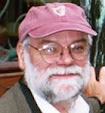
Forgive me for not posting blog entries lately. I apparently have a fierce and inexplicable case of writer's block. But I did want to write a brief post today on Martin Luther King, Jr. A few years ago I wrote a piece in this blog on what I was doing the day MLK was murdered. What was left out of that posting was the impact of MLK on me--and on the world.
I was just becoming awake to the world when Martin Luther King, Jr. was murdered on April 4, 1968. I was a 19-year-old college sophomore studying for the year in Salzburg and Innsbruck, Austria. That year in Europe put America in a different light for me. Europeans were very aware and concerned about the poverty and racism in America. And they seemed very worried about and opposed to the Vietnam War. I should have cared more about these issues, but I guess I was still somewhat insulated from them. I grew up in Euclid, Ohio. During my high school years, Euclid had a population of some 70,000 people, none of whom, as far as I knew, were Black. The Vietnam war had affected Euclid, but even that didn't penetrate my consciousness much--even though a St. William's and St. Joe's classmate, Raymond "Buddy" Chasser, had been killed in Vietnam. A year after MLK was murdered in Memphis, my own cousin, Tommy Fitzpatrick (again, of Euclid, St. William's, St. Joe's, and Euclid High School), was killed in Vietnam. So I quickly woke up, with all these deaths, riots, and war all around us.
MLK's murder left me bewildered, and eventually led to my study of nonviolence, my own fight against racism (which continues!), and my involvement in both the Civil Rights movement, the protests against the Vietnam War, and, indeed, resistance to war in general. After college, I moved to Cincinnati and roomed with Chris Cotter in the poor Over-the-Rhine neighborhood. We both studied nonviolence, learned about poverty first-hand, and met many courageous people involved in both the Civil Rights movement and the movement to nonviolently resist war and the tools of war. That's when Chris and I met Marion and Ernest Bromley, Juanita and Wally Nelson, and Maurice McCrackin--and later, Dorothy Day. And we met a lot of Peacemakers and Catholic Workers--Peggy Scherer, Greg Haas, Henry Scott, John Luginbill, Kenny Przybylski, Dan Bromley, Richard Gale, Tim Jenkins, Chuck Matthei--and so many others. In Chris Cotter's last two years at Notre Dame, he was in the Peace Studies Program, working with great teachers like Jim Douglass, Charles McCarthy, John Howard Yoder, and many others. I got to meet Jim Douglass and Charles McCarthy--and I know Emmanuel Charles McCarthy, now a Melkite-rite Catholic priest, is still a profound influence on Chris and my friend Tim Musser (and really hundreds and hundreds of other people).
Some years after leaving Cincinnati, I decided to write a biography of Rev. Maurice McCrackin, the great peace and Civil Rights activist. I soon teamed up with Judith Bechtel (now Judith Blackburn), and were able to publish a bio of Mac through Temple University Press in 1991 (a 2nd edition is still for sale on Amazon.com)--Building the Beloved Community: Maurice McCrackin's Life for Peace and Civil Rights. Daniel Berrigan, SJ, wrote a foreword to our biography.
All of that was thanks to Martin Luther King, and yes, to his death, which opened up my eyes to the evil in the world and what could be done about it.
Of course this is only part of the story and omits the influence of people I encountered in Berea, Kentucky, like Mike and Peggy Rivage-Seul, Guy and Peggy Patrick, Anne Weatherford, and many more. And the marvelous people I have met, and still work with in Painesville and Cleveland, Ohio--like Kathy Flora, Dan and Kathy Philipps, Brian Rice, and many many more. Not to mention the impact of my wife Linda and my daughters, Julia, Carolan, and Emily.
There are many courageous allies out there. Martin Luther King, Jr. once said, "The arc of the moral universe is long, but it bends toward justice." There's work to be done, there are allies out there, and "we shall not be moved" by the forces of hatred and despair.
Showing posts with label Martin Luther King. Show all posts
Showing posts with label Martin Luther King. Show all posts
Wednesday, April 4, 2018


Wednesday, April 8, 2015
Remembering April 4, 1968--When Martin Luther King Was Murdered
The day after Martin Luther King Jr. was killed, April 5, 1968, I was riding in a truck across the island of Crete. I was hitchhiking with a girl we met on the ferry boat sailing from Athens to Iraklion, a guitar, and my buddy Brian Wilson. Having a guitar was a great way to hitchhike--it offered instant entree. Having two guys, a girl, and a guitar--that was a little tougher.
On the ferryboat Brian and I met an American girl--I think we were the only Americans aboard that trip. Turned out this girl was from Eastlake, Ohio. I knew of her father's clothing store at E.222nd Street in Euclid. I even knew one of her cousins.
When we got off the ferry boat in Iraklion, we hitched a ride on a tiny motor scooter (well one of us did) and then got to the main road that crossed the island. Our destination was Matala, the tiniest of villages, on the southern coast of the island. Hitchhiking was tough because there was almost no traffic. Almost no one owned a car. We finally got a ride in a dump truck. The Eastlake girl and I (and the guitar) got in the front seat with the driver. Brian wanted to ride up on the load of gravel--a dangerous and uncomfortable position for him. While we were driving, we tried to communicate with the driver, but it was difficult. We only knew a few phrases of Greek, and he knew just a little English. He did know some German, so between these three languages he told us of the assassination of Martin Luther King. Still, I could hardly believe what I heard, and it would be hours more before King's murder was confirmed for us.
On that trip across Crete, we stopped at an archaeological site (very famous, very important, unbeknownst to us) called Phaistos.
We spent some time looking around the site, and then proceeded to the long walk to the village of Matala. On the way there, a man saw Brian carrying his guitar and invited us into his house. He wanted to show us his bouzouki, a spectacular instrument that must have cost the equivalent of weeks of work. We got to meet his entire family, and we took this beautiful photo with his three children. What a blessing to be invited into this home!
From here we walked to Matala. There was a dusty road, with absolutely no traffic. I'm guessing we walked a couple of hours, finally arriving at the tiny village on a blue cove on the Mediterranean Sea. Either side of the cove was lined with cliffs, and in the cliffs were carved-out caves--which, we assumed, were once used for burials. We found an empty cave and lived in it for a week.
On the ferryboat Brian and I met an American girl--I think we were the only Americans aboard that trip. Turned out this girl was from Eastlake, Ohio. I knew of her father's clothing store at E.222nd Street in Euclid. I even knew one of her cousins.
When we got off the ferry boat in Iraklion, we hitched a ride on a tiny motor scooter (well one of us did) and then got to the main road that crossed the island. Our destination was Matala, the tiniest of villages, on the southern coast of the island. Hitchhiking was tough because there was almost no traffic. Almost no one owned a car. We finally got a ride in a dump truck. The Eastlake girl and I (and the guitar) got in the front seat with the driver. Brian wanted to ride up on the load of gravel--a dangerous and uncomfortable position for him. While we were driving, we tried to communicate with the driver, but it was difficult. We only knew a few phrases of Greek, and he knew just a little English. He did know some German, so between these three languages he told us of the assassination of Martin Luther King. Still, I could hardly believe what I heard, and it would be hours more before King's murder was confirmed for us.
On that trip across Crete, we stopped at an archaeological site (very famous, very important, unbeknownst to us) called Phaistos.
 |
| Image of Phaistos, found in Wikipedia |
We spent some time looking around the site, and then proceeded to the long walk to the village of Matala. On the way there, a man saw Brian carrying his guitar and invited us into his house. He wanted to show us his bouzouki, a spectacular instrument that must have cost the equivalent of weeks of work. We got to meet his entire family, and we took this beautiful photo with his three children. What a blessing to be invited into this home!
 |
| Matala, Crete family--circa April 5, 1968 (this might have been closer to Pitsidia than Matala) |
 |
| A view of one of Matala's cliffs, with caves. [WWW.visitMatala.com] |
A year or two later Joni Mitchell came to Matala. She wrote a beautiful song about the village and the "Mermaid Cafe" and the local wine and a boy named "Carey." I'll try to find a Youtube version of that:
So that was the day we learned Martin Luther King died. While in Crete, we had no news, no telephone, nothing, So we didn't have any sense of how America exploded after the assassination.
Postscript. I had a couple more memories of that visit to Matala and Crete I thought I'd mention. When Brian Wilson and I were walking to Matala, we passed through a little village where we saw people dining outside. I noticed they were eating escargot--snails. That was the first time in my life I saw people eating that! I'm guessing this was the village of Pitsidia. Maybe that's the town where we met the Greek family seen in the photo above.
Here's another strange memory. As we were hitchhiking back to Iraklion, an army convoy drove by us, then stopped and told us to get into the troop truck. We got in, with our guitar and backpacks. About 20 soldiers sat stiffly inside the truck, not speaking to us. Then, a few minutes later, someone in charge, maybe a sergeant or an officer, ordered us to get out of the truck. We had no idea what was going on. I do remember seeing the soldiers' weapons during this incident, but I wasn't really afraid. About a week later, in the Northern Italian (German-speaking) town of Bolzano, I was searched by an Italian federal policeman, a "carabinieri," with his machine gun pointed at me. Again, that ended without an actual arrest and with no violence.
Postscript. I had a couple more memories of that visit to Matala and Crete I thought I'd mention. When Brian Wilson and I were walking to Matala, we passed through a little village where we saw people dining outside. I noticed they were eating escargot--snails. That was the first time in my life I saw people eating that! I'm guessing this was the village of Pitsidia. Maybe that's the town where we met the Greek family seen in the photo above.
Here's another strange memory. As we were hitchhiking back to Iraklion, an army convoy drove by us, then stopped and told us to get into the troop truck. We got in, with our guitar and backpacks. About 20 soldiers sat stiffly inside the truck, not speaking to us. Then, a few minutes later, someone in charge, maybe a sergeant or an officer, ordered us to get out of the truck. We had no idea what was going on. I do remember seeing the soldiers' weapons during this incident, but I wasn't really afraid. About a week later, in the Northern Italian (German-speaking) town of Bolzano, I was searched by an Italian federal policeman, a "carabinieri," with his machine gun pointed at me. Again, that ended without an actual arrest and with no violence.
Saturday, November 22, 2014
I remember November 22, 1963--The Murder of John F. Kennedy
I wrote this a few years ago and want to post it again on the 54th anniversary of the assassination of John F. Kennedy, something that still wounds me deeply:
It would be hard for anyone outside of my age, ethnic, social, and cultural context to understand how November 22, 1963, the assassination of John F. Kennedy, is etched on my soul. There is no adequate metaphor: etched, branded, tattooed. The day, the death, the memories will always be there, always be a part of me.

I think in part it's because John Kennedy, "Jack" we liked to call him, as if he were a friend of the family, it's because he represented what we longed to be. I was from a struggling, working-class Irish-Catholic family. John Kennedy came from the same roots--the exiled Irish, streaming out of famine and post-famine Ireland, where there was massive death, disease, and starvation everywhere. And then trying to find your way in a new society. By the time I was born in 1948, we had come a long way--90 years after our immigrant great grandparents came to America's shores. We had a lot of wonderful gifts: our tight Catholic religious community, our large and loving families and extended families ( I joke that my parents and I didn't have friends--we had relatives. It is the truth!). But we also had terrible problems with alcoholism, untreated anxiety and mental illness, and we faced plenty of prejudice. Very few people acknowledge that now, but it was the truth. Catholics, even in the 1950's and 1960s, were victims themselves of discrimination and prejudice (and we were full of that same vice towards others, I am sad to say). John F. Kennedy seemed like a vision to us, of what could be: he was more handsome, richer, better educated--yet full of his own problems, we later discovered, many far worse than our own ills and sins.
When I heard around 2:05 PM that November 22nd, that Black Friday, sitting in my religion class as St. Joseph High School in Cleveland--when Brother Stanley Matthews came over the PA system and told us, "Boys, he's been shot. The president has been shot," we were stunned beyond belief. It was as if my own Father had been shot. I remember how we prayed for the next half hour, when Brother Stanley came on again and said, "Boys, he's gone, he's dead. Pray for him, his family. Pray for yourselves and the world."
And that is what we did.
We, of that generation, knew a lot of terrible deaths, and we took them personally. John F. Kennedy, Martin Luther King Jr., Robert Kennedy. And then the Vietnam War, and cousins, classmates, friends getting killed: Tommy Fitzpatrick, Buddy Chasser, Steve Shields.
So I am marked by this day. I know my cousin Maggie Brock is also deeply marked. As are so many in my family, among my friends, in my generation.
Five years after John F. Kennedy's assassination, Brian Wilson and I were traveling in Greece during our spring break (we were Notre Dame students studying abroad in Austria). It was the day after Martin Luther King Jr. had been murdered. Brian and I were invited into a modest home near Matala, Crete. The man of the house wanted to show us his bouzouki and tell us of relatives in America. On the wall of his home were two pictures: Pope John XXIII, and John F. Kennedy.
Pope John would not have been his religious leader, for this man was Greek Orthodox. And JFK would not have been his president. But there it was--two heroes. Yes, we know JFK's clay feet, we know his catalogue of sins and faults. But I was inspired by him to try to make the world a better place. And his assassination on this day 51 years ago is etched indelibly into my heart.
Postscript: Pat Denny, a friend of mine, read this blog entry and sent me some of her own reflections on that fateful day. Pat was a freshman at Regina High School in South Euclid on November 22, 1963. Here is what she wrote me--I appreciate it so much!
"We were in an assembly. Principal (Sr. Mary Marthe) interrupted the program when the news was first announced. The program resumed, and later she returned and ended the program when the news of his dying came in. All our buses came earlier than usual, as I'm recalling. We all prayed the rosary all the way home from Regina to 260th bus stop in Euclid. Overwhelming sadness and grief punctuated that entire weekend, and for many days after as we followed the TV coverage. We were at such an impressionable age when it happened. Our hearts still ache when we recall it all."
It would be hard for anyone outside of my age, ethnic, social, and cultural context to understand how November 22, 1963, the assassination of John F. Kennedy, is etched on my soul. There is no adequate metaphor: etched, branded, tattooed. The day, the death, the memories will always be there, always be a part of me.
I think in part it's because John Kennedy, "Jack" we liked to call him, as if he were a friend of the family, it's because he represented what we longed to be. I was from a struggling, working-class Irish-Catholic family. John Kennedy came from the same roots--the exiled Irish, streaming out of famine and post-famine Ireland, where there was massive death, disease, and starvation everywhere. And then trying to find your way in a new society. By the time I was born in 1948, we had come a long way--90 years after our immigrant great grandparents came to America's shores. We had a lot of wonderful gifts: our tight Catholic religious community, our large and loving families and extended families ( I joke that my parents and I didn't have friends--we had relatives. It is the truth!). But we also had terrible problems with alcoholism, untreated anxiety and mental illness, and we faced plenty of prejudice. Very few people acknowledge that now, but it was the truth. Catholics, even in the 1950's and 1960s, were victims themselves of discrimination and prejudice (and we were full of that same vice towards others, I am sad to say). John F. Kennedy seemed like a vision to us, of what could be: he was more handsome, richer, better educated--yet full of his own problems, we later discovered, many far worse than our own ills and sins.
When I heard around 2:05 PM that November 22nd, that Black Friday, sitting in my religion class as St. Joseph High School in Cleveland--when Brother Stanley Matthews came over the PA system and told us, "Boys, he's been shot. The president has been shot," we were stunned beyond belief. It was as if my own Father had been shot. I remember how we prayed for the next half hour, when Brother Stanley came on again and said, "Boys, he's gone, he's dead. Pray for him, his family. Pray for yourselves and the world."
And that is what we did.
We, of that generation, knew a lot of terrible deaths, and we took them personally. John F. Kennedy, Martin Luther King Jr., Robert Kennedy. And then the Vietnam War, and cousins, classmates, friends getting killed: Tommy Fitzpatrick, Buddy Chasser, Steve Shields.
So I am marked by this day. I know my cousin Maggie Brock is also deeply marked. As are so many in my family, among my friends, in my generation.
Five years after John F. Kennedy's assassination, Brian Wilson and I were traveling in Greece during our spring break (we were Notre Dame students studying abroad in Austria). It was the day after Martin Luther King Jr. had been murdered. Brian and I were invited into a modest home near Matala, Crete. The man of the house wanted to show us his bouzouki and tell us of relatives in America. On the wall of his home were two pictures: Pope John XXIII, and John F. Kennedy.
 |
| John XXIII |
Pope John would not have been his religious leader, for this man was Greek Orthodox. And JFK would not have been his president. But there it was--two heroes. Yes, we know JFK's clay feet, we know his catalogue of sins and faults. But I was inspired by him to try to make the world a better place. And his assassination on this day 51 years ago is etched indelibly into my heart.
Postscript: Pat Denny, a friend of mine, read this blog entry and sent me some of her own reflections on that fateful day. Pat was a freshman at Regina High School in South Euclid on November 22, 1963. Here is what she wrote me--I appreciate it so much!
"We were in an assembly. Principal (Sr. Mary Marthe) interrupted the program when the news was first announced. The program resumed, and later she returned and ended the program when the news of his dying came in. All our buses came earlier than usual, as I'm recalling. We all prayed the rosary all the way home from Regina to 260th bus stop in Euclid. Overwhelming sadness and grief punctuated that entire weekend, and for many days after as we followed the TV coverage. We were at such an impressionable age when it happened. Our hearts still ache when we recall it all."
Friday, September 5, 2014
Just Thoughts: Building a Just Kingdom
“The arc of the moral universe is long, but it bends towards justice.” Martin Luther King Jr.
All of us need to embrace that wisdom, refuse discouragement and continue doing what we can to resist the forces of empire and unlock those “Gates of Hell.”
The words above end a blog posting written by theologian Michael Rivage-Seul, in response to the readings of a couple weeks ago. Martin Luther King Jr’s remarks seem exactly right, but they leave out a couple of important points. One point is that it’s not a straight arc toward justice. It’s more like a long and winding road. It’s the old idea of two steps forward and one step back (and often many steps sideways!). We can’t let ourselves be discouraged by the hard road to justice.
The other important thing MLK’s remarks leave out is the role of human beings enacting God’s plan for justice, for the Beloved Community. It takes all the energy, ingenuity, labor, and will of human beings, cooperating with the will of God, as best as it can be discerned, to bring about this Just Kingdom. May this Kingdom Come! As we say in the Lord’s Prayer.
How do we work to bring about God’s Just Kingdom without getting exhausted or discouraged? In part, we do it with friends, in community, working together. We do it by not being impatient for results—God’s timetable is not our own. We can only do our part, do our best. And we do it by trying to maintain a balance in our lives: prayer, work, family, learning, fun, music, art, recreation, rest. The Lord’s Kingdom will come, will be achieved, if we all do our part, in partnership with God.
[Click here to get to Mike Rivage-Seul's blog: Mike's blog]
[Click here to get to Mike Rivage-Seul's blog: Mike's blog]
Tuesday, August 26, 2014
Community Wrapped in Community Wrapped in Community
I wonder if Robin Williams, for one night about a week ago, felt completely alone, completely abandoned, as when Jesus on the cross "shouted in a loud voice, saying 'Eli Eli lama sabachthani?' which is, 'My God, my God, why have you forsaken me?'" We cannot know this for sure. We can not even know for sure things right in front of our face.
One thing I do know, as well as a human being is able, is that I am loved and enveloped in many communities, almost swaddled in love as a newborn baby. My first community was my family, initially my mother, father, and grandparents, Cora and Connie Coughlin. And I had lots of aunts and uncles and cousins. I joke that we didn't have friends growing up--we had family, relatives. This family expanded as Denny, Mary Ellen, Kevin, and Jim were born. And it keeps expanding!
Family is still very central to me, now with Linda, Julia, Carolan, and Emily, and my two sons-in-law, Ed and Brian, and my grandchildren, Colin and Robby. We have a big family, and it still is the bedrock of my security.
I have several other families, and these have been more "dynamic" over the years, with people flowing in and out. One of the first important ones for me was my Notre Dame classmates, especially the 35 other guys I studied abroad with in 1967-68 (in Salzburg and Innsbruck, Austria). Many of these fellows remain very close friends, with some others a bit more distant.
Another fantastic warm and loving community -- the peace activists I met when I moved to Cincinnati from Euclid in the winter of 1971. These people were Peacemakers, Catholic Workers, Quakers, and other like-minded living in and around Cincinnati's Over-the-Rhine neighborhood. Some were around my age, give or take, like Chris Cotter, Kenny Przybylski, Chuck Matthei, Jack Shereda, Peggy Scherer, Anne and Clare Weinkam, Greg Haas, Joan Levy, Bonnie Tompkins, Henry Scott, Andy Meyer, Joel Stevens, Dick Crowley, Richard Gale, John Luginbill (and others), and some were "elders" like Ernest and Marion Bromley, Maurice McCrackin (Mac), Bill Wahler--and several more. Some of my Peacemaker friends have died--Chuck Matthei, Ernest, Marion, Mac, Kenny, Jack, Bill. But I remain close friends with many, despite living far away from them.
Another layer of community consists of my colleagues at Lakeland Community College. Many of these are professors and fellow members of our union, the Lakeland Faculty Association. But there are also plenty of staffers, administrators, and part-timers that I consider part of my work community.
And then there is one of the most wonderful, sustaining communities I belong to, at my church, St. Mary's in Painesville, Ohio, especially the people I work with in the Karpos Ministry to feed the hungry and homeless--Linda, Kathy and Dan Philipps, Pam, Judy, Ken Fitzsimmons, Chuck Hillier, Jim, Bernice, Karen, Jeff, Kathy Flora, and many others. We have found a common focus for our interests in social justice and we have found a common and important task. It is almost exhilarating to work together with these folks every week. This is a model of the Beloved Community that Martin Luther King and Maurice McCrackin spoke of!
There are other communities I prize--my Irish-Gaelic classmates, my Irish traditional music friends, and many others.
These communities sustain me, and I hope I that I can do a small part to sustain, nourish, and love my friends in these communities. Let them never, not for an hour, feel unloved and unappreciated. This is my prayer.
One thing I do know, as well as a human being is able, is that I am loved and enveloped in many communities, almost swaddled in love as a newborn baby. My first community was my family, initially my mother, father, and grandparents, Cora and Connie Coughlin. And I had lots of aunts and uncles and cousins. I joke that we didn't have friends growing up--we had family, relatives. This family expanded as Denny, Mary Ellen, Kevin, and Jim were born. And it keeps expanding!
Family is still very central to me, now with Linda, Julia, Carolan, and Emily, and my two sons-in-law, Ed and Brian, and my grandchildren, Colin and Robby. We have a big family, and it still is the bedrock of my security.
I have several other families, and these have been more "dynamic" over the years, with people flowing in and out. One of the first important ones for me was my Notre Dame classmates, especially the 35 other guys I studied abroad with in 1967-68 (in Salzburg and Innsbruck, Austria). Many of these fellows remain very close friends, with some others a bit more distant.
Another fantastic warm and loving community -- the peace activists I met when I moved to Cincinnati from Euclid in the winter of 1971. These people were Peacemakers, Catholic Workers, Quakers, and other like-minded living in and around Cincinnati's Over-the-Rhine neighborhood. Some were around my age, give or take, like Chris Cotter, Kenny Przybylski, Chuck Matthei, Jack Shereda, Peggy Scherer, Anne and Clare Weinkam, Greg Haas, Joan Levy, Bonnie Tompkins, Henry Scott, Andy Meyer, Joel Stevens, Dick Crowley, Richard Gale, John Luginbill (and others), and some were "elders" like Ernest and Marion Bromley, Maurice McCrackin (Mac), Bill Wahler--and several more. Some of my Peacemaker friends have died--Chuck Matthei, Ernest, Marion, Mac, Kenny, Jack, Bill. But I remain close friends with many, despite living far away from them.
Another layer of community consists of my colleagues at Lakeland Community College. Many of these are professors and fellow members of our union, the Lakeland Faculty Association. But there are also plenty of staffers, administrators, and part-timers that I consider part of my work community.
And then there is one of the most wonderful, sustaining communities I belong to, at my church, St. Mary's in Painesville, Ohio, especially the people I work with in the Karpos Ministry to feed the hungry and homeless--Linda, Kathy and Dan Philipps, Pam, Judy, Ken Fitzsimmons, Chuck Hillier, Jim, Bernice, Karen, Jeff, Kathy Flora, and many others. We have found a common focus for our interests in social justice and we have found a common and important task. It is almost exhilarating to work together with these folks every week. This is a model of the Beloved Community that Martin Luther King and Maurice McCrackin spoke of!
There are other communities I prize--my Irish-Gaelic classmates, my Irish traditional music friends, and many others.
These communities sustain me, and I hope I that I can do a small part to sustain, nourish, and love my friends in these communities. Let them never, not for an hour, feel unloved and unappreciated. This is my prayer.
The Arc of the Moral Universe Bends Toward Justice (MLK)
I have recently been adding this line at the end of my emails, a kind of signature tag: “The arc of the moral universe is long, but it bends towards justice.” Martin Luther King Jr. I found this on Mike Rivage-Seul's latest blog entry. I thing MLK was exactly right about this--but the road to justice is a long and winding road indeed, with lots of setbacks--the old idea of 2 steps forward and one step back (and sometimes many steps back and several off to the side!). The other important thing unstated in MLK's quote is the fact that the arc toward justice is not automatic. It is the hard work, sacrifice, and focused will of flawed human beings that lead to justice--it is not automatic. Another point that has just occurred to me is that I don't always know what constitutes justice. We all have our own blind spots, selfishness, perspective, and errors. Here is an example. I am pretty sure that the great human being that I co-wrote a biography on (Building the Beloved Community: Maurice McCrackin's Life for Peace and Civil Rights--co-authored with Judith Bechtel Blackburn) . . . that this man and his parents were probably ardent advocates of Prohibition. Now in retrospect, Prohibition was a gigantic mistake, even a form of cultural imperialism. But it came out of good intentions and even a Progressive perspective. Prohibition was a mistake, a doozy!
If social justice is one of our life's goals, we are going to make many mistakes along the way. But we must not give up the struggle. For many, it is our life's work, our vocation. As for a baby learning to walk--you don't give up even when you fall down a hundred times. Get back up and get walking!

If social justice is one of our life's goals, we are going to make many mistakes along the way. But we must not give up the struggle. For many, it is our life's work, our vocation. As for a baby learning to walk--you don't give up even when you fall down a hundred times. Get back up and get walking!
 |
| Rev. Maurice McCrackin, in his old age |
Tuesday, July 1, 2014
The Works of Mercy--Our Opportunity and Responsibility
Just Thoughts: The Works
of Mercy
If you had religion
classes as a child, you might have learned to recite by heart the Corporal and
Spiritual Works of Mercy. These were celebrated most prominently in the Gospel
of Matthew (Chapter 25, verses 34-46), and trace their lineage back to Jewish tradition and
scripture. The Works of Mercy are among the most precious elements of our
religious heritage, and they are honored and taught by many traditions such as
the Methodist, Lutheran, Episcopalian, and Orthodox churches. One can also see
these guiding principles in the social justice work of Unitarian-Universalist, United
Church of Christ, and Mennonite churches. St. Mary's is my parish in Painesville, Ohio, and our ministries live out these exhortations
of Jesus, the Corporal Works of Mercy:
1. To feed the hungry. 2. To give drink to the thirsty. 3. To clothe the naked. 4. To shelter the homeless. 5. To visit the sick. 6. To visit the imprisoned. 7. To bury the dead.
If you are not finding the opportunities for doing the Works of
Mercy, contact the people in charge of the various ministries of your church. At our parish, we do all of these, every day of the year.
Most of this work is done by volunteers, who don’t see it as a burden, but a blessing,
a great opportunity.
The Spiritual Works of
Mercy are these:
1. To instruct the ignorant. 2. To counsel the doubtful. 3. To
admonish sinners. 4. To bear wrongs patiently. 5. To forgive offenses willingly.
6. To comfort the afflicted. 7. To pray for the living and the dead.
The first three Spiritual Works of Mercy probably demand a level
of expertise, education, and training that not everyone possesses. But we can
all bear wrongs patiently and forgive offenses willingly. And it is so
important to comfort the afflicted (and maybe occasionally, like Jesus in the
Cleansing of the Temple, to afflict the too comfortable!). And can there be any
excuse not to constantly pray for the living and the dead? That is everyone’s
vocation and opportunity, even the sick and the homebound.
The Works of Mercy help us honor the Great Commandment given to
us by the Lord in Matthew 22:36-40: “You shall love the Lord, your God, with all
your heart, with all your soul, and with all your mind. This is the greatest and the first commandment. The second is like it: You
shall love your neighbor as yourself. The whole law and the prophets depend on
these two commandments.”
Living out
the Works of Mercy obeys this Great Commandment and helps usher in the Just
Kingdom, the Beloved Community that Martin Luther King Jr. and Maurice McCrackin spoke of.
Postscript: When I showed someone a draft of this blog posting, she reminded me that the ideas behind the Works of Mercy can be found in many other religious traditions, not just the Jewish and Christian traditions.
Friday, April 4, 2014
Martin Luther King, Jr. My Memories of that day 46 years ago
[This is a reposting of a blog entry from years ago]
My roommate Brian Wilson and I got on a ferry boat at Piraeus, Greece, just outside of Athens the evening of April 4, 1968. We hadn't seen a newspaper in days and were far from any televisions or radios--blissfully cut off from the Vietnam slaughters and the American race wars. The ferry was heading overnight to Iraklion, a city on the northern coast of the island of Crete. It was a very crowded boat, not luxurious in any way (and that was fine with us). Overnight some of the Cretans were playing a wild music on some sort of folk instrument played with a bow. Brian Wilson met a girl on the boat from Eastlake, Ohio, a Cleveland suburb just miles from my home in Euclid. I actually knew some of her relatives and had shopped in her family's little clothing store in Euclid. A young mother in my quarters pulled out her breast in public and began nursing her baby. I was astonished beyond belief, never having seen anything like that back home. I slept a little that night in the crazy cacophony, in a setting where Zorba the Greek would have felt quite at home.
In the morning we arrived at port in Iraklion. We hitched a short ride up a hill on the back of a moped and then began walking. We had only a vague clue where we were headed. Somewhere we had heard a vague rumor about a place on the south central coast of the island where we could live free in caves. The place was called Matala, so we decided to head there. When we got out of Iraklion, we began hitchhiking. Unfortunately for us, there were hardly any cars at all on the roads. Finally a truck came by carrying a full load of gravel and stopped. The girl from Eastlake and I hopped into the cab, but there wasn't room for Brian and his guitar. The driver signalled for Brian to get up on the load of gravel, which he did. We began driving over the incredibly bad roads of Crete, occasionally passing by areas where the road had been utterly ruined by earthquakes. I passed the time trying to talk to the driver. I only knew a few words and phrases of Greek, but I discovered he spoke some German--apparently useful in Greece during the World War II era. And that's when he told me: that Martin Luther King had been murdered. His German was shaky enough that I wasn't sure exactly what he was telling me: that the king was dead, was shot. The driver was deadly serious about this and he certainly communicated to me that something very serious, very terrible, had happened.
We had a few more rides that day and walked a great deal. We walked right past one of the most historic archaeological sites in the world: "Phaistos," an ancient civilization, almost a birthplace of the world I lived in. The final 10 miles or so of our journey was on foot. There were no cars, no buses, and very primitive roads to Matala. I do remember one beautiful moment. A Greek man noticed Brian's guitar and invited us into his home. He spoke a little English and introduced us to his family, told us of relatives in America. He brought out his pride and joy, a magnificent bouzouki, one that must have cost him a year's wages, and played it for us. I took a photo of that scene, inside this Cretan house, the man holding his bouzouki, his wife and children by his side. About 4000 miles away in America, all hell had broken loose. The grim tide of blood and chaos that WB Yeats had spoken of had been unloosed. Evil and hatred had its day in America, while Brian and I were so blessed by this man and his family in Crete.
My roommate Brian Wilson and I got on a ferry boat at Piraeus, Greece, just outside of Athens the evening of April 4, 1968. We hadn't seen a newspaper in days and were far from any televisions or radios--blissfully cut off from the Vietnam slaughters and the American race wars. The ferry was heading overnight to Iraklion, a city on the northern coast of the island of Crete. It was a very crowded boat, not luxurious in any way (and that was fine with us). Overnight some of the Cretans were playing a wild music on some sort of folk instrument played with a bow. Brian Wilson met a girl on the boat from Eastlake, Ohio, a Cleveland suburb just miles from my home in Euclid. I actually knew some of her relatives and had shopped in her family's little clothing store in Euclid. A young mother in my quarters pulled out her breast in public and began nursing her baby. I was astonished beyond belief, never having seen anything like that back home. I slept a little that night in the crazy cacophony, in a setting where Zorba the Greek would have felt quite at home.
In the morning we arrived at port in Iraklion. We hitched a short ride up a hill on the back of a moped and then began walking. We had only a vague clue where we were headed. Somewhere we had heard a vague rumor about a place on the south central coast of the island where we could live free in caves. The place was called Matala, so we decided to head there. When we got out of Iraklion, we began hitchhiking. Unfortunately for us, there were hardly any cars at all on the roads. Finally a truck came by carrying a full load of gravel and stopped. The girl from Eastlake and I hopped into the cab, but there wasn't room for Brian and his guitar. The driver signalled for Brian to get up on the load of gravel, which he did. We began driving over the incredibly bad roads of Crete, occasionally passing by areas where the road had been utterly ruined by earthquakes. I passed the time trying to talk to the driver. I only knew a few words and phrases of Greek, but I discovered he spoke some German--apparently useful in Greece during the World War II era. And that's when he told me: that Martin Luther King had been murdered. His German was shaky enough that I wasn't sure exactly what he was telling me: that the king was dead, was shot. The driver was deadly serious about this and he certainly communicated to me that something very serious, very terrible, had happened.
We had a few more rides that day and walked a great deal. We walked right past one of the most historic archaeological sites in the world: "Phaistos," an ancient civilization, almost a birthplace of the world I lived in. The final 10 miles or so of our journey was on foot. There were no cars, no buses, and very primitive roads to Matala. I do remember one beautiful moment. A Greek man noticed Brian's guitar and invited us into his home. He spoke a little English and introduced us to his family, told us of relatives in America. He brought out his pride and joy, a magnificent bouzouki, one that must have cost him a year's wages, and played it for us. I took a photo of that scene, inside this Cretan house, the man holding his bouzouki, his wife and children by his side. About 4000 miles away in America, all hell had broken loose. The grim tide of blood and chaos that WB Yeats had spoken of had been unloosed. Evil and hatred had its day in America, while Brian and I were so blessed by this man and his family in Crete.
Wednesday, August 28, 2013
50th anniversary of the March on Washington and "I Have a Dream" Speech
I was 15 when Martin Luther King Jr. gave his famous speech in the August 28, 1963 March on Washington--one of the truly great speeches in American history. I was a sophomore at St. Joe's High School. There were no black students in the student body of 2000 boys (at least that is my memory). There were no black people in Euclid (as far as I knew), a city at that time of 80,000. The only black people I knew were our garbage collectors in Euclid and the janitor, Rev. Bill Love (we called him "Bill") at St. William's School on East 260th Street.
Euclid now might be half black; the public schools in Euclid are majority black. And we have a black President of the United States.
Thirty years ago, August 28, 1983, I and my wife Linda were in the 20th anniversary March on Washington. It was stiflingly hot, 95 to 100 degrees, and we were in a great sea of people. We had come to Washington with a group from Berea College (which included Anne Weatherford, Loren Kramer, et al.). I remember watching the crowd--and then, incredibly, seeing my old Cincinnati friend Peggy Scherer in the crowd, marching with a group from the New York Catholic Worker, carrying a banner. What astonishing luck to find Peggy in the great crowd.
I'll never forget that March, hearing a recording of Dr. King's original speech, hearing Peter, Paul, and Mary sing as they had done 20 years earlier.
I wanted to be there, to be part of this great and messy movement for equality.
Euclid now might be half black; the public schools in Euclid are majority black. And we have a black President of the United States.
Thirty years ago, August 28, 1983, I and my wife Linda were in the 20th anniversary March on Washington. It was stiflingly hot, 95 to 100 degrees, and we were in a great sea of people. We had come to Washington with a group from Berea College (which included Anne Weatherford, Loren Kramer, et al.). I remember watching the crowd--and then, incredibly, seeing my old Cincinnati friend Peggy Scherer in the crowd, marching with a group from the New York Catholic Worker, carrying a banner. What astonishing luck to find Peggy in the great crowd.
I'll never forget that March, hearing a recording of Dr. King's original speech, hearing Peter, Paul, and Mary sing as they had done 20 years earlier.
I wanted to be there, to be part of this great and messy movement for equality.
Thursday, April 3, 2008
40 years Ago Today: April 4, 1968, MLK RIP
My roommate Brian Wilson and I got on a ferry boat at Piraeus, Greece, just outside of Athens the evening of April 4, 1968. We hadn't seen a newspaper in days and were far from any televisions or radios--blissfully cut off from the Vietnam slaughters and the American race wars. The ferry was heading overnight to Iraklion, a city on the northern coast of the island of Crete. It was a very crowded boat, not luxurious in any way (and that was fine with us). Overnight some of the Cretans were playing a wild music on some sort of folk instrument played with a bow. Brian Wilson met a girl on the boat from Eastlake, Ohio, a Cleveland suburb just miles from my home in Euclid. I actually knew some of her relatives and had shopped in her family's little clothing store in Euclid. A young mother in my quarters pulled out her breast in public and began nursing her baby. I was astonished beyond belief, never having seen anything like that back home. I slept a little that night in the crazy cacophony, in a setting where Zorba the Greek would have felt quite at home.
In the morning we arrived at port in Iraklion. We hitched a short ride up a hill on the back of a moped and then began walking. We had only a vague clue where we were headed. Somewhere we had heard a vague rumor about a place on the south central coast of the island where we could live free in caves. The place was called Matala, so we decided to head there. When we got out of Iraklion, we began hitchhiking. Unfortunately for us, there were hardly any cars at all on the roads. Finally a truck came by carrying a full load of gravel and stopped. I hopped in the cab, but there wasn't room for Brian and his guitar. The driver signalled for Brian to get up on the load of gravel, which he did. We began driving over the incredibly bad roads of Crete, occasionally passing by areas where the road had been utterly ruined by earthquakes. I passed the time trying to talk to the driver. I only knew a few words and phrases of Greek, but I discovered he spoke some German--apparently useful in Greece during the World War II era. And that's when he told me: that Martin Luther King had been murdered. His German was shaky enough that I wasn't sure exactly what he was telling me: that the king was dead, was shot. The driver was deadly serious about this and he certainly communicated to me that something very serious, very terrible, had happened.
We had a few more rides that day and walked a great deal. We walked right past one of the most historic archaeological sites in the world: "Phaistos," an ancient civilization, almost a birthplace of the world I lived in. The final 10 miles or so of our journey was on foot. There were no cars, no buses, and very primitive roads to Matala. I do remember one beautiful moment. A Greek man noticed Brian's guitar and invited us into his home. He spoke a little English and introduced us to his family, told us of relatives in America. He brought out his pride and joy, a magnificent bouzouki, one that must have cost him a year's wages, and played it for us. I took a photo of that scene, inside this Cretan house, the man holding his bouzouki, his wife and children by his side. About 4000 miles away in America, all hell had broken loose. The grim tide of blood and chaos that WB Yeats had spoken of had been unloosed. Evil and hatred had its day in America, while Brian and I were so blessed by this man and his family in Crete.
In the morning we arrived at port in Iraklion. We hitched a short ride up a hill on the back of a moped and then began walking. We had only a vague clue where we were headed. Somewhere we had heard a vague rumor about a place on the south central coast of the island where we could live free in caves. The place was called Matala, so we decided to head there. When we got out of Iraklion, we began hitchhiking. Unfortunately for us, there were hardly any cars at all on the roads. Finally a truck came by carrying a full load of gravel and stopped. I hopped in the cab, but there wasn't room for Brian and his guitar. The driver signalled for Brian to get up on the load of gravel, which he did. We began driving over the incredibly bad roads of Crete, occasionally passing by areas where the road had been utterly ruined by earthquakes. I passed the time trying to talk to the driver. I only knew a few words and phrases of Greek, but I discovered he spoke some German--apparently useful in Greece during the World War II era. And that's when he told me: that Martin Luther King had been murdered. His German was shaky enough that I wasn't sure exactly what he was telling me: that the king was dead, was shot. The driver was deadly serious about this and he certainly communicated to me that something very serious, very terrible, had happened.
We had a few more rides that day and walked a great deal. We walked right past one of the most historic archaeological sites in the world: "Phaistos," an ancient civilization, almost a birthplace of the world I lived in. The final 10 miles or so of our journey was on foot. There were no cars, no buses, and very primitive roads to Matala. I do remember one beautiful moment. A Greek man noticed Brian's guitar and invited us into his home. He spoke a little English and introduced us to his family, told us of relatives in America. He brought out his pride and joy, a magnificent bouzouki, one that must have cost him a year's wages, and played it for us. I took a photo of that scene, inside this Cretan house, the man holding his bouzouki, his wife and children by his side. About 4000 miles away in America, all hell had broken loose. The grim tide of blood and chaos that WB Yeats had spoken of had been unloosed. Evil and hatred had its day in America, while Brian and I were so blessed by this man and his family in Crete.
Subscribe to:
Posts (Atom)