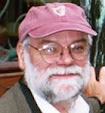
Forgive me for not posting blog entries lately. I apparently have a fierce and inexplicable case of writer's block. But I did want to write a brief post today on Martin Luther King, Jr. A few years ago I wrote a piece in this blog on what I was doing the day MLK was murdered. What was left out of that posting was the impact of MLK on me--and on the world.
I was just becoming awake to the world when Martin Luther King, Jr. was murdered on April 4, 1968. I was a 19-year-old college sophomore studying for the year in Salzburg and Innsbruck, Austria. That year in Europe put America in a different light for me. Europeans were very aware and concerned about the poverty and racism in America. And they seemed very worried about and opposed to the Vietnam War. I should have cared more about these issues, but I guess I was still somewhat insulated from them. I grew up in Euclid, Ohio. During my high school years, Euclid had a population of some 70,000 people, none of whom, as far as I knew, were Black. The Vietnam war had affected Euclid, but even that didn't penetrate my consciousness much--even though a St. William's and St. Joe's classmate, Raymond "Buddy" Chasser, had been killed in Vietnam. A year after MLK was murdered in Memphis, my own cousin, Tommy Fitzpatrick (again, of Euclid, St. William's, St. Joe's, and Euclid High School), was killed in Vietnam. So I quickly woke up, with all these deaths, riots, and war all around us.
MLK's murder left me bewildered, and eventually led to my study of nonviolence, my own fight against racism (which continues!), and my involvement in both the Civil Rights movement, the protests against the Vietnam War, and, indeed, resistance to war in general. After college, I moved to Cincinnati and roomed with Chris Cotter in the poor Over-the-Rhine neighborhood. We both studied nonviolence, learned about poverty first-hand, and met many courageous people involved in both the Civil Rights movement and the movement to nonviolently resist war and the tools of war. That's when Chris and I met Marion and Ernest Bromley, Juanita and Wally Nelson, and Maurice McCrackin--and later, Dorothy Day. And we met a lot of Peacemakers and Catholic Workers--Peggy Scherer, Greg Haas, Henry Scott, John Luginbill, Kenny Przybylski, Dan Bromley, Richard Gale, Tim Jenkins, Chuck Matthei--and so many others. In Chris Cotter's last two years at Notre Dame, he was in the Peace Studies Program, working with great teachers like Jim Douglass, Charles McCarthy, John Howard Yoder, and many others. I got to meet Jim Douglass and Charles McCarthy--and I know Emmanuel Charles McCarthy, now a Melkite-rite Catholic priest, is still a profound influence on Chris and my friend Tim Musser (and really hundreds and hundreds of other people).
Some years after leaving Cincinnati, I decided to write a biography of Rev. Maurice McCrackin, the great peace and Civil Rights activist. I soon teamed up with Judith Bechtel (now Judith Blackburn), and were able to publish a bio of Mac through Temple University Press in 1991 (a 2nd edition is still for sale on Amazon.com)--Building the Beloved Community: Maurice McCrackin's Life for Peace and Civil Rights. Daniel Berrigan, SJ, wrote a foreword to our biography.
All of that was thanks to Martin Luther King, and yes, to his death, which opened up my eyes to the evil in the world and what could be done about it.
Of course this is only part of the story and omits the influence of people I encountered in Berea, Kentucky, like Mike and Peggy Rivage-Seul, Guy and Peggy Patrick, Anne Weatherford, and many more. And the marvelous people I have met, and still work with in Painesville and Cleveland, Ohio--like Kathy Flora, Dan and Kathy Philipps, Brian Rice, and many many more. Not to mention the impact of my wife Linda and my daughters, Julia, Carolan, and Emily.
There are many courageous allies out there. Martin Luther King, Jr. once said, "The arc of the moral universe is long, but it bends toward justice." There's work to be done, there are allies out there, and "we shall not be moved" by the forces of hatred and despair.
Showing posts with label Chris Cotter. Show all posts
Showing posts with label Chris Cotter. Show all posts
Wednesday, April 4, 2018
Monday, May 29, 2017
Memorial Day--Thank You for Your Service, of All Kinds
There were different kinds of service, sacrifice, and even martyrdom. We shouldn't forget the less obvious ones this Memorial Day.
Today, I especially remember my cousin Tommy Fitzpatrick [Tommy Fitzpatrick on the Virtual Vietnam Memorial Wall], who was killed in Vietnam on April 18, 1969, just over 48 years ago. Tommy grew up with us in Euclid, Ohio, went to St. William's with us, then on to St. Joseph High School and Euclid High School, where he graduated in 1967. Less than two years after high school graduation, Tommy was killed in Vietnam, a devastating loss to his family, friends, and community. Tommy was the second St. William's boy killed in Vietnam, along with Raymond "Buddy" Chasser. Buddy's mother was a Horkan, a shirttail cousin of my mother.
And today I also remember Steve Shields [Steve Shields, on the virtual Vietnam Memorial Wall], my Notre Dame and Innsbruck Program classmate. Steve was in ROTC at Notre Dame, graduating in 1970. Two years later, on June 20, 1972, the helicopter he was piloting was shot down in Vietnam, and Steve was killed. I went to the funeral in Philadelphia and the burial at West Point. Steve was mourned by hundreds of people, family, friends, and classmates. Steve was just 23 years old.
There were so many other huge sacrifices. I think about my father in World War II, 20 years old, a Signalman in the Navy, at war in the South Pacific, aboard a small wooden ship called a "Subchaser." My father-in-law, Art Sanders, also in the Navy in the South Pacific, an 18-year-old machinist. My many uncles who served in the war. At least three of them came back with serious PTSD, a condition that had no name back then. They were haunted the rest of their short lives, self-medicating their anxiety and depression with alcohol.
Not all the heroes were war heroes. Some were anti-war heroes; others played roles in the background, either supporting the war effort or the anti-war effort.
In 1970 I had to decide if I would fight in Vietnam. I read, thought, and prayed about this issue and finally decided that I would not. I felt at the time I had three or four options: I would go to Canada (or try to); I would go underground (again, I had no idea if that were even possible); I would go to jail; or I would try to take the legal path and apply for Conscientious Objector status. So in the summer of 1970, I applied for CO status. I also took my draft physical, along with hundreds of other young men, in a basement area of Erieview Tower in Cleveland. That summer I submitted my CO application and later had a kind of trial or hearing before the draft board. They eventually, to my astonishment, granted me CO status. I would next have to do two years of Alternate Service. During these 6 months of uncertainty, I was working with Gene Killeen and many other wonderful people at Terminal Parking, at West 6th and Superior. In late January of 1971, I said goodbye to Gene and my work friends, said goodbye to my family, and moved to Cincinnati to try to find an acceptable Alternate Service position. That summer, I finally located such a job, in the Health Education Department of the 12th Street Clinic. There I worked under Dr. Joseph Alter, who I heard had also been a CO many years earlier. I worked with Charles Couch, Becky Meyers RN, June Mealey, Dale White, and many other wonderful people at the clinic. My pay was $2.50 per hour. My job was located in the Cincinnati ghetto of Over-the-Rhine, but I didn't consider it dangerous. I did some service for the neighborhood and my country. My sacrifice was not like Tommy's or Buddy's or Steve's. But I played a role.
When I moved to Cincinnati I met a group of dedicated people called "Peacemakers." They were pacifists, and many of them had spent time in jail for not participating in war efforts and for refusing to pay war taxes. Their sacrifices were huge. I'm thinking of people like Maurice McCrackin, Ernest Bromley, Marion Bromley, Dan Bromley, Wally Nelson, Juanita Nelson, Chuck Matthei, Kenny Przybylski, Richard Gale, Chris Cotter, Peggy Scherer . . . gee, so many other incredible, dedicated people who said no to war and yes to peacemaking.
For all of the people mentioned, the warriors and the peacemakers, the Conscientious Objectors and conscious participators, I say, "thank you for your service."
And PS, thanks to Tim Musser for his service as a Conscientious Objector!
Today, I especially remember my cousin Tommy Fitzpatrick [Tommy Fitzpatrick on the Virtual Vietnam Memorial Wall], who was killed in Vietnam on April 18, 1969, just over 48 years ago. Tommy grew up with us in Euclid, Ohio, went to St. William's with us, then on to St. Joseph High School and Euclid High School, where he graduated in 1967. Less than two years after high school graduation, Tommy was killed in Vietnam, a devastating loss to his family, friends, and community. Tommy was the second St. William's boy killed in Vietnam, along with Raymond "Buddy" Chasser. Buddy's mother was a Horkan, a shirttail cousin of my mother.
And today I also remember Steve Shields [Steve Shields, on the virtual Vietnam Memorial Wall], my Notre Dame and Innsbruck Program classmate. Steve was in ROTC at Notre Dame, graduating in 1970. Two years later, on June 20, 1972, the helicopter he was piloting was shot down in Vietnam, and Steve was killed. I went to the funeral in Philadelphia and the burial at West Point. Steve was mourned by hundreds of people, family, friends, and classmates. Steve was just 23 years old.
There were so many other huge sacrifices. I think about my father in World War II, 20 years old, a Signalman in the Navy, at war in the South Pacific, aboard a small wooden ship called a "Subchaser." My father-in-law, Art Sanders, also in the Navy in the South Pacific, an 18-year-old machinist. My many uncles who served in the war. At least three of them came back with serious PTSD, a condition that had no name back then. They were haunted the rest of their short lives, self-medicating their anxiety and depression with alcohol.
Not all the heroes were war heroes. Some were anti-war heroes; others played roles in the background, either supporting the war effort or the anti-war effort.
In 1970 I had to decide if I would fight in Vietnam. I read, thought, and prayed about this issue and finally decided that I would not. I felt at the time I had three or four options: I would go to Canada (or try to); I would go underground (again, I had no idea if that were even possible); I would go to jail; or I would try to take the legal path and apply for Conscientious Objector status. So in the summer of 1970, I applied for CO status. I also took my draft physical, along with hundreds of other young men, in a basement area of Erieview Tower in Cleveland. That summer I submitted my CO application and later had a kind of trial or hearing before the draft board. They eventually, to my astonishment, granted me CO status. I would next have to do two years of Alternate Service. During these 6 months of uncertainty, I was working with Gene Killeen and many other wonderful people at Terminal Parking, at West 6th and Superior. In late January of 1971, I said goodbye to Gene and my work friends, said goodbye to my family, and moved to Cincinnati to try to find an acceptable Alternate Service position. That summer, I finally located such a job, in the Health Education Department of the 12th Street Clinic. There I worked under Dr. Joseph Alter, who I heard had also been a CO many years earlier. I worked with Charles Couch, Becky Meyers RN, June Mealey, Dale White, and many other wonderful people at the clinic. My pay was $2.50 per hour. My job was located in the Cincinnati ghetto of Over-the-Rhine, but I didn't consider it dangerous. I did some service for the neighborhood and my country. My sacrifice was not like Tommy's or Buddy's or Steve's. But I played a role.
When I moved to Cincinnati I met a group of dedicated people called "Peacemakers." They were pacifists, and many of them had spent time in jail for not participating in war efforts and for refusing to pay war taxes. Their sacrifices were huge. I'm thinking of people like Maurice McCrackin, Ernest Bromley, Marion Bromley, Dan Bromley, Wally Nelson, Juanita Nelson, Chuck Matthei, Kenny Przybylski, Richard Gale, Chris Cotter, Peggy Scherer . . . gee, so many other incredible, dedicated people who said no to war and yes to peacemaking.
For all of the people mentioned, the warriors and the peacemakers, the Conscientious Objectors and conscious participators, I say, "thank you for your service."
And PS, thanks to Tim Musser for his service as a Conscientious Objector!
Tuesday, July 19, 2016
New Poem--about the Spring of 1970
Sorry I have been absent so long from this blog. Maybe I was in jail; or maybe in a mental institution; or maybe I was in Montana with my family. What in the world triggered this poem, 46 years later?
Last Month at Notre
Dame—May 1970
The world being blown apart, spring of 1970,
Cambodian Invasion, endless bloody Vietnam War,
Kent State and Jackson State massacres,
Student strike at Notre Dame where we . . .
The privileged sat on a bank above St. Mary’s Lake
Or off-campus at a friend’s party, strumming our guitars,
Singing “The Children and the Flowers” or “For Baby for
Bobby”
Or Dylan’s “You Ain’t Goin’ Nowhere.”
Steve didn’t know it, but he was going to Vietnam to die in
a helicopter crash;
Me and Chris to a Cincinnati ghetto and a Peacemakers’
commune;
Others to Mexico, graduate school, one brilliant friend to a
job as a garbage collector,
Many to the military, yet far from the horror of Southeast
Asia.
I remember that May: Mike, Chris, Tim,
Carol, Julie, Vangie, Rene, Tom,
Warren, Dick, Steve, John , many more,
Beloved friends.
Our last month as school comrades,
In the beautiful safe womb of Notre Dame,
Eager yet afraid of what awaited us
Outside the gates.
Bob Coughlin
/ July 19, 2016
Tuesday, August 26, 2014
Community Wrapped in Community Wrapped in Community
I wonder if Robin Williams, for one night about a week ago, felt completely alone, completely abandoned, as when Jesus on the cross "shouted in a loud voice, saying 'Eli Eli lama sabachthani?' which is, 'My God, my God, why have you forsaken me?'" We cannot know this for sure. We can not even know for sure things right in front of our face.
One thing I do know, as well as a human being is able, is that I am loved and enveloped in many communities, almost swaddled in love as a newborn baby. My first community was my family, initially my mother, father, and grandparents, Cora and Connie Coughlin. And I had lots of aunts and uncles and cousins. I joke that we didn't have friends growing up--we had family, relatives. This family expanded as Denny, Mary Ellen, Kevin, and Jim were born. And it keeps expanding!
Family is still very central to me, now with Linda, Julia, Carolan, and Emily, and my two sons-in-law, Ed and Brian, and my grandchildren, Colin and Robby. We have a big family, and it still is the bedrock of my security.
I have several other families, and these have been more "dynamic" over the years, with people flowing in and out. One of the first important ones for me was my Notre Dame classmates, especially the 35 other guys I studied abroad with in 1967-68 (in Salzburg and Innsbruck, Austria). Many of these fellows remain very close friends, with some others a bit more distant.
Another fantastic warm and loving community -- the peace activists I met when I moved to Cincinnati from Euclid in the winter of 1971. These people were Peacemakers, Catholic Workers, Quakers, and other like-minded living in and around Cincinnati's Over-the-Rhine neighborhood. Some were around my age, give or take, like Chris Cotter, Kenny Przybylski, Chuck Matthei, Jack Shereda, Peggy Scherer, Anne and Clare Weinkam, Greg Haas, Joan Levy, Bonnie Tompkins, Henry Scott, Andy Meyer, Joel Stevens, Dick Crowley, Richard Gale, John Luginbill (and others), and some were "elders" like Ernest and Marion Bromley, Maurice McCrackin (Mac), Bill Wahler--and several more. Some of my Peacemaker friends have died--Chuck Matthei, Ernest, Marion, Mac, Kenny, Jack, Bill. But I remain close friends with many, despite living far away from them.
Another layer of community consists of my colleagues at Lakeland Community College. Many of these are professors and fellow members of our union, the Lakeland Faculty Association. But there are also plenty of staffers, administrators, and part-timers that I consider part of my work community.
And then there is one of the most wonderful, sustaining communities I belong to, at my church, St. Mary's in Painesville, Ohio, especially the people I work with in the Karpos Ministry to feed the hungry and homeless--Linda, Kathy and Dan Philipps, Pam, Judy, Ken Fitzsimmons, Chuck Hillier, Jim, Bernice, Karen, Jeff, Kathy Flora, and many others. We have found a common focus for our interests in social justice and we have found a common and important task. It is almost exhilarating to work together with these folks every week. This is a model of the Beloved Community that Martin Luther King and Maurice McCrackin spoke of!
There are other communities I prize--my Irish-Gaelic classmates, my Irish traditional music friends, and many others.
These communities sustain me, and I hope I that I can do a small part to sustain, nourish, and love my friends in these communities. Let them never, not for an hour, feel unloved and unappreciated. This is my prayer.
One thing I do know, as well as a human being is able, is that I am loved and enveloped in many communities, almost swaddled in love as a newborn baby. My first community was my family, initially my mother, father, and grandparents, Cora and Connie Coughlin. And I had lots of aunts and uncles and cousins. I joke that we didn't have friends growing up--we had family, relatives. This family expanded as Denny, Mary Ellen, Kevin, and Jim were born. And it keeps expanding!
Family is still very central to me, now with Linda, Julia, Carolan, and Emily, and my two sons-in-law, Ed and Brian, and my grandchildren, Colin and Robby. We have a big family, and it still is the bedrock of my security.
I have several other families, and these have been more "dynamic" over the years, with people flowing in and out. One of the first important ones for me was my Notre Dame classmates, especially the 35 other guys I studied abroad with in 1967-68 (in Salzburg and Innsbruck, Austria). Many of these fellows remain very close friends, with some others a bit more distant.
Another fantastic warm and loving community -- the peace activists I met when I moved to Cincinnati from Euclid in the winter of 1971. These people were Peacemakers, Catholic Workers, Quakers, and other like-minded living in and around Cincinnati's Over-the-Rhine neighborhood. Some were around my age, give or take, like Chris Cotter, Kenny Przybylski, Chuck Matthei, Jack Shereda, Peggy Scherer, Anne and Clare Weinkam, Greg Haas, Joan Levy, Bonnie Tompkins, Henry Scott, Andy Meyer, Joel Stevens, Dick Crowley, Richard Gale, John Luginbill (and others), and some were "elders" like Ernest and Marion Bromley, Maurice McCrackin (Mac), Bill Wahler--and several more. Some of my Peacemaker friends have died--Chuck Matthei, Ernest, Marion, Mac, Kenny, Jack, Bill. But I remain close friends with many, despite living far away from them.
Another layer of community consists of my colleagues at Lakeland Community College. Many of these are professors and fellow members of our union, the Lakeland Faculty Association. But there are also plenty of staffers, administrators, and part-timers that I consider part of my work community.
And then there is one of the most wonderful, sustaining communities I belong to, at my church, St. Mary's in Painesville, Ohio, especially the people I work with in the Karpos Ministry to feed the hungry and homeless--Linda, Kathy and Dan Philipps, Pam, Judy, Ken Fitzsimmons, Chuck Hillier, Jim, Bernice, Karen, Jeff, Kathy Flora, and many others. We have found a common focus for our interests in social justice and we have found a common and important task. It is almost exhilarating to work together with these folks every week. This is a model of the Beloved Community that Martin Luther King and Maurice McCrackin spoke of!
There are other communities I prize--my Irish-Gaelic classmates, my Irish traditional music friends, and many others.
These communities sustain me, and I hope I that I can do a small part to sustain, nourish, and love my friends in these communities. Let them never, not for an hour, feel unloved and unappreciated. This is my prayer.
Monday, June 9, 2014
Community of St. Peter--Amazing Ecclesial Community in Cleveland
Yesterday, the Feast of Pentecost, I celebrated the coming of the Holy Spirit by attending mass with Kathleen O'Neill Webb and Rick Webb at the Community of St. Peter, which is now located in a historic old building at E. 71st Street and Euclid Ave. in Cleveland, Ohio. The community moved to this building when Bishop Richard Lennon closed the community's historic (and beautiful) old church a few years ago. Old St. Peter's was located at the corner of E.17th and Superior. My great grandfather, Cornelius Coughlin, an immigrant from Ireland, married my great grandmother, Lizzie Ierg, an immigrant from Germany, somewhere around 1885 in Old St. Peter's. So I took it personally when the bishop shuttered the historic old church.
The community took the blow, which must have been a kind of death, and they have risen into a new facility. They have an absolutely thriving, dynamic community. Here is a photo of the outside of their new facility:

Well, from the outside it doesn't have the beauty of the old church. But they are beginning to make the inside their own. One of the first things you see as you enter the room is a beautiful holy water/baptismal font, carved from a solid piece of stone found by Lake Erie. The font is quietly powerful, solid, and beautiful. I heard the font as well as the altar were sculpted by the Koehn Sculptors from Green Road in South Euclid. Here is their website: Koehn Sculptors.
The mass was packed--possibly 250 people around the altar. There was a 15-person choir, with musicians playing grand piano, viola, and violin. The music was wonderful! And maybe most wonderful of all was an Alleluia called "Heleluyan: Traditional Muskogee Creek Indian Song." It was accompanied by powerful drumming and interesting and very different harmonies. I located a Youtube version of this Muskogee Creek Indian hymn:
Fr. Bob Marrone is a powerful figure. He is serious, focused, and charismatic. I think his fellow community members really love him. In his sermon he talked about failure of imagination as one of the central flaws of our time. I am sure he is right about this. He also discussed the beautiful image by Emil Nolde that was on the cover of the church bulletin. Nolde, one of the greatest of 20th Century artists, entitled this work "Pentecost." Here it is:
Fr. Bob pointed out how Peter is at the center of this painting. Peter was the fool, the failure, the apostle who denounced Jesus three times--and yet is the "rock" of the Church. That gives hope for fools and failures like us, like me!
After the mass there was coffee and some food. There I met some old friends, including Pat and Mike Coughlin (who are friends in spirit, but no close cousins, as far as I can tell), and Tim Musser. Tim is really an amazingly focused worker for peace and justice, and a friend of many of my friends, including Chris Cotter, my roommate for many years in Cincinnati.
As I left the building I met Cormac Somerville. He comes from Dublin, Ireland. I have met and played Irish music with his brother, Dermot Somerville, one of the finest Irish musicians in Greater Cleveland.
All in all, this was a wonderful, Spirit-filled experience at the Community of St. Peter. I plan to come back often.
 |
| A view of old St. Peter's Church |
The community took the blow, which must have been a kind of death, and they have risen into a new facility. They have an absolutely thriving, dynamic community. Here is a photo of the outside of their new facility:
Well, from the outside it doesn't have the beauty of the old church. But they are beginning to make the inside their own. One of the first things you see as you enter the room is a beautiful holy water/baptismal font, carved from a solid piece of stone found by Lake Erie. The font is quietly powerful, solid, and beautiful. I heard the font as well as the altar were sculpted by the Koehn Sculptors from Green Road in South Euclid. Here is their website: Koehn Sculptors.
 |
| St. Pete's Holy Water Font |
 |
| The simple, beautiful Altar |
Fr. Bob Marrone is a powerful figure. He is serious, focused, and charismatic. I think his fellow community members really love him. In his sermon he talked about failure of imagination as one of the central flaws of our time. I am sure he is right about this. He also discussed the beautiful image by Emil Nolde that was on the cover of the church bulletin. Nolde, one of the greatest of 20th Century artists, entitled this work "Pentecost." Here it is:
 |
| Emil Nolde's "Pfingsten" (Pentecost) |
After the mass there was coffee and some food. There I met some old friends, including Pat and Mike Coughlin (who are friends in spirit, but no close cousins, as far as I can tell), and Tim Musser. Tim is really an amazingly focused worker for peace and justice, and a friend of many of my friends, including Chris Cotter, my roommate for many years in Cincinnati.
 |
| Mike Coughlin and Tim Musser |
As I left the building I met Cormac Somerville. He comes from Dublin, Ireland. I have met and played Irish music with his brother, Dermot Somerville, one of the finest Irish musicians in Greater Cleveland.
All in all, this was a wonderful, Spirit-filled experience at the Community of St. Peter. I plan to come back often.
Monday, March 3, 2014
Being a Conscientious Objector During the Vietnam War
My niece Rachel Sanders asked me this question:
4. What was your role as a conscientious objector? What prompted you to become one? What was the process like?
I was issued Conscientious Objector (CO) status sometime in the summer or fall of 1970. The process of attaining this status was incredible and complex.
During the spring of 1970 my draft board in Cleveland was actively pursuing me. They knew that I would be graduating from college in June of that year and my student deferment would be up. They told me to go to Chicago to get a physical (that must have been in March or April of 1970) and I mailed back to them that I was unable to do that. OK, they responded, then you will have to get your physical in Cleveland in June. Meanwhile, I was planning to apply for CO status and trying to figure out how that was done. At this point I was convinced that the war was immoral. It was clear in my mind that I was not going to participate. I felt like I had 3 choices: I could be granted CO status and do "alternate service"; I could go to jail; or I could go underground or try to emigrate to Canada. What I was not going to do was be part of the military in this terrible war. I realized that this could alienate me from my Dad and many others in my family (gee, even my brother Denny, who might have been in the Navy by this time).
I had my physical during the summer of 1970. I had just started working a part-time job at "Terminal Parking," in Downtown Cleveland. My pay was $2.50 per hour. Believe it or not, I enjoyed working with the Killeen family, who owned the parking lot. I had a good time at this job. My draft physical took place in the basement of the Erieview Tower on East 9th Street. It was a circus! Dozens, maybe hundreds of boys standing around for hours in their underpants. I recognized one fellow, my grade school classmate Tony Severino. Tony had been a terrific high school and college athlete, baseball and football. He looked like Mr. America. But Tony had some sort of cyst on his back--and a note from his doctor. Tony failed his physical, but I passed it.
In the weeks that followed I submitted my request for CO status to my draft board. It was a long, detailed essay, based mostly on my religious views, and backed up with letters of support from a priest, Fr. Maurie Amen, CSC, from a friend, Chris Cotter, and from another friend who was a soldier, Steve Shields (Steve died in Vietnam two years later). The draft board considered my materials and had a hearing for me in Downtown Cleveland. Apparently it went well, because some time later I was granted CO status.
I kept working at the parking lot until January of 1971, and then moved to Cincinnati upon the urging of my friend Chris Cotter. When I got to Cincinnati, I did all sorts of odd jobs, all the while looking for an "alternate service" job that I would do instead of military service. I finally found that job in August of 1971--working in the Health Education Department of the 12th Street Clinic, in Cincinnati's Over-the-Rhine neighborhood. I did that job for about a year and a half. By that time, the draft process had fallen apart and I felt I could safely change jobs or go back to school.
4. What was your role as a conscientious objector? What prompted you to become one? What was the process like?
I was issued Conscientious Objector (CO) status sometime in the summer or fall of 1970. The process of attaining this status was incredible and complex.
During the spring of 1970 my draft board in Cleveland was actively pursuing me. They knew that I would be graduating from college in June of that year and my student deferment would be up. They told me to go to Chicago to get a physical (that must have been in March or April of 1970) and I mailed back to them that I was unable to do that. OK, they responded, then you will have to get your physical in Cleveland in June. Meanwhile, I was planning to apply for CO status and trying to figure out how that was done. At this point I was convinced that the war was immoral. It was clear in my mind that I was not going to participate. I felt like I had 3 choices: I could be granted CO status and do "alternate service"; I could go to jail; or I could go underground or try to emigrate to Canada. What I was not going to do was be part of the military in this terrible war. I realized that this could alienate me from my Dad and many others in my family (gee, even my brother Denny, who might have been in the Navy by this time).
I had my physical during the summer of 1970. I had just started working a part-time job at "Terminal Parking," in Downtown Cleveland. My pay was $2.50 per hour. Believe it or not, I enjoyed working with the Killeen family, who owned the parking lot. I had a good time at this job. My draft physical took place in the basement of the Erieview Tower on East 9th Street. It was a circus! Dozens, maybe hundreds of boys standing around for hours in their underpants. I recognized one fellow, my grade school classmate Tony Severino. Tony had been a terrific high school and college athlete, baseball and football. He looked like Mr. America. But Tony had some sort of cyst on his back--and a note from his doctor. Tony failed his physical, but I passed it.
In the weeks that followed I submitted my request for CO status to my draft board. It was a long, detailed essay, based mostly on my religious views, and backed up with letters of support from a priest, Fr. Maurie Amen, CSC, from a friend, Chris Cotter, and from another friend who was a soldier, Steve Shields (Steve died in Vietnam two years later). The draft board considered my materials and had a hearing for me in Downtown Cleveland. Apparently it went well, because some time later I was granted CO status.
I kept working at the parking lot until January of 1971, and then moved to Cincinnati upon the urging of my friend Chris Cotter. When I got to Cincinnati, I did all sorts of odd jobs, all the while looking for an "alternate service" job that I would do instead of military service. I finally found that job in August of 1971--working in the Health Education Department of the 12th Street Clinic, in Cincinnati's Over-the-Rhine neighborhood. I did that job for about a year and a half. By that time, the draft process had fallen apart and I felt I could safely change jobs or go back to school.
Saturday, March 1, 2014
Vietnam Era Societal Tensions: Race, War, Gender
My niece Rachel Sanders has asked me to respond to this question about the Vietnam War Era:
3. What were some of the tensions in society? Was there racial and gender equality?
As I have said in some of my previous responses, my awareness of social issues and tensions gradually developed over the long course of the Vietnam War. My first thoughts on this: the justness of the war and racial tensions were the two biggest issues for most of that era. The Civil Rights struggle predated the Vietnam War, but came to a head in the mid to late 1960's. During that time we have the passing of landmark civil rights legislation, and the murder of figures like Martin Luther King Jr. and Malcolm X. We had the Montgomery Bus Boycott, the Freedom Rides, and sit-ins all over the country. We also had what were called "race riots" in many cities, including Cleveland and Cincinnati. I think "race riot" is a disgusting and misleading term that doesn't begin to get to the complexity of what was happening. I myself felt deeply the murder of Martin Luther King Jr. I remember where I was when I got the news--a strange place indeed. I was hitchhiking across the Grecian isle of Crete. I was riding in a dump truck, along with Brian Wilson and a girl we met on the ferry (She was from Eastlake, amazingly enough). Brian was actually riding on top of the load of gravel being carried by the dump truck. This terrible murder was compounded 2 months later with the murder of Bobby Kennedy. How could we explain America to the Europeans we were going to school and living with after these two terrible events?
Of course, the Vietnam War created almost unbearable tensions, between families, friends, relatives, everybody. To be against the war risked banishment, shunning, almost exile from your family--at least in the earlier years of opposition to the war. Later, the anger against the war culminated in gigantic demonstrations in Washington, D.C. And I was proud to march in these demonstrations.
The issue of gender was never on my mind until very late in my Notre Dame years, say 1968-70. And then that issue exploded into consciousness. I will never forget an incident that took place in the Mansfield Community House in Cincinnati around 1971. We were sitting around after the communal supper and apparently I was pontificating on something. I happened to use the word "mankind" and two or three of the women present walked out of the room because of my use of that word. I learned to be very careful of my word choice! I stopped using the word "girls" to refer to these young women. And "mankind" became "humankind." It was a painful lesson, and maybe not totally fair toward me. But it was a good lesson. I later learned to respect and love these women, many of whom are still working hard for peace and justice.
3. What were some of the tensions in society? Was there racial and gender equality?
As I have said in some of my previous responses, my awareness of social issues and tensions gradually developed over the long course of the Vietnam War. My first thoughts on this: the justness of the war and racial tensions were the two biggest issues for most of that era. The Civil Rights struggle predated the Vietnam War, but came to a head in the mid to late 1960's. During that time we have the passing of landmark civil rights legislation, and the murder of figures like Martin Luther King Jr. and Malcolm X. We had the Montgomery Bus Boycott, the Freedom Rides, and sit-ins all over the country. We also had what were called "race riots" in many cities, including Cleveland and Cincinnati. I think "race riot" is a disgusting and misleading term that doesn't begin to get to the complexity of what was happening. I myself felt deeply the murder of Martin Luther King Jr. I remember where I was when I got the news--a strange place indeed. I was hitchhiking across the Grecian isle of Crete. I was riding in a dump truck, along with Brian Wilson and a girl we met on the ferry (She was from Eastlake, amazingly enough). Brian was actually riding on top of the load of gravel being carried by the dump truck. This terrible murder was compounded 2 months later with the murder of Bobby Kennedy. How could we explain America to the Europeans we were going to school and living with after these two terrible events?
Of course, the Vietnam War created almost unbearable tensions, between families, friends, relatives, everybody. To be against the war risked banishment, shunning, almost exile from your family--at least in the earlier years of opposition to the war. Later, the anger against the war culminated in gigantic demonstrations in Washington, D.C. And I was proud to march in these demonstrations.
The issue of gender was never on my mind until very late in my Notre Dame years, say 1968-70. And then that issue exploded into consciousness. I will never forget an incident that took place in the Mansfield Community House in Cincinnati around 1971. We were sitting around after the communal supper and apparently I was pontificating on something. I happened to use the word "mankind" and two or three of the women present walked out of the room because of my use of that word. I learned to be very careful of my word choice! I stopped using the word "girls" to refer to these young women. And "mankind" became "humankind." It was a painful lesson, and maybe not totally fair toward me. But it was a good lesson. I later learned to respect and love these women, many of whom are still working hard for peace and justice.
Tuesday, September 10, 2013
Visit to the University of Notre Dame
Our visit to Notre Dame on August 31st for the Notre Dame-Temple football game. The campus was beautiful and full of fun and everybody seemed so happy. We parked at St. Mary's College and walked over to the Grotto, where we met my brothers and their kids. Minutes later I met Chris Cotter, his son Daniel, and Becky Cotter's son Austin. Chris and I, friends since 1966 or so, barely had time to talk, but it was wonderful to see him. At times I felt almost overcome by memories. As we prayed at the Grotto, I especially thought of my mother, who loved Notre Dame and visited it often as a girl. I imagine I went to the school because of my Mom. Below are some photos from that wonderful day.
 |
| Linda by St. Mary's Lake |
 |
| Linda and Bob near the Golden Dome |
 |
| Bob, with Washington Hall in the background |
 |
| Hesburgh Library and the mosaic of the Resurrected Christ |
 |
| Bob, Jim, Darby, Kevin, Tommy |
 |
| Chris Cotter and Bob |
 |
| Dillon and Harmon |
 |
| iI the Grotto, lighting a candle |
Friday, July 26, 2013
Der "Rudi" (Tim Forward) Besucht Mich in Ohio!
So happy today to have lunch with my old friend from Notre Dame and Innsbruck and Salzburg, Austria, Tim Forward. Back in Salzburg, in the previous millennium (1967) we called Tim "Rudi" after a character in a book about the famous Swiss character Wilhelm Tell (I think that was the origin of Tim's nickname). Almost all the Notre Damers who studied in Salzburg and Innsbruck had nicknames. Sometimes they were logical and more often they were inexplicable. Why was I called "Wilder Mann"? Why was Chris Cotter called "Wheat"? And Tom Heinen "Spider"? Why was Mike Gerrity "Misha"?
Thirty-six 19-year-old boys in the Innsbruck Program--all of them bright, ambitious; many fun; a few stone crazy. Forty-five years later some of the guys have had incredible success. Two have died--Steve Shields in combat in Vietnam around 1973 and John Higgins from cancer. One of my favorites is Tim Forward, "Rudi"--so happy he stopped by today on his way to Chicago and Green Bay.
Thirty-six 19-year-old boys in the Innsbruck Program--all of them bright, ambitious; many fun; a few stone crazy. Forty-five years later some of the guys have had incredible success. Two have died--Steve Shields in combat in Vietnam around 1973 and John Higgins from cancer. One of my favorites is Tim Forward, "Rudi"--so happy he stopped by today on his way to Chicago and Green Bay.
 |
| Tim Forward and Bob Coughlin at the Red Hawk, Concord, Ohio |
Monday, April 22, 2013
The Death of Richie Havens
I have just heard of the passing of the great folk singer Richie Havens at age 72. Richie Havens was the opening act of Woodstock; it is said that his set lasted three hours. He sang and played every song he knew. In the end he improvised one of the classics of our era, "Sometimes I Feel Like a Motherless Child," which morphed into "Freedom." The song was played in an incredible percussive style, Havens' trademark, with his plaintive voice singing "Freedom! Freedom! Freedom!"
I remember so vividly listening to recordings of Richie Havens singing "The Minstrel from Gault," "Handsome Johnnie," and "All Along the Watchtower," the definitive performance of the Bob Dylan tune. Chris Cotter's brother Tony played Havens' tunes incredibly well--and that is one of my best memories from the time in 1971 that I visited the Cotters' house in Cincinnati.
In my mind, Richie Havens was a force that helped end the Vietnam War. Rest in Peace, Richie Havens, and thank you for your incredible art.
I remember so vividly listening to recordings of Richie Havens singing "The Minstrel from Gault," "Handsome Johnnie," and "All Along the Watchtower," the definitive performance of the Bob Dylan tune. Chris Cotter's brother Tony played Havens' tunes incredibly well--and that is one of my best memories from the time in 1971 that I visited the Cotters' house in Cincinnati.
In my mind, Richie Havens was a force that helped end the Vietnam War. Rest in Peace, Richie Havens, and thank you for your incredible art.
Monday, December 3, 2012
Bluegrass Music at Aunt Maudie's in the 1970's
In the winter of 1971, Chris Cotter and I took over, from Peggy Scherer and Anne Weinkam, the apartment at 225 Orchard Street in Cincinnati's Over-the-Rhine (OTR) neighborhood. Over-the-Rhine was one of the most interesting neighborhoods you could find in America. It was a mostly poor, urban Appalachian area, with remnants of German and Italian-Americans, and a scattering of other ethnic groups. In 1971, there weren't many Blacks in Over-the-Rhine; they were, for the most part, in the West End and on the fringes of OTR. There was a small group of Vista workers; some Mennonite workers from Bluffton College; some peace activists (I guess Chris and I fit into that category); and some young people who were artists or craftsmen. Some people fit none of these categories!
About one quarter mile from our Orchard Street home, near 13th and Main Streets, was a Bluegrass bar called "Aunt Maudie's Country Garden." I am sure that you could not find better Bluegrass music anywhere. We had the best, and there was no cover charge. The beer was served in mason jars and was cheep and plentiful. Life was good!
On the weekends, a band called the "Stony Mountain Boys" played music at the bar--they were stuffed in the back of the long, narrow bar, behind the pool table, just to the right of the men's toilet, on a small, slightly elevated stage. I once asked Junior McIntyre how much he was paid per night. If I remember correctly, he told me $7 bucks a night. Now that couldn't be possible. But whatever they were paid, it wasn't much, and it did not match their incredible talent. [More coming soon]
About one quarter mile from our Orchard Street home, near 13th and Main Streets, was a Bluegrass bar called "Aunt Maudie's Country Garden." I am sure that you could not find better Bluegrass music anywhere. We had the best, and there was no cover charge. The beer was served in mason jars and was cheep and plentiful. Life was good!
On the weekends, a band called the "Stony Mountain Boys" played music at the bar--they were stuffed in the back of the long, narrow bar, behind the pool table, just to the right of the men's toilet, on a small, slightly elevated stage. I once asked Junior McIntyre how much he was paid per night. If I remember correctly, he told me $7 bucks a night. Now that couldn't be possible. But whatever they were paid, it wasn't much, and it did not match their incredible talent. [More coming soon]
Tuesday, September 27, 2011
More about Cincinnati's Boal Street & Cincinnati Communes
There were several community houses (some people might call these "communes") in Cincinnati in the early 1970s, and I was connected to three of them. One loose community was the 225 Orchard Street apartment building in the Over-the-Rhine neighborhood, near Liberty Street and Sycamore. People who lived in that building included me, Chris Cotter, briefly Dan Wenstrup, Clare Weinkam, Annie Weinkam, Peggy Scherer, Jack Shereda, and others who don't immediately come to mind.
About 100 feet across Sycamore Street was the Mansfield House, which was a genuine community or commune. When I moved to Cincinnati from Euclid in late January of 1971, the people in the Mansfield House included Greg Haas, John Luginbill, Joan Levy, Bonnie Tompkins, Andy Meyer, and a handful of other folks. I was never sure if there was an official roster of House residents. Certainly Carolyn Bromley and her brother Dan lived there much of the time, as did Jack Shereda, and, from time to time, Kenny Przybylski. When you add in the frequent visitors, you get a sense of how dynamic and exciting this place was: Denny Ryan, Henry Scott, Mary Alice Shepherd, Chuck Matthei, Peggy Scherer, Anne Weinkam (and her sister Clare and brother Paul), Dick Crowley, Richard Gale, Chris Cotter, Joel Stevens--and so many other wonderful, talented, and committed people.
A third community house, of sorts, developed about a quarter of a mile away, just up the Sycamore Street hill, then down Boal Street, a beautiful hillside street that ran above the Over-the-Rhine basin. I think that somehow Jim Tarbell got hold of the house--for very little money. And Jim let his friends live in the house. The address, if I remember correctly, was 324 Boal St. The house, built in the late 1890s, was a three-story brick house, a style common in Cincinnati's older neighborhoods. This house had a wonderful view, a back yard that was a hillside, and a side yard--something lacking in most of Over-the-Rhine.
For a very short time, when I was between apartments, I stayed in the Boal Street house. Regulars there were Henry Scott and Dan Bromley. A fellow named Jack lived in the first-floor front room; I'm sure many other people lived in that house or stayed temporarily in that house from time to time. I remember that Chris Cotter's dad, Larry Cotter (a prominent architect in Cincinnati), looked over the house to give an opinion on its structural soundness. If I remember correctly, Mr. Cotter was not particularly sanguine about the house's long-term prospects (guess he was wrong!).
I have many fond memories of the Boal Street house. I remember a wonderful party we had on one of the upper floors--must have been around 1975 or so. Lots of people packed in, music and dancing and beer--lots of fun! I remember another time when we took the old Peacemaker Ross Anderson up on the roof. Now Ross was about 75-years-old and blind, so this appeared to be a dangerous stunt. But Ross was so happy to sit under the stars on the roof of that old house. So many wonderful friends, meals, parties. I remember one day playing Scrabble with friends, including Ken Przybylski and Mary Alice Shepherd (now Mary Alice Milnes). Mary Alice took some pictures and when she later showed me a photo she took, I grabbed it and tried to crumple it up. What a dumb, vain move on my part! I wish I had that photo now, with Kenny deceased almost 25 years. Another memory is of Malcolm Dalglish, the great musician, playing his hammer dulcimer in the house--right at the beginning of his folk music career.
One amazing thing I've found about the Internet is that you can type in the address of a house, and then use a function on Google Maps to actually see that house. If you want to try to see the old Boal Street house, type this into Google: 324 Boal Street, Cincinnati, Ohio 45202. Then drag the little yellow icon of a man onto the road and take a look. It's a miracle!
I have also found a photo and property description of this house by going to www.zillow.com, and then typing in the house address.
About 100 feet across Sycamore Street was the Mansfield House, which was a genuine community or commune. When I moved to Cincinnati from Euclid in late January of 1971, the people in the Mansfield House included Greg Haas, John Luginbill, Joan Levy, Bonnie Tompkins, Andy Meyer, and a handful of other folks. I was never sure if there was an official roster of House residents. Certainly Carolyn Bromley and her brother Dan lived there much of the time, as did Jack Shereda, and, from time to time, Kenny Przybylski. When you add in the frequent visitors, you get a sense of how dynamic and exciting this place was: Denny Ryan, Henry Scott, Mary Alice Shepherd, Chuck Matthei, Peggy Scherer, Anne Weinkam (and her sister Clare and brother Paul), Dick Crowley, Richard Gale, Chris Cotter, Joel Stevens--and so many other wonderful, talented, and committed people.
A third community house, of sorts, developed about a quarter of a mile away, just up the Sycamore Street hill, then down Boal Street, a beautiful hillside street that ran above the Over-the-Rhine basin. I think that somehow Jim Tarbell got hold of the house--for very little money. And Jim let his friends live in the house. The address, if I remember correctly, was 324 Boal St. The house, built in the late 1890s, was a three-story brick house, a style common in Cincinnati's older neighborhoods. This house had a wonderful view, a back yard that was a hillside, and a side yard--something lacking in most of Over-the-Rhine.
For a very short time, when I was between apartments, I stayed in the Boal Street house. Regulars there were Henry Scott and Dan Bromley. A fellow named Jack lived in the first-floor front room; I'm sure many other people lived in that house or stayed temporarily in that house from time to time. I remember that Chris Cotter's dad, Larry Cotter (a prominent architect in Cincinnati), looked over the house to give an opinion on its structural soundness. If I remember correctly, Mr. Cotter was not particularly sanguine about the house's long-term prospects (guess he was wrong!).
I have many fond memories of the Boal Street house. I remember a wonderful party we had on one of the upper floors--must have been around 1975 or so. Lots of people packed in, music and dancing and beer--lots of fun! I remember another time when we took the old Peacemaker Ross Anderson up on the roof. Now Ross was about 75-years-old and blind, so this appeared to be a dangerous stunt. But Ross was so happy to sit under the stars on the roof of that old house. So many wonderful friends, meals, parties. I remember one day playing Scrabble with friends, including Ken Przybylski and Mary Alice Shepherd (now Mary Alice Milnes). Mary Alice took some pictures and when she later showed me a photo she took, I grabbed it and tried to crumple it up. What a dumb, vain move on my part! I wish I had that photo now, with Kenny deceased almost 25 years. Another memory is of Malcolm Dalglish, the great musician, playing his hammer dulcimer in the house--right at the beginning of his folk music career.
One amazing thing I've found about the Internet is that you can type in the address of a house, and then use a function on Google Maps to actually see that house. If you want to try to see the old Boal Street house, type this into Google: 324 Boal Street, Cincinnati, Ohio 45202. Then drag the little yellow icon of a man onto the road and take a look. It's a miracle!
I have also found a photo and property description of this house by going to www.zillow.com, and then typing in the house address.
Saturday, May 7, 2011
Cincinnati Peacemakers (and John Leininger's Death)
The passing of John Leininger has certainly awakened my memories of the active and courageous peace community in Cincinnati in the early 1970's. I mentioned some of the Peacemakers that John would have known and worked with in the previous blog posting. Here are some others that I remember: Andy Meyer, Joan Levy, Denny Ryan, Richard Gale, Bonnie Tomkins, Joel Stephens, Dick Crowley--and all the other folks who either lived in or often visited the Mansfield House Community and the neighborhing Orchard Street house (where I lived, along with Chris Cotter, Anne and Clare Weinkam, Peggy Scherer, and Jack Shereda). Henry Scott was for a while at the Bromley's in Gano, Ohio, and at other times in the Over-the-Rhine area. There were many others who were in and out: Maggie Jones, the local VISTA workers (Dick Crowley, John Thornton, and many others), some folks from the Bluffton College Mennonite service group, some local organizres and social workers. Jim Tarbell was occasionally there, as were some local artists. It was a dynamic, ever-changing, fantastically interesting gathering of people. Many Peacemakers, Catholic Workers, and Quakers from out of town came through from time to time. They were all offered hospitality--a place to stay and food to eat, without a question being asked. I wish I could express the flavor of this time and place better than I have. It's something that won't ever happen again in exactly that way.


Friday, May 6, 2011
The Death of Peacemaker John Leininger
Yesterday I received the shocking news that an old friend and fellow Peacemaker, John Leininger, has died from an aggressive cancer diagnosed just weeks ago. Left behind is Alice Ann Carpenter, his partner for some 38 years, step-children Maureen and Jenny, grandchildren Jocelyn, Alaina, and Devlin, sons-in-law Chris and Donal, and so many other relatives and friends.
John was a courageous and active peacemaker and will be memorialized later this summer at a Cincinnati Unitarian church.
I first met John around 1973 at Peacemaker "foldings" (where the Peacemaker newsletter was folded and mailed) at the home of Marion and Ernest Bromley in Gano, Ohio. These foldings later moved to Alice Ann and John's home in the North Avondale neighborhood of Cincinnati.
I have wonderful memories of these Peacemaker foldings (and other activities like the conferences and "gatherings"). A lot of courageous people came to these foldings: Greg Haas, John Luginbill, Kenny Przybylski, Mary Alice Shepherd, Chuck Matthei, Peggy Scherer, Chris Cotter, Annie Weinkam . . . .[I'll mention more people in further postings].
Here is a website that John Leininger and Alice Ann Carpenter maintained for their crime and murder mystery books business: http://gravematters.com/ Photos of John and Alice Ann can be found at that site.
John was a courageous and active peacemaker and will be memorialized later this summer at a Cincinnati Unitarian church.
I first met John around 1973 at Peacemaker "foldings" (where the Peacemaker newsletter was folded and mailed) at the home of Marion and Ernest Bromley in Gano, Ohio. These foldings later moved to Alice Ann and John's home in the North Avondale neighborhood of Cincinnati.
I have wonderful memories of these Peacemaker foldings (and other activities like the conferences and "gatherings"). A lot of courageous people came to these foldings: Greg Haas, John Luginbill, Kenny Przybylski, Mary Alice Shepherd, Chuck Matthei, Peggy Scherer, Chris Cotter, Annie Weinkam . . . .[I'll mention more people in further postings].
Here is a website that John Leininger and Alice Ann Carpenter maintained for their crime and murder mystery books business: http://gravematters.com/ Photos of John and Alice Ann can be found at that site.
Monday, September 20, 2010
Notre Dame-Innsbruck Friends from 1967-68


The 1967-68 Notre Dame Innsbruck Program:
The top photo looks like something out of "Lucy in the Sky with Diamonds" and the Magical Mystery Tour! It shows some of the Ehrlerstrasse Pension gang drinking beer, strumming guitars, and wearing funny hats (the hats belonged to Steve Shields). Included here are Mike Celizic (seriously ill these days), Chris Cotter, Steve Shields, and Mike Gerrity. The special effects in this photo are the products of chance, time, the print being rolled up in a tube for years, blood, sweat, tears, and probably some measure of alcohol.
The bottom photo shows 5 members of the Notre Dame-Innsbruck Program, probably in September of 1967 at "Eisriesenwelt," gigantic ice caves outside Salzburg, Austria. In this photo you can see Steve Shields (died in Vietnam, circa 1972); Charlie Bradley; Brian Wilson; Bob Coughlin; Mike Gerrity. There was quite a scary hike to get to the caves, including a trek across a cliff face (holding on to cable affixed to the rock). I can't remember who took this photo.
Wednesday, May 5, 2010
May 5th, 1978--Hippie Wedding
 Unsere Hochzeit, 5 Mai 1978. Sankt Georg Kirche, Cincinnati, Ohio. Links-rechts: Bob, Chris Cotter, Linda, Mary Ann Hageman.
[I have no idea why I originally wrote that sentence above in German. It simply means," Our Wedding, My 5th 1978. Saint George Church, Cincinnati, Ohio. Left-right: . . . ."]
Monday, December 14, 2009
Cincinnati's Mansfield House in Over-the-Rhine (#3)
The Mansfield House was, loosely defined, an intentional community. I guess "anarchists" (and many of these folks were anarchists, but not in the common sense of this term) don't form rigid intentional communities! What held this community together? Well, the community membership was dynamic, with people constantly moving in and out, but they did share many values: a dedication to nonviolence (in the Gandhian and Martin Luther King Jr. sense); opposition to the Vietnam War; and a dedication to living simply. I imagine many members felt marginalized in the normal American world, so there were psychological similarities in many of the Mansfield House's community members. Many came from a religious background. A number of the members were affiliated with the Friends, the Quakers (Dan Bromley, Caroline Bromley, possibly John Luginbill); others found the Mennonites to be friends in spirit; a number of people came out of the Catholic tradition (Peggy Scherer, Greg Haas, Kenny Przybylski, Jack Shereda, Anne Weinkam). One, Joan Levy, was a secular Jew. I didn't know if some others, like Bonnie Tompkins, were brought up in a religious tradition. Some of these people continued to practice their religion; others didn't.
Many people stayed in the Mansfield House for days, or weeks, or even longer, but probably wouldn't have been considered long-time members of the community. Others came over mostly during the day and just occasionally stayed there over night. Among these people would be Joel Stevens, Henry Scott, Mary Alice Shepherd, Chris Cotter, myself, Dick Crowley, Denny Ryan, Clare Weinkam, Paul Weinkam, and possibly Jim Tarbell. There were many others that don't immediately come to mind.
Many people stayed in the Mansfield House for days, or weeks, or even longer, but probably wouldn't have been considered long-time members of the community. Others came over mostly during the day and just occasionally stayed there over night. Among these people would be Joel Stevens, Henry Scott, Mary Alice Shepherd, Chris Cotter, myself, Dick Crowley, Denny Ryan, Clare Weinkam, Paul Weinkam, and possibly Jim Tarbell. There were many others that don't immediately come to mind.
Thursday, December 3, 2009
The Mansfield House, in Cincinnati's Over-the-Rhine (#1)
I moved to Cincinnati in late January of 1971. I had been on the phone with my Notre Dame/Innsbruck friend, Chris Cotter, when he said, "Why don't you come down to Cincinnati?" I said, OK, be there soon!"
I had been working for $2.50/hour at Terminal Parking, the parking garage run by Gene Killeeen and his family at West 6th and Superior in Cleveland. I loved the Killeen's, and believe it or not, enjoyed my job. I'm pretty sure we had the best-educated car parkers in the history of the world. At one time, besides Gene (Notre Dame, 1956), we had Earl Hurd (Notre Dame, 1970), me (Notre Dame, 1970), and several other well-educated members of the Killeen family, as well as my Euclid friend Bill Heiss( St. Joseph's, 1966) working there. But I knew that parking cars was not going to be my career. And it was a very tough job working outside that cold and snowy winter of 1970-71. So I decided just like that to make the move. Within days I was in my raggedy old Ford Econoline van, driving down to Chris Cotter's house in Cincinnati .
For a very short time I stayed with the Cotter family in the Western Hills area of
Cincinnati. Then one day Chris and I went down to the Over-the-Rhine neighborhood and found out that we could sublet Anne Weinkam and Peggy Scherer's apartment on the third floor of 225 Orchard Street. The timing was just downright lucky because Anne and Peggy were ready to leave for a very long roadtrip and they needed subletters. And another astonishing piece of luck was that the Orchard Street house was about 150 feet from the Mansfield House, a raggedy old house at the end of Mansfield Street, just off Sycamore and near Liberty, a hundred yards from the old Cutter Junior High School (which later became the famous School for the Creative and Performing Arts). The Mansfield House was one of the most interesting community experiments in the history of Cincinnati--and Chris and I were nextdoor neighbors! [More on the Mansfield House coming in another blog entry.]
I had been working for $2.50/hour at Terminal Parking, the parking garage run by Gene Killeeen and his family at West 6th and Superior in Cleveland. I loved the Killeen's, and believe it or not, enjoyed my job. I'm pretty sure we had the best-educated car parkers in the history of the world. At one time, besides Gene (Notre Dame, 1956), we had Earl Hurd (Notre Dame, 1970), me (Notre Dame, 1970), and several other well-educated members of the Killeen family, as well as my Euclid friend Bill Heiss( St. Joseph's, 1966) working there. But I knew that parking cars was not going to be my career. And it was a very tough job working outside that cold and snowy winter of 1970-71. So I decided just like that to make the move. Within days I was in my raggedy old Ford Econoline van, driving down to Chris Cotter's house in Cincinnati .
For a very short time I stayed with the Cotter family in the Western Hills area of
Cincinnati. Then one day Chris and I went down to the Over-the-Rhine neighborhood and found out that we could sublet Anne Weinkam and Peggy Scherer's apartment on the third floor of 225 Orchard Street. The timing was just downright lucky because Anne and Peggy were ready to leave for a very long roadtrip and they needed subletters. And another astonishing piece of luck was that the Orchard Street house was about 150 feet from the Mansfield House, a raggedy old house at the end of Mansfield Street, just off Sycamore and near Liberty, a hundred yards from the old Cutter Junior High School (which later became the famous School for the Creative and Performing Arts). The Mansfield House was one of the most interesting community experiments in the history of Cincinnati--and Chris and I were nextdoor neighbors! [More on the Mansfield House coming in another blog entry.]
Tuesday, November 24, 2009
Where Is Dick Crowley? VISTA in Cincinnati's Over-the-Rhine
Today I was thinking about AmeriCorps and the VISTA program because my daughter Carolan has interviewed with AmeriCorps State and National and, we hope, will soon be offered a position with them. I don't know the history of VISTA, but think it is a kind of natural growth from the Peace Corps program that John F. Kennedy established--possibly coming out of the LBJ years and the "Great Society" programs of the mid to late 1960s. Of course the roots of VISTA must go back long before that! One need only to think of the Civilian Conservation Corps and the WPA projects of the FDR presidency.
So thinking about VISTA led me to thinking about Dick Crowley, a VISTA volunteer in Cincinnati in the early 1970's. Dick was one of several VISTA people I met in Cincinnati near the Mansfield House commune and the Orchard Street house in Cincinnati's Over-the-Rhine community. Another Cincinnati VISTA name that comes to mind is John Thornton (and his "Thorntonisms"). Dick was a great guy, a giant of a man perhaps 6'5" tall (at least he looked that tall to me!). I'll never forget how Dick recited a Pablo Neruda poem at Chris Cotter's wedding ("I, body of a woman . . .")--slightly under the influence. The recitation was great fun, greeted by hoots and hollers.
In recent years I have found out that I am a direct descendant of Mary Crowley, my great great grandmother, who emigrated from West Cork, Ireland with her husband Daniel Coghlin and her four children, Jeremiah, Bartholemew, Catherine, and Cornelius. Maybe Dick Crowley is a relative--one who got the tall gene. I wish I knew Dick's whereabouts!
So thinking about VISTA led me to thinking about Dick Crowley, a VISTA volunteer in Cincinnati in the early 1970's. Dick was one of several VISTA people I met in Cincinnati near the Mansfield House commune and the Orchard Street house in Cincinnati's Over-the-Rhine community. Another Cincinnati VISTA name that comes to mind is John Thornton (and his "Thorntonisms"). Dick was a great guy, a giant of a man perhaps 6'5" tall (at least he looked that tall to me!). I'll never forget how Dick recited a Pablo Neruda poem at Chris Cotter's wedding ("I, body of a woman . . .")--slightly under the influence. The recitation was great fun, greeted by hoots and hollers.
In recent years I have found out that I am a direct descendant of Mary Crowley, my great great grandmother, who emigrated from West Cork, Ireland with her husband Daniel Coghlin and her four children, Jeremiah, Bartholemew, Catherine, and Cornelius. Maybe Dick Crowley is a relative--one who got the tall gene. I wish I knew Dick's whereabouts!
Saturday, April 11, 2009
Happy Easter!
I spent some time on Good Friday with Linda at Our Lady of Lourdes Shrine in Euclid, Ohio. This holy place, a replica of Lourdes, sits on a high hill above Euclid Avenue, US Route 20, with a view of Lake Erie a few miles to the north. This shrine is an island of sanity in a sea of insanity. There is no doubt that it is a holy place.
At the Grotto Linda and I lit candles--for my Dad and Mom, for Linda's Dad and Mom, and for all our friends and family, living and dead. I thought especially of Kenny Przybylski and Sr. Franzita Kane. As we did the Stations of the Cross, I thought of my friends who have health challenges: Linda Cotter, Jack Pendergast, Mike Gerrity, John Connell. And certainly their spouses who help them cope: Chris, Vicki, Terry, Marlene.
We Catholics and Christians (and really, all of us, whether Christian or not) have the great gift of Holy Week: The Eucharist of Holy Thursday; the suffering and crucifixion of Good Friday; the waiting of Holy Saturday; the victory over sin and death of Easter Sunday. May all this redeemed suffering and the greatest victory be with you, with all of us, this Easter.
At the Grotto Linda and I lit candles--for my Dad and Mom, for Linda's Dad and Mom, and for all our friends and family, living and dead. I thought especially of Kenny Przybylski and Sr. Franzita Kane. As we did the Stations of the Cross, I thought of my friends who have health challenges: Linda Cotter, Jack Pendergast, Mike Gerrity, John Connell. And certainly their spouses who help them cope: Chris, Vicki, Terry, Marlene.
We Catholics and Christians (and really, all of us, whether Christian or not) have the great gift of Holy Week: The Eucharist of Holy Thursday; the suffering and crucifixion of Good Friday; the waiting of Holy Saturday; the victory over sin and death of Easter Sunday. May all this redeemed suffering and the greatest victory be with you, with all of us, this Easter.
Subscribe to:
Posts (Atom)