Showing posts with label Chuck Matthei. Show all posts

Friday, July 23, 2021

Key to Patricia (Patsy) Harman's Nonfiction Memoir "Arms Wide Open"


 Key to Patsy Harman’s “Arms Wide Open.” Patsy's book is like a "roman-a-clef." It's a mix of fiction and non-fiction, with the characters' names changed and some actions and places slightly fictionalized.


These are my best guesses:


Patsy Patsy Harman, who I knew circa 1974 as Patsy Sun, partner at that time with Bob Sun, now known as Robin Wilson.


Mica Kaya, son of Patsy and Bob Sun.


Tom Tom Harman, now married to Patsy


Mara Wendy Rawlins

Benny Steve Tuck


Stacy         Robin Wilson, known circa 1974 as Bob Sun


Kaitlin Kerry Grant (later married to Tim Jenkins)

Tall Terry Tim Jenkins, Winona, MN, friend and classmate of Kenny Przybylski.


Tristan John Meyer. Close friend of Barb Siarca.

Annie Barb Siarca, of Willowick, Lake County, Ohio. Now in Montana.


Colin Chuck Matthei, one of the greatest Peacemakers.

From the North Chicago suburbs.


Shanti Diane. From the Dakotas. She gave me her old junker green Dodge, mentioned in the book, on page 103, Chapter 2.


Bro. Lenny Kenny Przybylski, mentioned only briefly on p. 128


Rachel Short, stocky fiddle-playing Jewish girl,

Not a great fiddle player back in 1975.


  • Patsy and Tom currently live in West Virginia.

  • Wendy and Steve also live in West Virginia.

  • Robin Wilson still lives near Spencer, West Virginia.

  • Kerry and Tim live near Westby, Wisconsin. I've visited them on the way to Montana.


Kenny, Chuck, and Diane are deceased. Chuck died of thyroid cancer. Diane also died of cancer.


Thursday, July 5, 2018

Advice to Prophets--a short poem

Advice to Prophets

Today the prophets weep,
Victory always seems to go to Evil.

But in the long arc,
If we help bend it,
It turns toward justice.

Weep not, prophets,
Just get to work!

Bob Coughlin
July 4, 2018


[Theodore Parker, Unitarian/Transcendentalist, in his 1853 book “Ten Sermons of Religion”--”The arc of the moral universe is long, but it bends toward justice.”]

 When I wrote this poem yesterday, I was thinking of some prophetic voices that I have known--Mike Rivage-Seul, Kathy Flora, Brian Rice, Dave Lima, Dolly Mikula, Fr. James Martin, Maurice McCrackin, Marion Bromley, Ernest Bromley, Chuck Matthei, Daniel Berrigan, and many others. What keeps them going in times of such discouragement? Or is that the wrong word? There's a line in Tennessee Williams' Glass Menagerie: "I am disappointed, not discouraged."

I also thought about the famous line, seen above, that Martin Luther King Jr. borrowed from Theodore Parker, about the arc of the moral universe. What I wanted to add is that we have to do the bending--I'm not sure that it bends by itself. We have to get to work!

Wednesday, April 4, 2018

Remembering Martin Luther King, Jr.

Forgive me for not posting blog entries lately. I apparently have a fierce and inexplicable case of writer's block. But I did want to write a brief post today on Martin Luther King, Jr. A few years ago I wrote a piece in this blog on what I was doing the day MLK was murdered. What was left out of that posting was the impact of MLK on me--and on the world.

I was just becoming awake to the world when Martin Luther King, Jr. was murdered on April 4, 1968. I was a 19-year-old college sophomore studying for the year in Salzburg and Innsbruck, Austria. That year in Europe put America in a different light for me. Europeans were very aware and concerned about the poverty and racism in America. And they seemed very worried about and opposed to the Vietnam War. I should have cared more about these issues, but I guess I was still somewhat insulated from them. I grew up in Euclid, Ohio. During my high school years, Euclid had a population of some 70,000 people, none of whom, as far as I knew, were Black. The Vietnam war had affected Euclid, but even that didn't penetrate my consciousness much--even though a St. William's and St. Joe's classmate, Raymond "Buddy" Chasser, had been killed in Vietnam. A year after MLK was murdered in Memphis, my own cousin, Tommy Fitzpatrick (again, of Euclid, St. William's, St. Joe's, and Euclid High School), was killed in Vietnam. So I quickly woke up, with all these deaths, riots, and war all around us.

MLK's murder left me bewildered, and eventually led to my study of nonviolence, my own fight against racism (which continues!), and my involvement in both the Civil Rights movement, the protests against the Vietnam War, and, indeed, resistance to war in general. After college, I moved to Cincinnati and roomed with Chris Cotter in the poor Over-the-Rhine neighborhood. We both studied nonviolence, learned about poverty first-hand, and met many courageous people involved in both the Civil Rights movement and the movement to nonviolently resist war and the tools of war. That's when Chris and I met Marion and Ernest Bromley, Juanita and Wally Nelson, and Maurice McCrackin--and later, Dorothy Day. And we met a lot of Peacemakers and Catholic Workers--Peggy Scherer, Greg Haas, Henry Scott, John Luginbill, Kenny Przybylski, Dan Bromley, Richard Gale, Tim Jenkins, Chuck Matthei--and so many others. In Chris Cotter's last two years at Notre Dame, he was in the Peace Studies Program, working with great teachers like Jim Douglass, Charles McCarthy, John Howard Yoder, and many others. I got to meet Jim Douglass and Charles McCarthy--and I know Emmanuel Charles McCarthy, now a Melkite-rite Catholic priest, is still a profound influence on Chris and my friend Tim Musser (and really hundreds and hundreds of other people).

Some years after leaving Cincinnati, I decided to write a biography of Rev. Maurice McCrackin, the great peace and Civil Rights activist. I soon teamed up with Judith Bechtel (now Judith Blackburn), and were able to publish a bio of Mac through Temple University Press in 1991 (a 2nd edition is still for sale on Amazon.com)--Building the Beloved Community: Maurice McCrackin's Life for Peace and Civil Rights. Daniel Berrigan, SJ, wrote a foreword to our biography.

All of that was thanks to Martin Luther King, and yes, to his death, which opened up my eyes to the evil in the world and what could be done about it.

Of course this is only part of the story and omits the influence of people I encountered in Berea, Kentucky, like Mike and Peggy Rivage-Seul, Guy and Peggy Patrick, Anne Weatherford, and many more. And the marvelous people I have met, and still work with in Painesville and Cleveland, Ohio--like Kathy Flora, Dan and Kathy Philipps, Brian Rice, and many many more. Not to mention the impact of my wife Linda and my daughters, Julia, Carolan, and Emily.

There are many courageous allies out there. Martin Luther King, Jr. once said, "The arc of the moral universe is long, but it bends toward justice." There's work to be done, there are allies out there, and "we shall not be moved" by the forces of hatred and despair.

Monday, May 29, 2017

Memorial Day--Thank You for Your Service, of All Kinds

There were different kinds of service, sacrifice, and even martyrdom. We shouldn't forget the less obvious ones this Memorial Day.

Today, I especially remember my cousin Tommy Fitzpatrick [Tommy Fitzpatrick on the Virtual Vietnam Memorial Wall], who was killed in Vietnam on April 18, 1969, just over 48 years ago. Tommy grew up with us in Euclid, Ohio, went to St. William's with us, then on to St. Joseph High School and Euclid High School, where he graduated in 1967. Less than two years after high school graduation, Tommy was killed in Vietnam, a devastating loss to his family, friends, and community. Tommy was the second St. William's boy killed in Vietnam, along with Raymond "Buddy" Chasser. Buddy's mother was a Horkan, a shirttail cousin of my mother.

And today I also remember Steve Shields [Steve Shields, on the virtual Vietnam Memorial Wall], my Notre Dame and Innsbruck Program classmate. Steve was in ROTC at Notre Dame, graduating in 1970. Two years later, on June 20, 1972, the helicopter he was piloting was shot down in Vietnam, and Steve was killed. I went to the funeral in Philadelphia and the burial at West Point. Steve was mourned by hundreds of people, family, friends, and classmates. Steve was just 23 years old.

There were so many other huge sacrifices. I think about my father in World War II, 20 years old, a Signalman in the Navy, at war in the South Pacific, aboard a small wooden ship called a "Subchaser." My father-in-law, Art Sanders, also in the Navy in the South Pacific, an 18-year-old machinist. My many uncles who served in the war. At least three of them came back with serious PTSD, a condition that had no name back then. They were haunted the rest of their short lives, self-medicating their anxiety and depression with alcohol.

Not all the heroes were war heroes. Some were anti-war heroes; others played roles in the background, either supporting the war effort or the anti-war effort.

In 1970 I had to decide if I would fight in Vietnam. I read, thought, and prayed about this issue and finally decided that I would not. I felt at the time I had three or four options: I would go to Canada (or try to); I would go underground (again, I had no idea if that were even possible); I would go to jail; or I would try to take the legal path and apply for Conscientious Objector status. So in the summer of 1970, I applied for CO status. I also took my draft physical, along with hundreds of other young men, in a basement area of Erieview Tower in Cleveland. That summer I submitted my CO application and later had a kind of trial or hearing before the draft board. They eventually, to my astonishment, granted me CO status. I would next have to do two years of Alternate Service. During these 6 months of uncertainty, I was working with Gene Killeen and many other wonderful people at Terminal Parking, at West 6th and Superior. In late January of 1971, I said goodbye to Gene and my work friends, said goodbye to my family, and moved to Cincinnati to try to find an acceptable Alternate Service position. That summer, I finally located such a job, in the Health Education Department of the 12th Street Clinic. There I worked under Dr. Joseph Alter, who I heard had also been a CO many years earlier. I worked with Charles Couch, Becky Meyers RN, June Mealey, Dale White, and many other wonderful people at the clinic. My pay was $2.50 per hour. My job was located in the Cincinnati ghetto of Over-the-Rhine, but I didn't consider it dangerous. I did some service for the neighborhood and my country. My sacrifice was not like Tommy's or Buddy's or Steve's. But I played a role.

When I moved to Cincinnati I met a group of dedicated people called "Peacemakers." They were pacifists, and many of them had spent time in jail for not participating in war efforts and for refusing to pay war taxes. Their sacrifices were huge. I'm thinking of people like Maurice McCrackin, Ernest Bromley, Marion Bromley, Dan Bromley, Wally Nelson, Juanita Nelson, Chuck Matthei, Kenny Przybylski, Richard Gale, Chris Cotter, Peggy Scherer . . .  gee, so many other incredible,  dedicated people who said no to war and yes to peacemaking.

For all of the people mentioned, the warriors and the peacemakers, the Conscientious Objectors and conscious participators, I say, "thank you for your service."

And PS, thanks to Tim Musser for his service as a Conscientious Objector!

Tuesday, April 18, 2017

I Just Paid My War Taxes--Mea Culpa!

Paying My War Taxes

Today I filed my federal war taxes. I am almost ashamed to admit it. Many friends of mine risked their freedom, their careers, their homes—really, almost everything, by refusing to pay war taxes. Many of them went to jail for this. Others had to live below the taxable poverty line, in other words, very simply, with an extremely low income threshold. I’m thinking of people like Chuck Matthei, Marion and Ernest Bromly, Juanita and Wally Nelson., the Berrigan’s, Phil and Dan, Dorothy Day, Ammon Hennacy (The One-Man Revolution), Maurice McCrackin. Many folks in the Peacemaker Movement and the Catholic Worker Movement. Many Quakers and Mennonites. I appreciate their enormous sacrifices.
 
Chuck Matthei
I am not against all taxation. I am happy to pay my taxes and share my resources for many things having to do with the health, welfare, and cultural resources of our country. I am also happy to share my resources with those in need outside my country, the poor, needy, refugees, the hungry.

Wally and Juanita Nelson, Ernest and Marion Bromley, Maurice McCrackin

But I strongly object to the use of my taxes for war and for imperialism. Our tax dollars have done so much damage in the world. And lately, the sabers have been rattling again—at people and groups in Syria, Iraq, Iran, Afghanistan, Russia, China, and many other places. And most ominously of all, in North Korea, where “all options are on the table.” Well one of those options is the use of nuclear weapons. If it comes to that, then the future of the world, the entire future of civilization, is put at great risk. The world could essentially end. All our own hopes and our hopes for our families, friends, children, and grandchildren could be dashed—incinerated.
 
Ammon Hennacy (right)


Can we trust our leaders not to use these weapons of destruction—in fact, weapons of mass destruction. We have them at the ready. They could be launched at any minute.

Dan Berrigan and Thomas Merton

Thursday, November 20, 2014

New Poem: "The Prophet"

The Prophet

(Blessed are they who hunger and thirst for justice. . .Matthew 5:6)

Sometimes the rage, anger, unresolved mourning under the skin
erupt in sudden violent spasms--
surprising yourself and the people who love you.

Often it is just anger and you feel like Jeremiah
with a truth to tell--one you cannot but yell out
to the world.

Speak your piece, o friend,
share the vision,
whether it be terrible,

     or beautiful--

Your job is to tell the truth!

[Bob Coughlin November 19, 2014]


As I composed this poem, I was thinking about prophetic people I have known or encountered over my lifetime. Some achieved a degree of fame (or notoriety), like Maurice McCrackin, Marion Bromley, Ernest Bromley, Daniel Berrigan, Dorothy Day, Chuck Matthei, Mike Rivage-Seul. But most are known only to a few people (these names I will keep in my heart). During the Vietnam protest era, the government thought many of the protesters to be mentally ill. Ha! Who's mentally ill??


Monday, September 15, 2014

Peacemaker Gathering at Memorial Picnic for Dorothy Glanzer

Yesterday at Mt. Echo Park in Cincinnati there was a gathering of old Peacemakers and friends of Dorothy Glanzer and Greg Haas. Dorothy died recently after suffering for years with MS. The gathering was a wonderful reunion of old friends, many of whom met back in the late 1960s or early 1970s in the Vietam-era peace movement. The peace movement is gaining steam again, in response to perpetual war.

Greg Haas

Alice Ann, Peggy, Mary Alice, Anne, Clare, me

Mansfield House photo from 1971 or 1972. Looks like a poster for the musical "Hair"! Ken Przybylski at far left, with Chris Cotter to his right. Also pictured, Carolyn Bromley, Greg Haas, Peggy Scherer, Anne Weinkam, Jack Shereda, John Luginbill, Joan Levy, Bonnie Tompkins, Denny Ryan, Mary Jane Atkinson, and two neighborhood boys

Me with Mary Alice Shepherd Milnes

Me with Peggy Scherer

With Jim Tarbell

Manuel, Alice Ann, Peggy, Mary Alice, Anne, Clare, me
A strange thing that often happens at wakes and memorial services is the joy that people have in seeing old friends. That certainly happened yesterday. The afternoon was filled with hugs and hilarious stories.

One woman approached me and asked me if I knew who she was. I recognized her right away, but her name didn't come to me. It turned out to be Debbie Boerschig, who had lived in my old apartment building--I think my own apartment on the third floor. Debbie is a nurse who began her career at 12th Street Clinic, where I worked from 1971 to 1973. We know many people in common from 12th Street Clinic and from our old neighborhood in Over-the-Rhine. There were other people at the gathering who had lived at 225 Orchard Street--Anne Weinkam and Clare Weinkam. Clare said she moved from the second floor to the fourth floor because the rent was cheaper the further up you went--from 48 dollars a month to $47.50 (or something like that). The rent was astonishingly cheap, and the building fairly well-maintained by our plumber-landlord, whose name I think was "Dougherty." I also saw Joyce [can't think of her last name--Hillstrom?] there--hadn't seen her since maybe the memorial services for Maurice McCrackin or Ernest Bromley. Joyce had lived in the Lang Street house in Over-the-Rhine (as had John Luginbill, Chris Cotter, and other friends). The rent there was $40 per month! Talking to Debbie I heard that one former resident of 225 Orchard had died--Mary "Bird" Bliss. I also learned that Rowena Toews, who had a short, unfortunate marriage to Richard Gale, had also died. So many of our old friends gone--Jack Shereda, Kenny Przybylski, Carolyn Bromley, Maurice McCrackin, Ernest and Marion Bromley, Chuck Matthei--so many.

We also talked about friends who didn't make it to the memorial: Chris Cotter, Henry Scott, Andy Meyer, Denny Ryan, Bonnie Tompkins, Richard Gale, John Luginbill, Joan Levy, and others. We missed them all.

Our prayers are with Greg Haas and his wife Dorothy Glanzer. Rest in Peace, Dorothy.

Wednesday, June 11, 2014

I'm a "Gray Panther" Now! Living My Life Like Maggie Kuhn

Yesterday I went into a Mentor-on-the-Lake Subway shop, ordered a sandwich, and as I took out my wallet to pay, I noticed the woman serving me gave me a 10% senior discount--without my asking. She winked at me and I said, "Thank You!" And lately if I run into a McDonald's and order a cup of coffee, I automatically am given the "senior discount." There's no getting around it--I look like a senior citizen, though I feel only 17 years old (sometimes!).

When Judy Bechtel Blackburn and I co-wrote the biography of Maurice McCrackin (Building the Beloved Community: Maurice McCrackin's Life for Peace and Civil Rights), we borrowed a quote by one of Mac's friends, Maggie Kuhn, one of the founders of the "Gray Panther" movement. Maggie said,

 "Old age is not a disaster or a disease. It is freedom to innovate. It is freedom to build upon your own past and to get a historical perspective on what you have seen and known and suffered and lived through. It is a marvelous state of being. Old age is the time to engage in a new life style of outrage and to go down swinging. And with that kind of agenda ahead of you, you know nothing 
will keep you in bed."

Well I won't yet admit to being "old-aged," but I will stand up, like Maggie Kuhn, Maurice McCrackin, Ernest Bromley, Marion Bromley, Wally Nelson, Juanita Nelson, Chuck Matthei, Kathy F., Pat D., Linda C., Bill Wahler, Tim Musser, and so many others that I have been blessed to know . . . I will stand up for peace and justice. My voice will be heard. My presence will be felt. I will not be silent!

Bob-Gray-Panther

Beloved Community--graphic for Maurice McCrackin

Monday, May 26, 2014

Memorial Day. And Dad's 92nd Birthday.

Today my Dad would have been 92 years old. He was born in Cleveland on May 26, 1922, to Cora Esther Bowers Coughlin and Cornelius (Connie) Francis Coughlin. Both my grandparents were first generation Americans. In 1922 they lived around East 87th Street, between St. Clair and Superior. My Dad was the third child, after Fran and Jack. Bill was born about a year and a half later. And Bernice followed Bill. My grandparents' marriage seemed a little odd--Connie was a rough and ready Irishman and a great semi-pro baseball player. My grandmother was the daughter of a bridge engineer, Frank Bowers (changed from Bauer) and Mary Voelker. My impression is that they were upper middle class. So Cora married a guy who was in a lower social class. But Connie had charm and smarts. He was funny, affable, a great athlete, with lots of friends.Their marriage lasted about 43 years, until my Grampa's death in 1960.

During World War II, their 4 boys were all in the service, all over seas. My Dad was a signalman in the Navy, and spent most of his 4 years in the South Pacific, on very small ships (including wooden Subchasers!). We honor him today, his birthday, and Memorial Day.

Today I also think about my cousin Tommy Fitzpatrick, who was just 6 months older than me. Tommy was killed in Vietnam in 1969, just 21 years old. His death is an unending ache to his family and friends.

I also think about my Notre Dame/Innsbruck friend, Steve Shields. I studied with Steve in Salzburg and Innsbruck, Austria in 1967-68, and we graduated from Notre Dame together in 1970. Just a couple years later, around age 23 or 24, Steve's helicopter was shot down in Vietnam and he was killed. Rest in Peace, Tommy and Steve.

I also think about some of the unsung heroes of the Civil Rights and Peace Movement on Memorial Day. There is no official holiday for them, but they are also heroes for our country and our world. Names that come quickly to mind are Ernest and Marion Bromley, Maurice McCrackin, and Chuck Matthei. But there are many more, many whose names are totally lost to history.

So to all the heroes, both of wars and of the struggle for peace and justice, we say Thank You!

Tommy Fitzpatrick in Vietnam (center)

Dad and Mom, August 1947, Willoughby

Steve Shields (left)--Salzburg, Austria
[Also, Charlie Bradley, Brian Wilson, me, Mike Gerrity]

Monday, March 24, 2014

The Homeless and Hungry in America: A Meditation for Lent; Remembering Chuck Matthei

As part of the Karpos Ministry at St. Mary's Church in Painesville, Ohio, we try to feed the hungry and homeless. This winter we have offered many homeless people emergency shelter when the temperatures were bitterly cold. And if someone needs a coat, hat, gloves, or socks, we provide for them. We do not have huge funding; no paid employees; no big organization. What we do have is faithful and dedicated volunteers and the support of our church and our pastor. Some of our volunteers are Catholics, members of St. Mary's parish; many are of different faiths. All passionately believe in living and fostering the corporal and spiritual Works of Mercy.

Today in the mail I received The Catholic Worker newspaper--the one published by the Catholic Workers on the Lower East Side of Manhattan. The March-April 2014 issue has a beautiful woodcut with the words of the Moroccan poet, Abdellatif Laabi:

"In these days of abstinence, it was a source of pride to me to be hungry and to disturb a little the shameful peace of those who starve our people."

A thought-provoking remark in the season of Lent. Who is it that allows, even fosters, the great hunger and homelessness we see in Painesville and throughout our country?

Abdellatif Laabi's remark makes me think of Chuck Matthei (1948-2002), the great Peacemaker, who once told me that he fasted every Friday in solidarity with the hungry of the world. Chuck was a kind of saint. He felt he was called to such extraordinary action. We are probably not called to that. But we all are called to the task of feeding the hungry, clothing the naked, and sheltering the homeless--and trying to cure our society of these problems.

Here is a site with a short bio of Chuck and some photos: Remembering Chuck Matthei.

My old friend Wendy Rawlins Tuck is currently researching and writing a biography of Chuck.

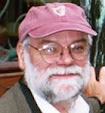
Chuck Matthei

Sunday, March 9, 2014

"To My Fellow Warriors": The Fighters for the Environment

This morning I saw an email from Debbie Cowden of the Buckeye Forest Council addressed "To My Fellow Warriors." The Buckeye Forest Council is an environmental group fighting fracking, hydraulic fracturing, and they are advocates for the rights of Ohio citizens to clean air and water. Certainly fracking is one of the most urgent threats to a clean environment in Ohio (and in many other places across our land). I was taken aback by the idea of us being called "fellow warriors," but I gradually began to feel she used exactly the right term. Some of the people I have met in the past year or two are indeed brave warriors. I'm thinking of KF, KH, the members of Frack-Free Geauga. There's also KW, Mr and Mrs. W, DP, and KP. These are brave fighters, using their wills, intelligence, creativity--all their resources--to fight for something they believe in. Putting the "stubborn ounces of their weight," in the words of Bonaro Overstreet, into this struggle.

I remember many years ago when Chuck Matthei would point out that there were people in the military putting in long days and long careers doing the opposite of what Chuck and his fellow Peacemakers were trying to do. Chuck didn't think of peacemaking as a part-time avocation. For him it was the central focus of his life. Maybe some of my new friends and acquaintances have this calling--full-time warriors for the environment.

I would like to be thought of as a warrior, but there is a lot of work to be done before I could earn that title. Do I have the will, the energy, the courage, the persistence? Do I have the love in me to continue fighting for what I think is right?

Tuesday, February 11, 2014

Old Poem about Kenny Przybylski

I recently thought about this poem I wrote about 12 years ago in memory of Kenny Przybylski, our great friend. The form is (loosely) a ghazal, a Persian poetic form. In ghazals, the poet's name is mentioned in the final verses.

Ghazal for Kenny Przybylski                      
(Riffs on lines by the poet Ghalib)      
           
“No wonder you came looking for me, you
who care for the grieving, and I the sound of grief”

After high school in Winona, your parents astonished and angry,
You joined the Franciscans, Little Brothers of the Poor of St. Francis,

Living in Simplicity, in imitation of the life of the great saint
Who stayed close to his own suffering and forever cared for the grieving.

Working with “bad boys,” delinquents, incorrigibles,
Abandoned detritus of a brutal society.

They gave you a religious name, “Masseo,”
An early companion of Francis in Assisi,

And you lived up to the name, staying close to suffering,
And laughter, fun, practical jokes.

After six years of this life, you get kicked out.
Who gets kicked out of the Franciscans?

Well not exactly kicked out, “asked to leave.”
They were right, of course, your vocation was stranger, more complicated.

A vagabond life, some time in jail, picking apples in Wisconsin,
Oranges around Tarpon Springs, time at the Catholic Worker,

Sometimes finding food in a dumpster behind the Piggily-Wiggily.
(Easter breakfast, 1977!).

We all recognized your holiness and your craziness, your unusual ministry.
Wanted to be around you as you ministered to our grieving, the sound of grief,

Stayed close to suffering. And in the end, as you lay dying of AIDS
In a Franciscan hospital in Tampa

(You tried to ride there, from New Orleans to Tampa,
on your bicycle to visit Joanie)

In the end, full circle, surrounded by Terri, Peggy, Joanie, Chuck,
The Franciscans, keeping watch over your suffering, your sound of grief,

Still blessing everyone in your luminous circle,
Ever the Francis, wounds on the hands, feet, chest.


Listen, Bob Coughlin, this amazing blessing, rubbing shoulders
With this ragged funny saint, who forever cared for the grieving,

Stayed faithful and close to our own suffering
The song of our grief.

 Robert M. Coughlin/October 25, 2002

Saturday, November 17, 2012

Dorothy Day Article on Ernest and Marion Bromley and the Cincinnati Peacemakers

I've been reading Patsy Harman's book "Arms Wide Open," and it made me think about some of the characters in the book that I knew who were involved in a historic victory for the peace movement. Dorothy Day wrote about it:

 
"Bromley Eviction Halted"
By Dorothy Day
The Catholic Worker, September 1975, 3. 


As we go to press it gives me great joy to write of a victory on the peace front, a victory achieved by the valiant work of the younger members of the peace movement in the United States, which has long known the patient and long-suffering work of such bodies as the War Resisters and the Fellowship of Reconciliation, not to forget, to speak modestly, of the Catholic Worker. As of now, it looks as though our friends, the Bromleys, will not be evicted from the Gano Peacemaker house in Cincinnati, and that the sale of the house, which took place this last summer, will be annulled. Among others, credit can be given to Peggy Scherer, who, in addition to her manual labor here at the farm in Tivoli this past year, had continued her close collaboration with Chuck Matthei in Washington and other Peacemakers around the country. And Lee LeCuyer, who is a tireless worker at First Street, has also leafleted and picketed both in Cincinnati and New York. These are the ones who helped lead the movement which achieved this victory. Ernest and Marion Bromley's patient hard work--picketing, leafleting, resisting, speaking the truth--has not gone unnoticed.
It is a lesson for us all in the peace movement that gentle pressure, constant hard work, a faithful, straightforward--one might even say respectful--adherence to the Scriptural command to love our opponents and to exercise the virtue of hope even when all seems hopeless, offer a great example of the pure means to achieve our ends. Jacques Maritain impressed this use of pure means upon us as in the earliest days of the Catholic Worker. This victory also gives us all a sense of joyful gratitude, not only for the hard work of the young people, but even for those in government office who can respond, as they seem to have, to these persistent, though gentle pressures. Let us pray that this "little" victory will give courage to others around the country to take a stand, which involves a real commitment to the "voluntary poverty" we all talk so much about.

[This text is not copyrighted. However, if you use or cite this text please indicate the original publication source and this website (Dorothy Day Library on the Web at http://www.catholicworker.org/dorothyday/). 

Suggested citation:
Day, Dorothy. "Bromley Eviction Halted". The Catholic Worker, September 1975, 3. The Catholic Worker Movement. http://www.catholicworker.org/dorothyday/Reprint2.cfm?TextID=556]