Monday, July 7, 2014

A Happy Day for Linda

Linda at Overlook Park, Mentor-on-the-Lake
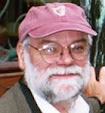
Robby, Linda, Bob, Colin
A wonderful day she had--watching her two beloved grandchildren, opening a few birthday cards, simple supper with her husband,  daughter, son-in-law, and grandboys. Phone calls from a daughter in Montana and a daughter in Columbus. An evening by Lake Erie.

Forced to wear her husband's shirt from two years back: "Will you still need me, will you still feed me, when I'm 64?"

You know the answer!

Saturday, July 5, 2014

Great Blueberry Harvest Begins!

This morning we picked the first blueberries of 2014. I am surprised how plentiful they are despite our nasty winter in the Chardon/Hambden Township area. Hopefully we will be picking berries for a few more weeks!


Big One!

Friday, July 4, 2014

Summer Solstice Sunset on Lake Erie


Summer Solstice. Photo taken from Mentor Headlands Beach. Our beloved Lake Erie, named after the Cat Nation Indians, La Nation du Chat, is the 11th or 12th largest freshwater lake in the world. It really is one of the wonders of the world, and we try to enjoy it!

Baking Apple Pies for Our July 4th Picnic

For our picnic at Julia and Ed's house, my specialty--apple pies.

Apple Pies-in-Progress. July 4th, 2014

Thursday, July 3, 2014

Logging Lake and Grace Lake--in Glacier National Park

My daughter Carolan lives near Glacier National Park in Montana. Last Sunday she and her friend Jeremy hiked and paddled Logging Lake and Grace Lake in the wild and remote northwestern part of Glacier. Here are a few photos from that adventure. Besides paddling two lakes, Carolan and Jeremy hiked 19 miles that day.

Carolan hiking a muddy trail near Logging Lake

Carolan paddling Logging Lake

Carolan and Jeremy on Grace Lake

Cutthroat Trout (he lived to see another day)

Waterfalls at the end of Grace Lake

Jeremy paddling Logging Lake
Carolan and Jeremy--Happy

Just Thoughts: Immigration

Just Thoughts: Immigration

At the end of the mass held at this year’s Celtic Festival in Painesville, Fr. Tom Johns, pastor of St. John Vianney parish in Mentor, reminded everyone of the July 12th Cleveland Diocese-sponsored “Walk for Justice” for Immigrants. He asked us to remember that the Irish ancestors of the people present were immigrants, and faced great discrimination because of their nationality and Catholicism. There is still a cultural memory of this discrimination--it is not so far in the past.

The Catholic Church in America is a church of immigrants. Catholics were relative late-comers in this country. Great waves of immigration started in the 1840s during the Irish Potato Famine and hardly decreased in the decades that followed. Greater Cleveland’s Catholic population is made up of the descendants of these immigrants: Irish, German, Italian, Polish, Slovenian, Croatian, Hungarian, Czech, Slovak, Hispanic, and others. So Catholics in America should never forget the immigrants, of the past or the present. They are us.

Come to think of it, almost everyone in America comes from immigrant stock. A few of us can trace our roots back to early colonists, but most of us have much more recent American roots. It could be said that Native Americans are the only people who aren't from immigrant stock.

Why do people leave everything behind and move to a new country? Think about it: if you had a good home, a safe environment, a good job, would you move across the ocean to a place where you might not even speak the language? When people emigrate from their native land, it is often out of desperation. It must be the hardest decision.

In the new land immigrants often face daunting obstacles--discrimination, the need to quickly learn a new language, the need for the basics of life, food, shelter, safety. The need for honorable work. Sometimes they feel rejected by the new society. That brings to mind the great line from the gospels: “The stone that the builders rejected has become the cornerstone.” The Catholic immigrants, our ancestors, once rejected and discriminated against, are cornerstones of the strong and prosperous America we have today.

We as Catholic Christians must stand up for immigrants, find a just resolution to the dilemmas presented to our society by immigration. If we are successful, the immigrants will strengthen our society--and Church. We at St. Mary’s in Painesville, Ohio, have a great opportunity to work with the immigrants in our midst, and to offer our success as a model for the broader society.


Tuesday, July 1, 2014

The Works of Mercy--Our Opportunity and Responsibility

Just Thoughts: The Works of Mercy

If you had religion classes as a child, you might have learned to recite by heart the Corporal and Spiritual Works of Mercy. These were celebrated most prominently in the Gospel of Matthew (Chapter 25, verses 34-46), and trace their lineage back to Jewish tradition and scripture. The Works of Mercy are among the most precious elements of our religious heritage, and they are honored and taught by many traditions such as the Methodist, Lutheran, Episcopalian, and Orthodox churches. One can also see these guiding principles in the social justice work of Unitarian-Universalist, United Church of Christ, and Mennonite churches. St. Mary's is my parish in Painesville, Ohio, and our ministries live out these exhortations of Jesus, the Corporal Works of Mercy:

1. To feed the hungry. 2. To give drink to the thirsty. 3. To clothe the naked. 4. To shelter the homeless. 5. To visit the sick. 6. To visit the imprisoned. 7. To bury the dead.

If you are not finding the opportunities for doing the Works of Mercy, contact the people in charge of the various ministries of your church. At our parish, we do all of these, every day of the year. Most of this work is done by volunteers, who don’t see it as a burden, but a blessing, a great opportunity.


The Spiritual Works of Mercy are these:

1. To instruct the ignorant. 2. To counsel the doubtful. 3. To admonish sinners. 4. To bear wrongs patiently. 5. To forgive offenses willingly. 6. To comfort the afflicted. 7. To pray for the living and the dead.

The first three Spiritual Works of Mercy probably demand a level of expertise, education, and training that not everyone possesses. But we can all bear wrongs patiently and forgive offenses willingly. And it is so important to comfort the afflicted (and maybe occasionally, like Jesus in the Cleansing of the Temple, to afflict the too comfortable!). And can there be any excuse not to constantly pray for the living and the dead? That is everyone’s vocation and opportunity, even the sick and the homebound.

The Works of Mercy help us honor the Great Commandment given to us by the Lord in Matthew 22:36-40: “You shall love the Lord, your God, with all your heart, with all your soul, and with all your mind. This is the greatest and the first commandment. The second is like it: You shall love your neighbor as yourself. The whole law and the prophets depend on these two commandments.”

Living out the Works of Mercy obeys this Great Commandment and helps usher in the Just Kingdom, the Beloved Community that Martin Luther King Jr. and Maurice McCrackin spoke of.

Postscript: When I showed someone a draft of this blog posting, she reminded me that the ideas behind the Works of Mercy can be found in many other religious traditions, not just the Jewish and Christian traditions.